Travertine Pool Decks
Travertine stays cooler underfoot and offers natural slip resistance, making it a favorite surround for swimming pools, and we install it carefully to create safe, elegant decks.

Service guide / San Diego
What to know before installing travertine pavers in San Diego: finishes, fill and voids, acid sensitivity, sealing, color variation, heat, and the order of work.
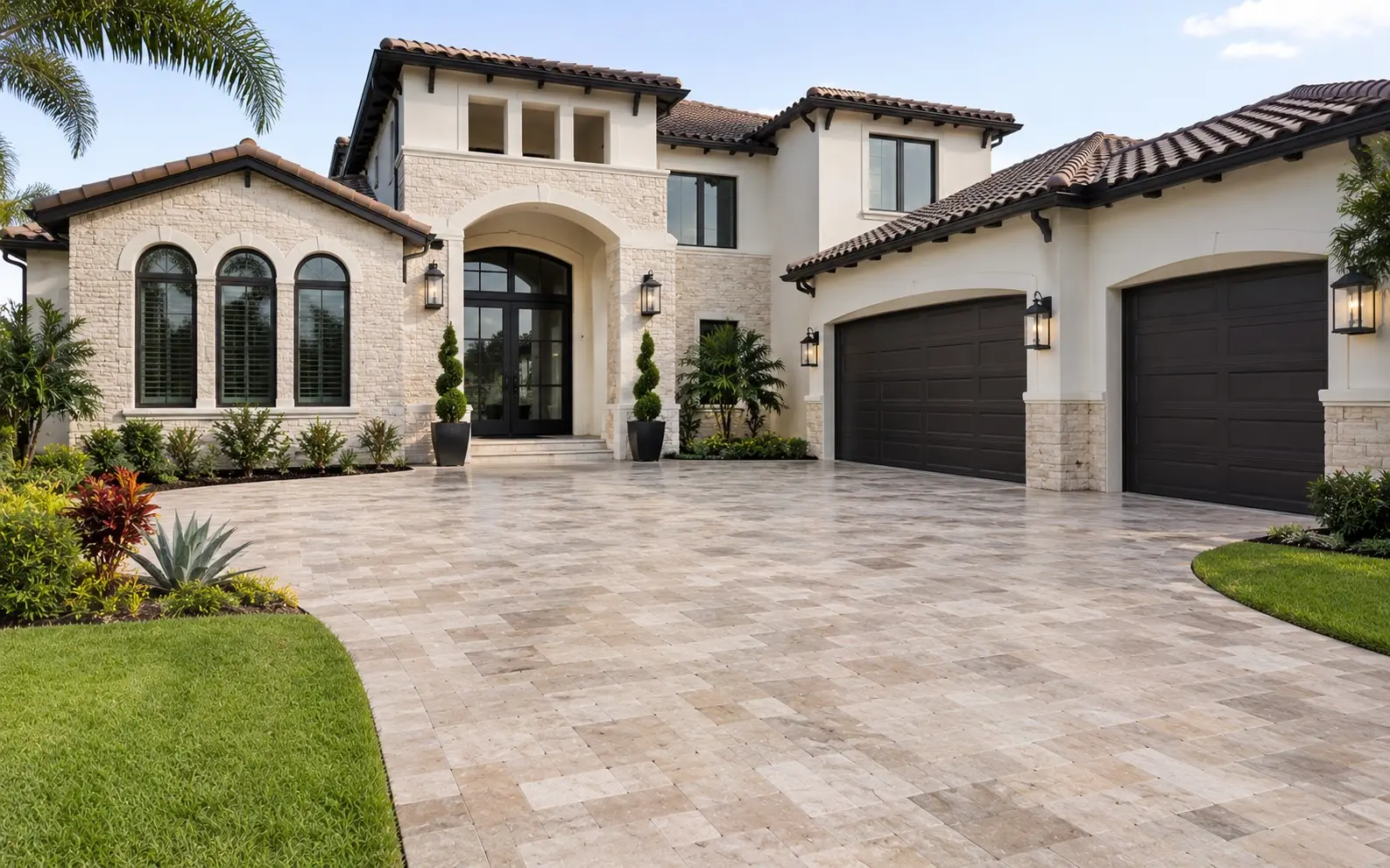
Travertine paver installation in San Diego brings timeless, natural stone elegance to patios, pool decks, driveways, and walkways.
Travertine is known for its warm tones, unique texture, and ability to stay cooler underfoot in the sun, which makes it an especially popular choice around pools. Our team installs travertine with careful preparation, including a compacted base, proper drainage, and precise spacing, so your surface looks flawless and lasts. We offer a range of colors and finishes, such as tumbled, honed, and filled, to match your style and your home’s design. Sealing is also available to protect the stone from stains and weathering, preserving its natural beauty. For a refined, luxurious look, travertine is hard to beat. Our crews restore older travertine surfaces that have lost their luster. Contact us today to request your travertine paver installation estimate in San Diego.
Travertine stays cooler underfoot and offers natural slip resistance, making it a favorite surround for swimming pools, and we install it carefully to create safe, elegant decks.
Warm tones and varied textures give patios a refined appearance, and our crew sets each paver with precise spacing, careful leveling, and a durable base for lasting beauty.
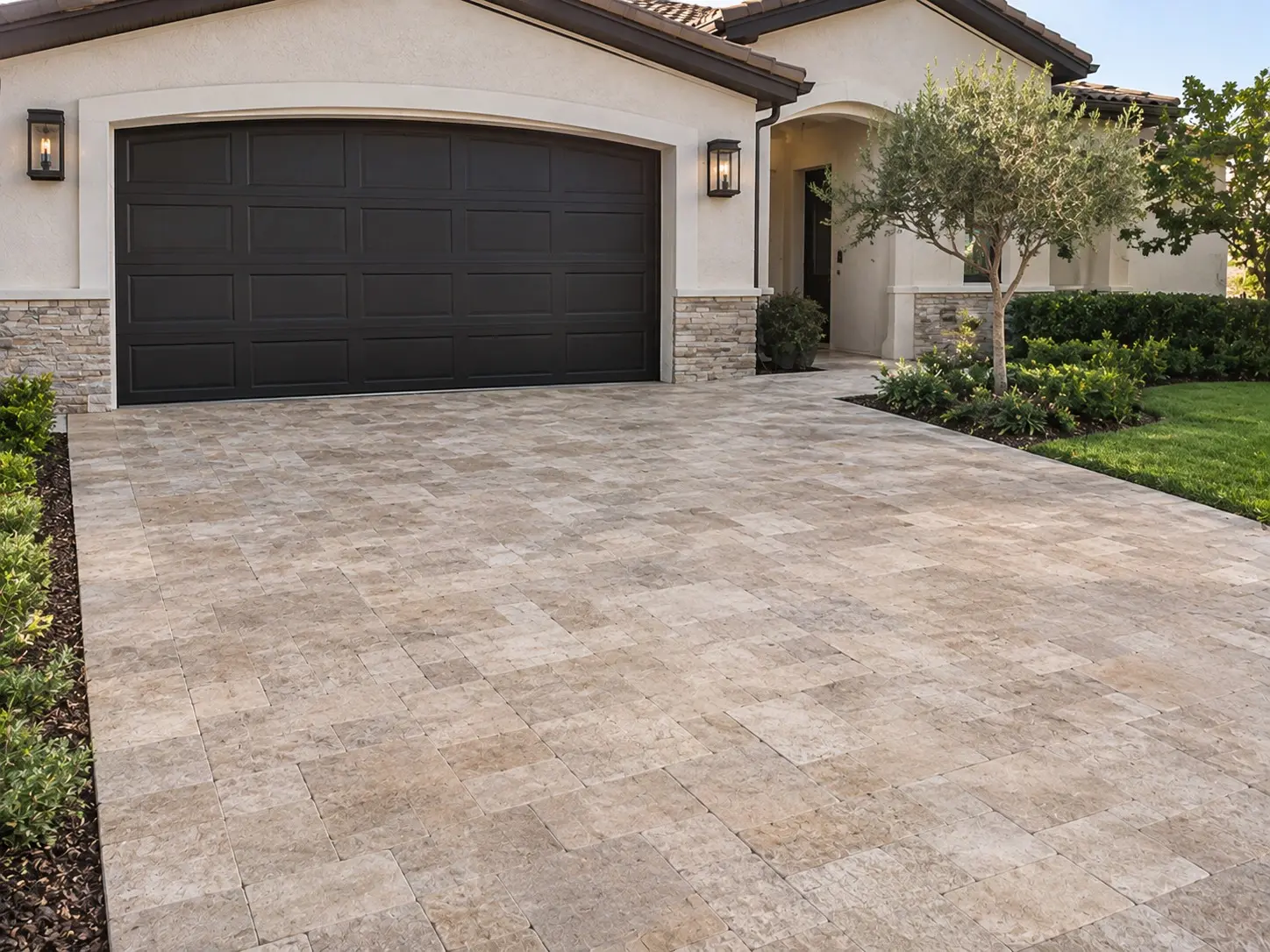
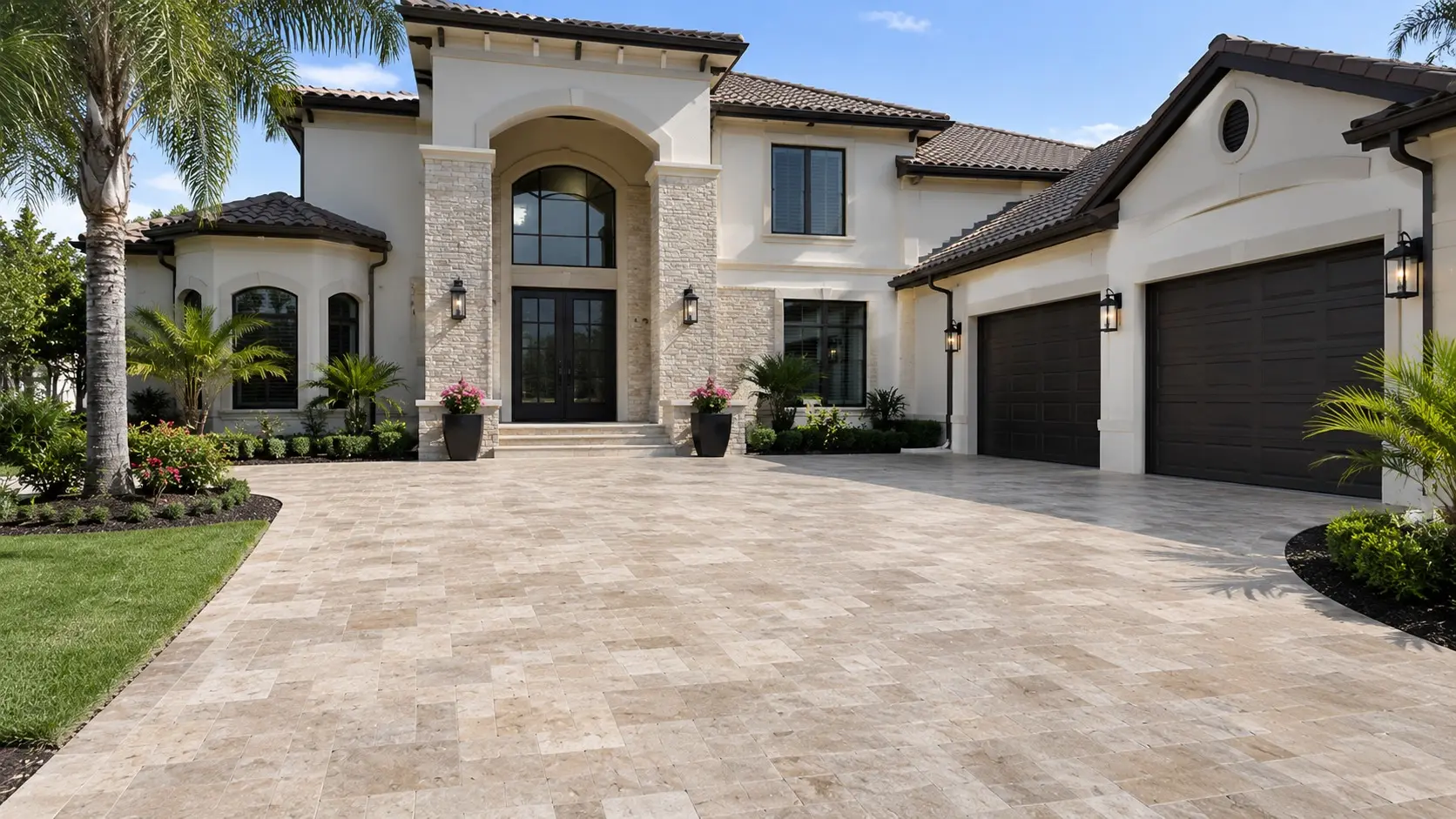
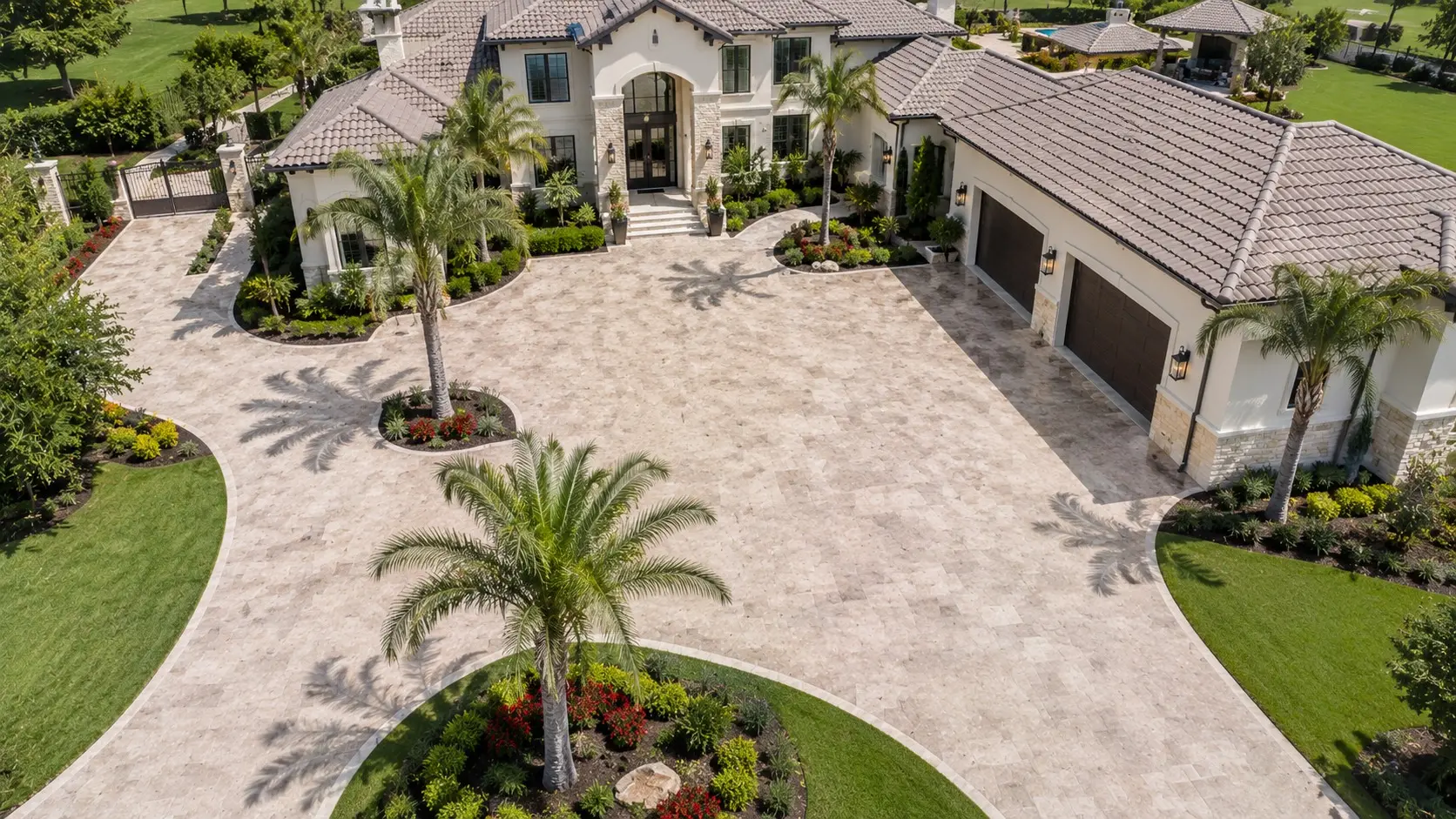
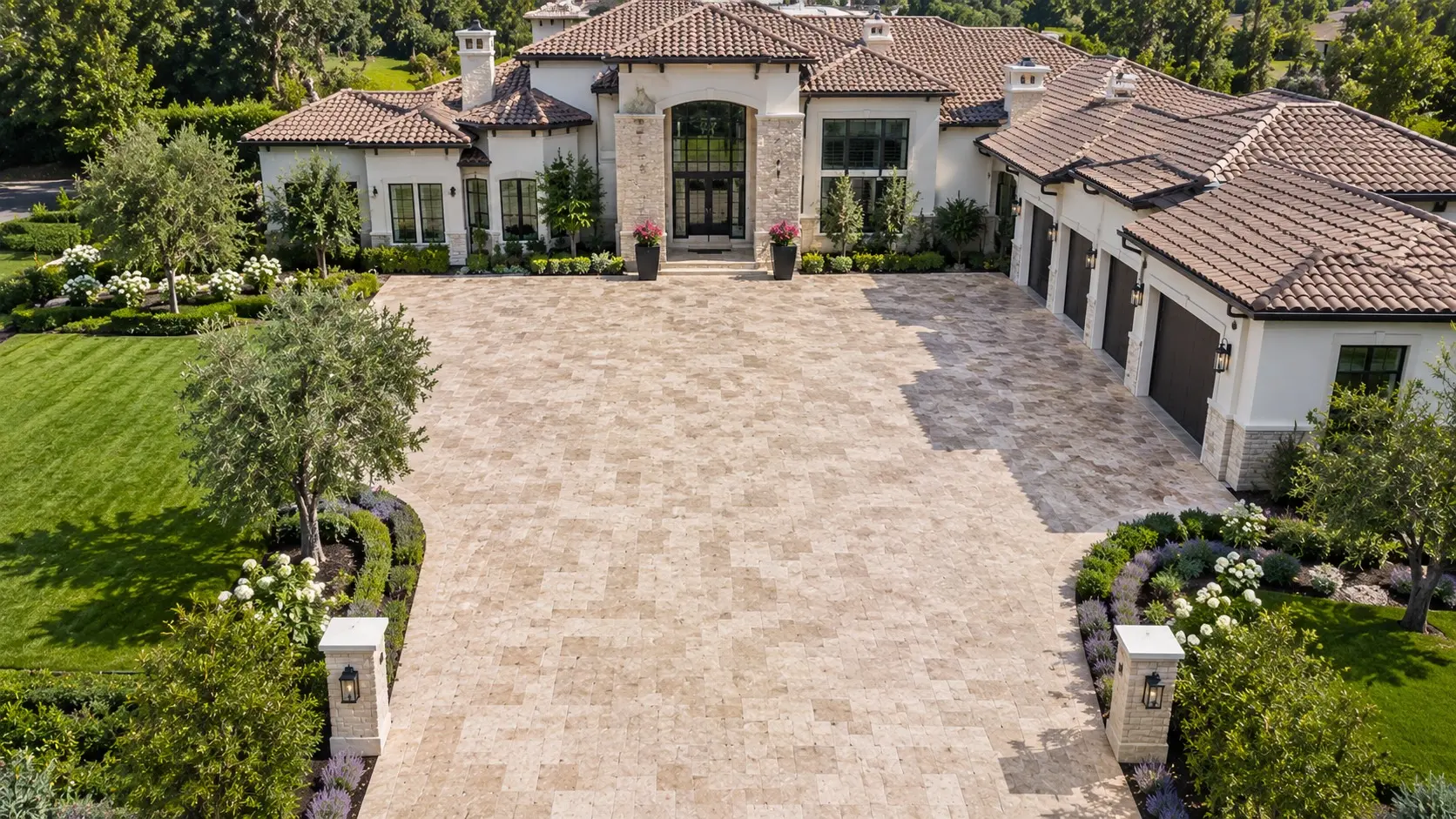
Add upscale character to your entrance with travertine pavers installed on a heavy-duty base, offering a distinctive look that elevates curb appeal and stands up to vehicle traffic.
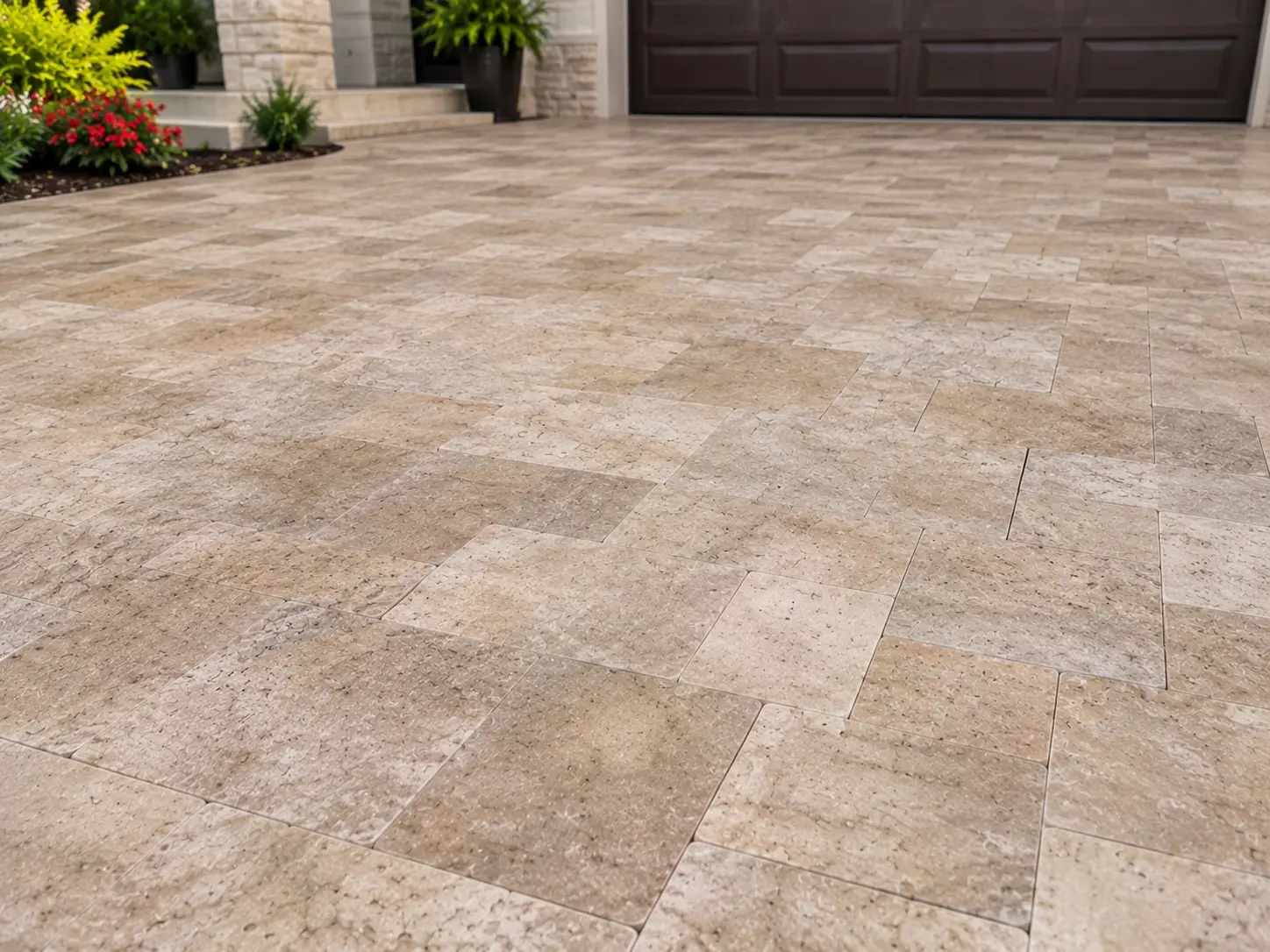
Choose tumbled, honed, brushed, or filled finishes in ivory, walnut, gold, and silver tones, and we help you select the combination that fits your home and outdoor style.
A quality sealer protects travertine from stains, moisture, and weathering, enhancing its color while helping the surface stay cleaner and easier to maintain through years of exposure.
We clean, re-level, and refill joints on older travertine surfaces, replacing cracked pieces where needed so your existing patio or pool deck looks fresh and performs well.
Travertine suits more places than patios, as long as the finish fits the use.
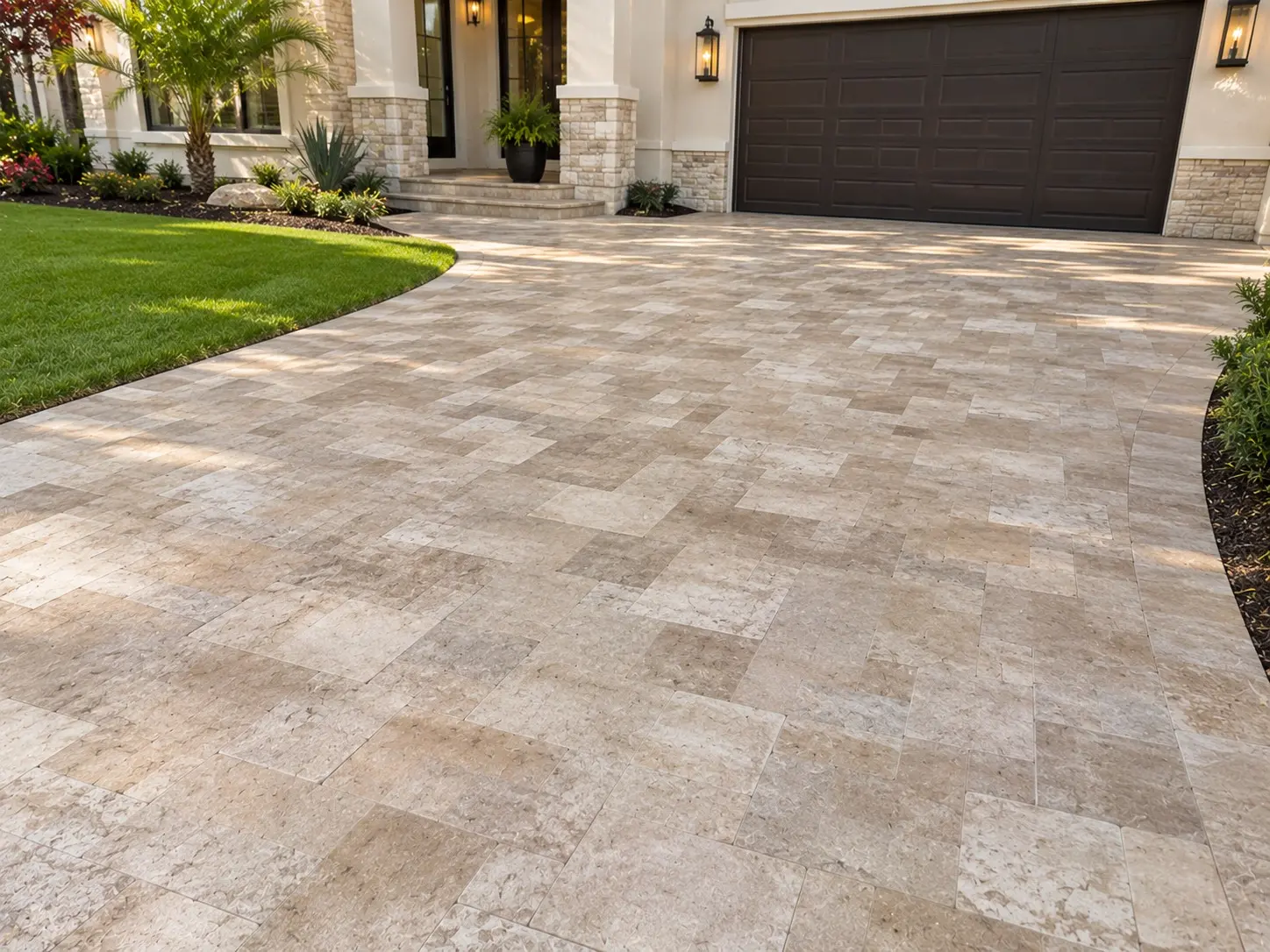
Its pale, calm tones work behind sofas and under shade structures where a soft look is the goal.
A honed or textured finish stays comfortable underfoot, though sealing and a drainage plan become more important.
Stone treads and landings give a front entry a more formal feel than a plain slab.
Dense, sealed stone resists most splashes, but grease and acidic spills should be wiped promptly.
Smaller pieces or a French pattern can follow curves and suit planted borders.
The same stone finishes seat walls and steps, giving pavers and walls a matched edge.
| Finish | Look and feel | Slip behavior | Where it suits |
|---|---|---|---|
| Tumbled | Rounded edges, soft and aged appearance | Textured, good grip | Relaxed patios and pool surrounds |
| Honed | Smooth, matte and even | Moderate when dry, reduced when wet | Covered terraces and interior-to-exterior flow |
| Brushed | Light texture with a worn feel | Good grip | Walkways and steps |
| Filled and honed | Voids packed so the surface is uniform | Smoother, needs checking when wet | Formal courts and kitchens |
| Unfilled | Natural pits remain visible | Textured | Rustic looks and thermal comfort |
Finish names vary by supplier, so confirm what a sample actually looks and feels like.
 Natural stone hardscaping Flagstone, bluestone and other stones behave differently from travertine in joints, thickness and wear.
 Porcelain pavers A useful comparison if you like the stone look but want lower absorption and uniform color.
 Pool deck pavers Wet-area safety and heat comfort apply to travertine around water.
 Cleaning and sealing Stone needs the right cleaners and sealer, and this page explains the maintenance side.
Start by laying out the samples where the stone will go, wet and dry, in morning and afternoon light. Natural material arrives with shade variation between pallets, so ask how pieces will be blended and how mismatched edges will be handled.
Travertine pavers are normally laid on a compacted aggregate base with a sand bed, or on a slab with mortar in covered areas. The installer chooses the method based on thickness, location and drainage. Call 811 before digging and check with your HOA if exterior changes need approval.
Light stone reflects more sunlight than dark pavers, which usually keeps it cooler under bare feet but can add glare at midday. Planting, umbrellas or a pergola soften both.
Travertine forms with natural pockets. Filled stone has them packed with a cement or resin compound, while unfilled stone leaves them visible, which also helps grip.
Acids. Vinegar, lemon juice, some cleaners and fertilizers can etch the stone. Use a pH-neutral cleaner and rinse spills quickly.
Usually, yes. A penetrating sealer slows stains without changing how the surface looks. Sealers differ, so follow the manufacturer's instructions and test a spare piece first.
Slightly. Sun and weather mellow the surface, and some sealers deepen tone. Variation between pieces is normal and part of the stone.
Approve the finish, thickness and shade range from physical samples, not from a photograph.
Set grades so water runs away from the house and off the stone, then excavate to the right depth.
Place crushed aggregate in compacted lifts and screed a thin sand bed or prepare the slab for setting.
Pieces are set in the chosen pattern, mixed from several pallets, and cut with a wet saw for edges and curves.
Joints receive their fill, and sealer is applied once the stone is clean and dry.
Clarity before you begin
Honed and polished surfaces can be, while tumbled, brushed and unfilled finishes grip better. Near pools or irrigation spray, choose a textured finish and test a wet sample under foot.
Furniture is fine. The stone is softer than porcelain, so scratches and chips are possible from dragged items or dropped tools. Use pads and lift rather than slide.
Yes, with proper sealing and periodic rinsing to remove salt deposits. Stainless fixtures nearby help as well, since salt air attacks other metals.
Travertine looks more natural but needs more care and tends to cost more per square foot than concrete. Concrete pavers offer more colors, patterns and consistency.
Ask which quarry or supplier it is from, whether pieces from the same lot will be delivered, and what the return policy is for damaged or mismatched material.