Stain and Fade Resistance
Porcelain pavers resist wine, oil, and other stains while holding their color under strong sunlight, giving your outdoor space a clean, vibrant look with minimal upkeep.

Service guide / San Diego
Porcelain pavers in San Diego: dense large-format 2 cm tiles, low absorption, cutting and setting methods, pedestal and bed systems, and how they compare with stone.
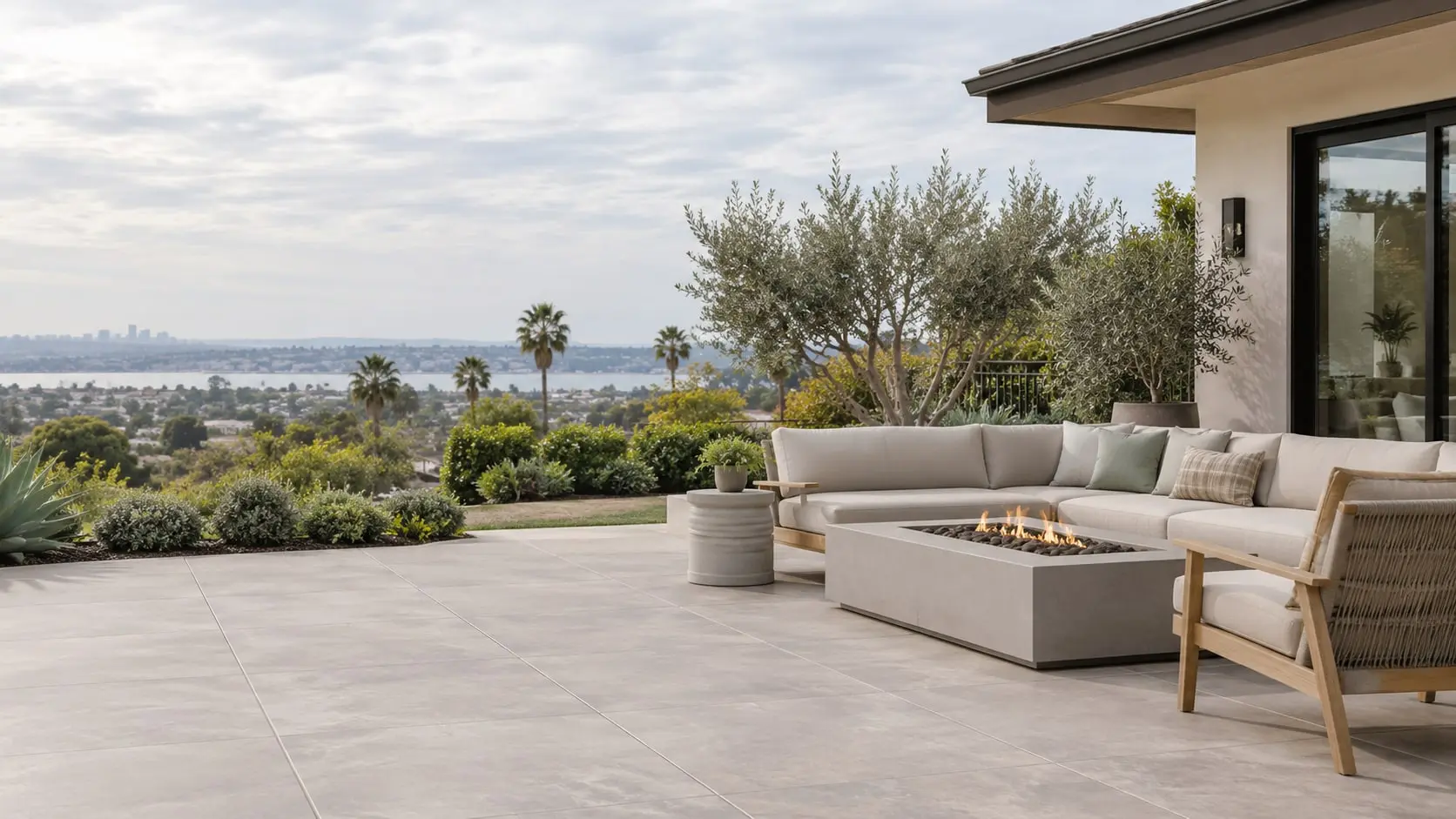
Porcelain paver installation in San Diego delivers a sleek, modern look with exceptional durability and very little maintenance.
Porcelain pavers resist stains, fading, scratches, and moisture, making them an excellent choice for patios, pool decks, walkways, and outdoor kitchens. They are available in finishes that mimic natural stone, concrete, and wood while offering a consistent appearance and a slip-resistant surface. Our team installs porcelain pavers with careful base preparation, precise leveling, and clean, tight joints, ensuring a flawless finish. Because the material is dense and nonporous, it stays easy to clean and holds its color through intense sun and heavy use. If you want a contemporary outdoor space that remains beautiful for years, porcelain is a smart option. We also offer matching steps, borders, and pool coping. Contact us today to request a porcelain paver installation estimate in San Diego.
Porcelain pavers resist wine, oil, and other stains while holding their color under strong sunlight, giving your outdoor space a clean, vibrant look with minimal upkeep.
Select realistic finishes that mimic natural stone, timber, or polished concrete, enjoying the beauty of those materials with more consistency, easier maintenance, and weather resistance.
Slip-resistant porcelain remains comfortable and attractive around pools, and we install it with a proper base and drainage to resist moisture, chemicals, and constant heavy foot traffic.
Create sleek, modern outdoor floors with precisely cut porcelain pavers, tight joints, and level surfaces that offer a clean, contemporary appearance for entertaining areas and pathways.
We set porcelain on adjustable pedestals or a solid base depending on site, creating level surfaces over uneven areas, rooftops, or drainage conditions where flexibility matters.
Dense, nonporous porcelain resists scratches, frost, and moisture, and it wipes clean easily, so your new patio looks fresh with minimal maintenance throughout the seasons.
Large-format porcelain gives a clean, continuous floor with few joints. That tends to suit contemporary patios, rooftop and second-story decks on pedestals, kitchens and lounge areas where tidy lines matter more than a tumbled, aged look.
Because the tile does not absorb water or stains easily, it also works around grills, fire tables and under dining tables where food and drink are part of the plan.

| Trait | Porcelain | Travertine | Concrete paver |
|---|---|---|---|
| Water absorption | Very low | Moderate, needs sealing | Moderate, benefits from sealer |
| Color consistency | Very uniform | Varies piece to piece | Consistent within a batch |
| Stain resistance | High | Lower, acid-sensitive | Moderate |
| Cutting | Slow, needs a diamond blade | Easier with a wet saw | Straightforward |
| Typical setting | Pedestal, mortar or bed system | Sand or mortar bed | Sand bed on compacted base |
Check the manufacturer's installation guide for the specific product, since setting methods vary by line.
Pavers can sit on pedestals, on a mortar bed over concrete or on a compacted aggregate bed, depending on the product and site.
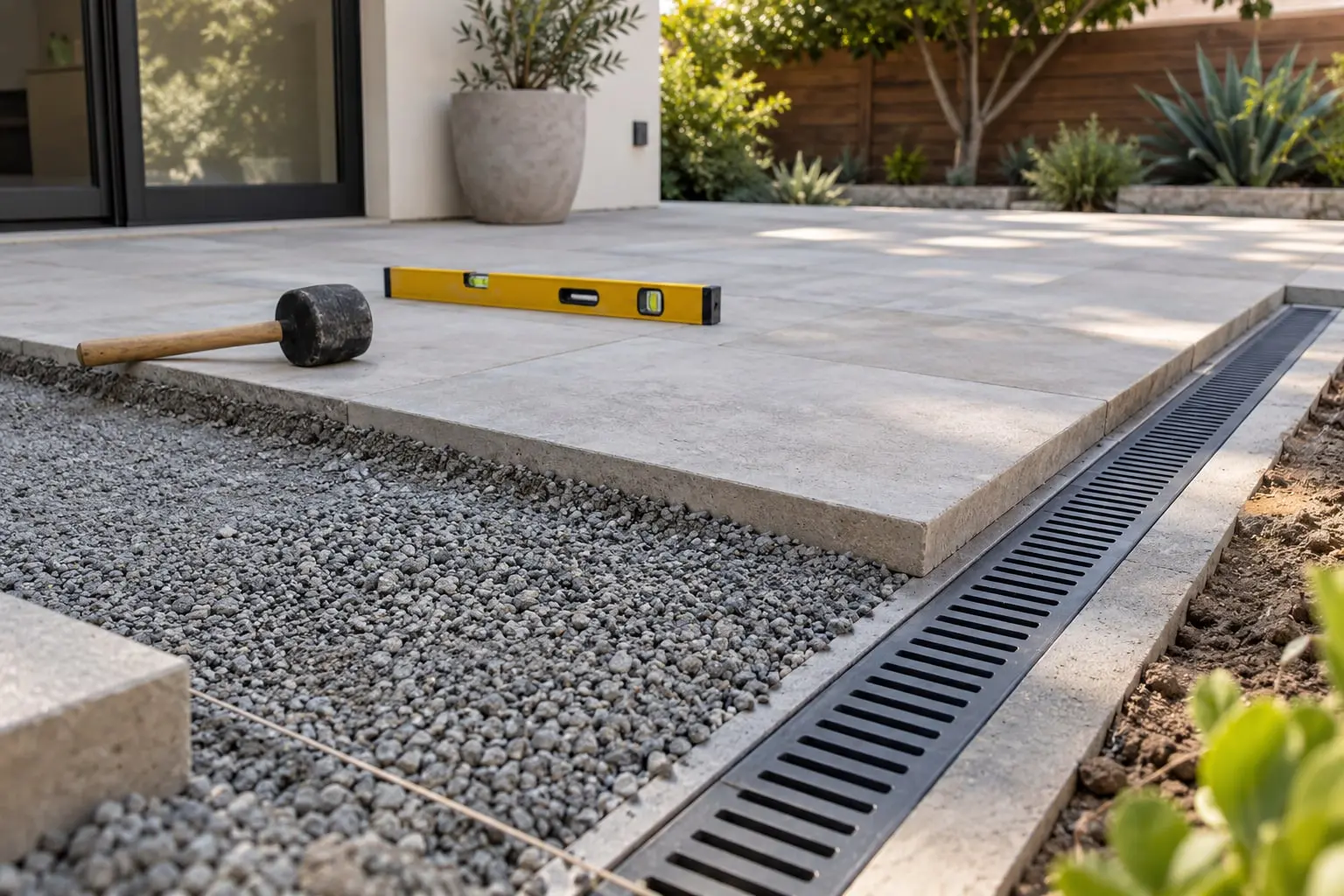
Because porcelain is rigid, a base that is out of flat shows up as rocking or lippage between tiles.
Tiles are placed without fixing them, so cuts, edges and drains can be planned before anything is set.
A wet saw with a porcelain-rated diamond blade, or a handheld grinder for notches, keeps edges clean.
Spacers hold uniform joints while a leveling system keeps neighboring pieces flush.
Joints receive the filler specified for the setting method, then the surface is cleaned of residue.
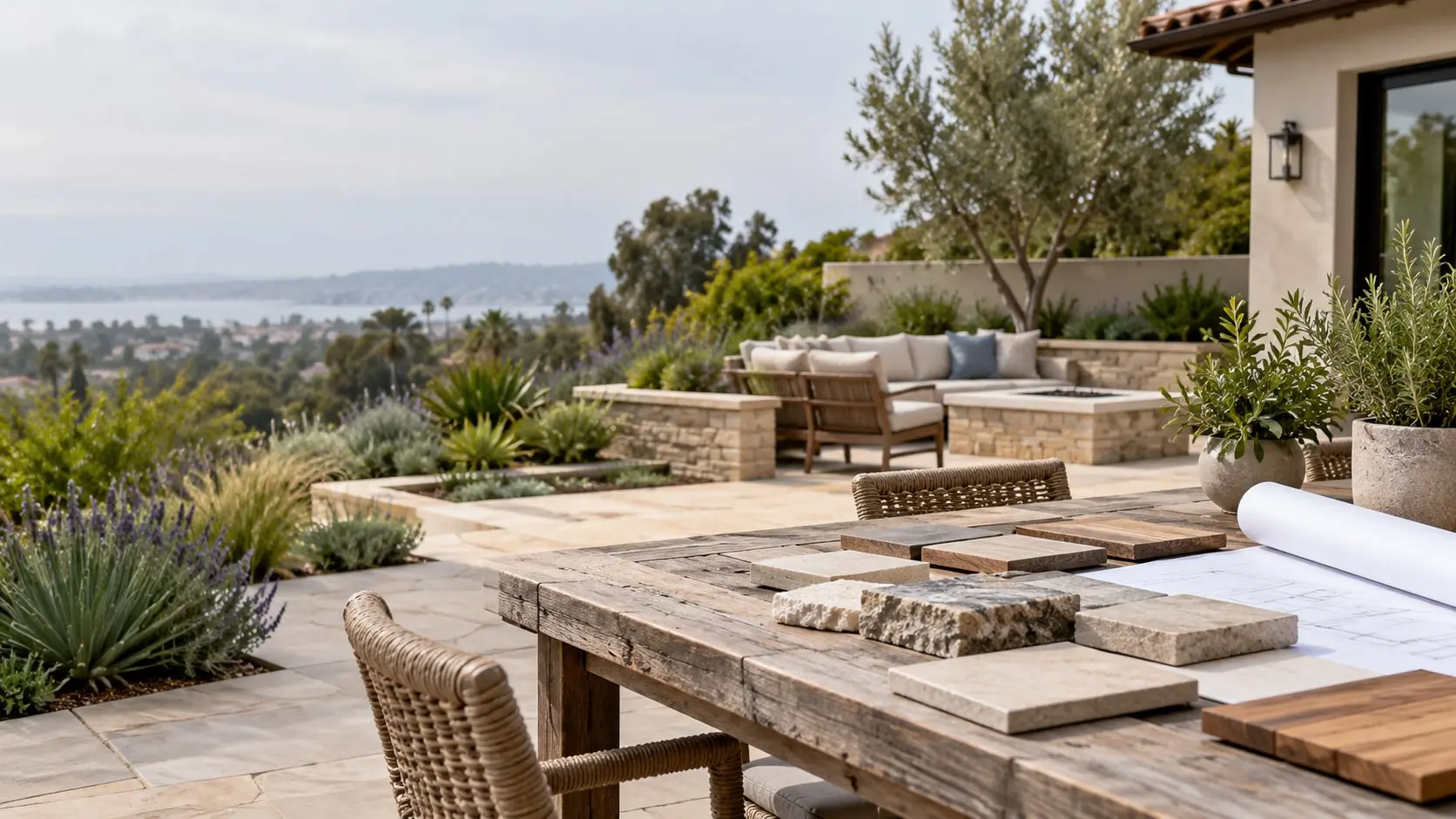
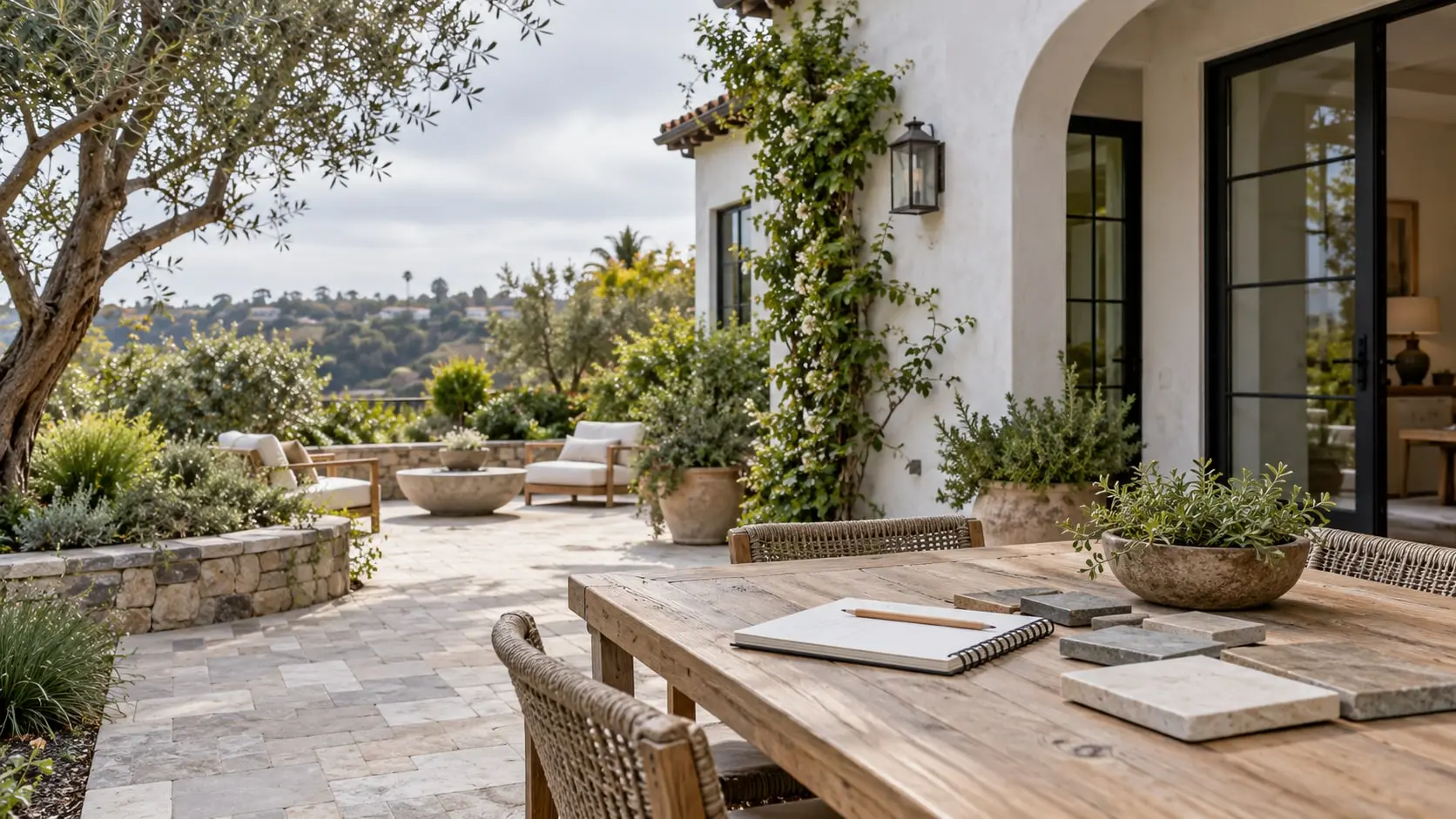
Measure early, because large tiles are cut to the area and waste depends on layout. Ask about slope, since porcelain needs the right drainage plan built into the support. Call 811 before digging and confirm HOA requirements if the area is visible from the street.
Porcelain is made in concrete, wood-plank and stone-look patterns, so it can echo these three surfaces without their upkeep.
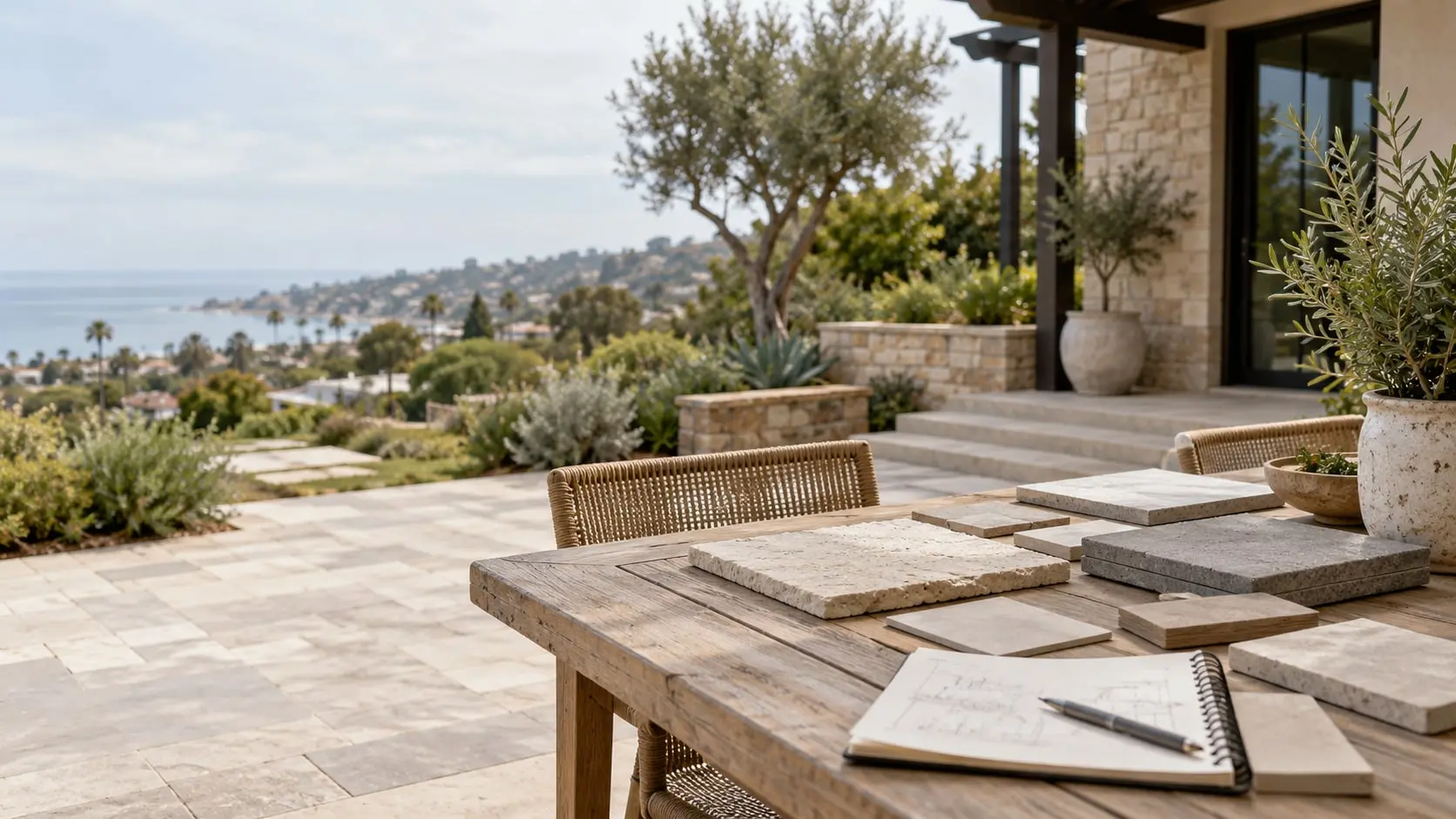
Look at the sample in your own yard: printed patterns can repeat, and a finish that looks tidy in a showroom may read flat in direct sun.
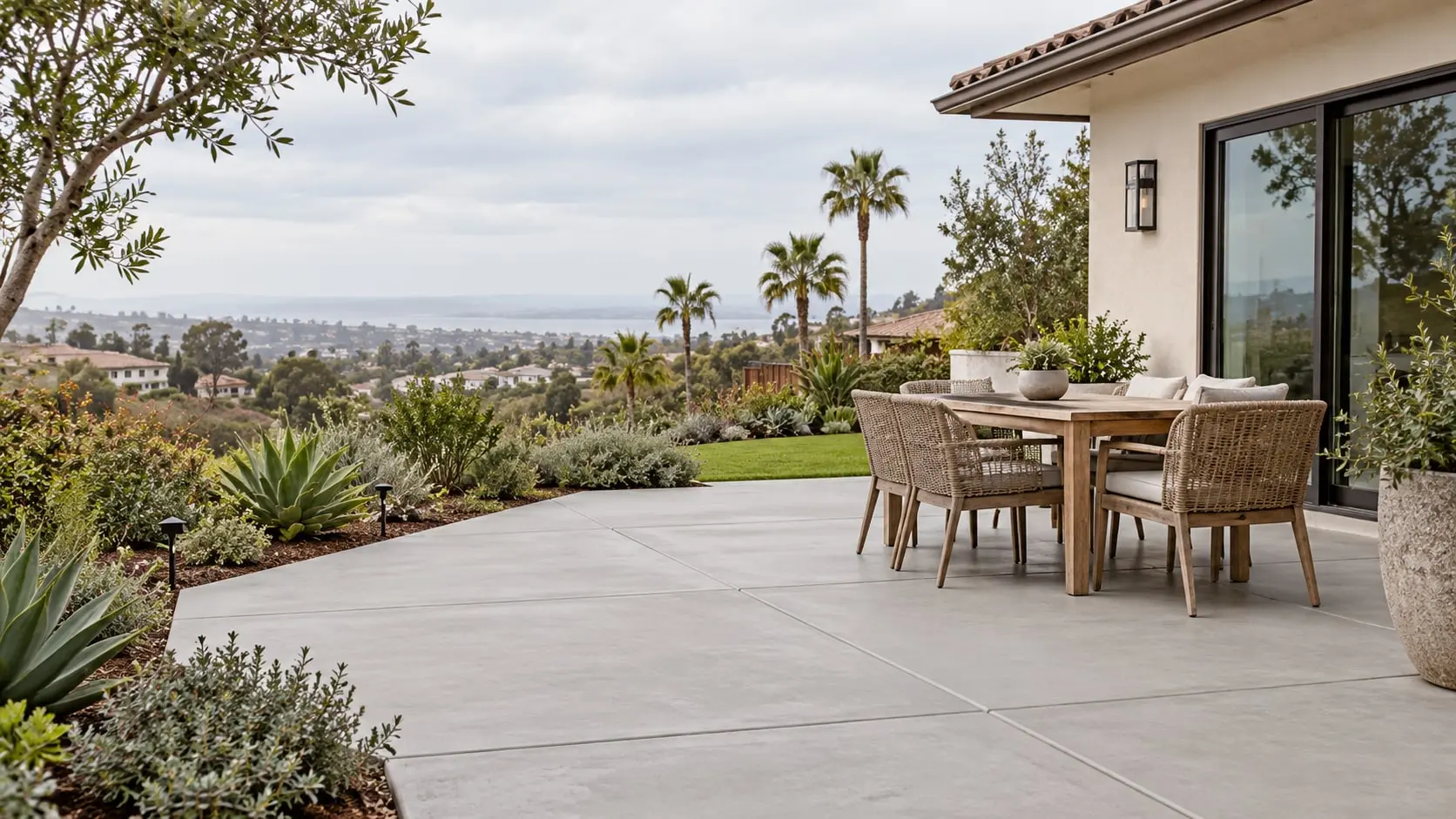
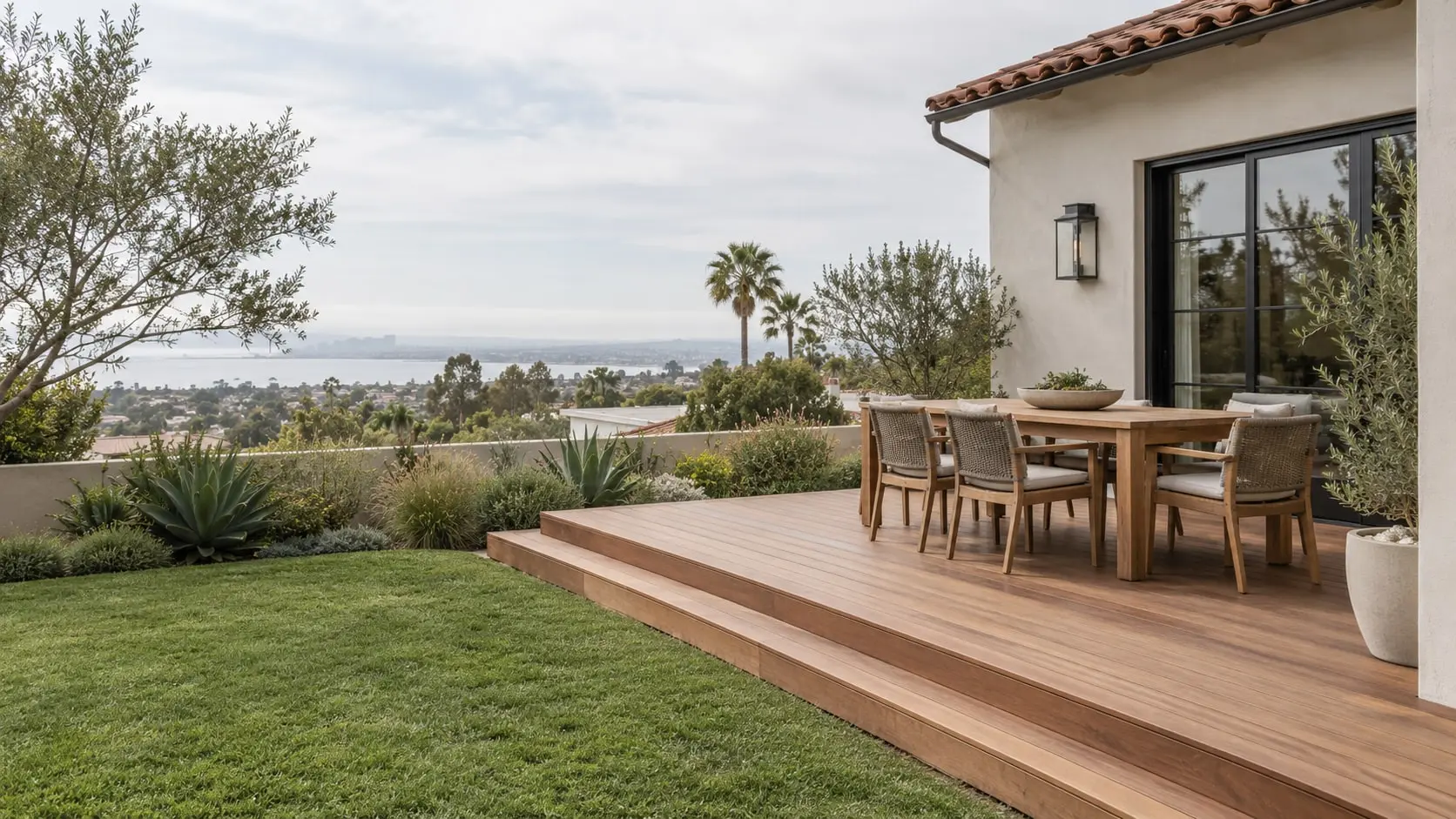
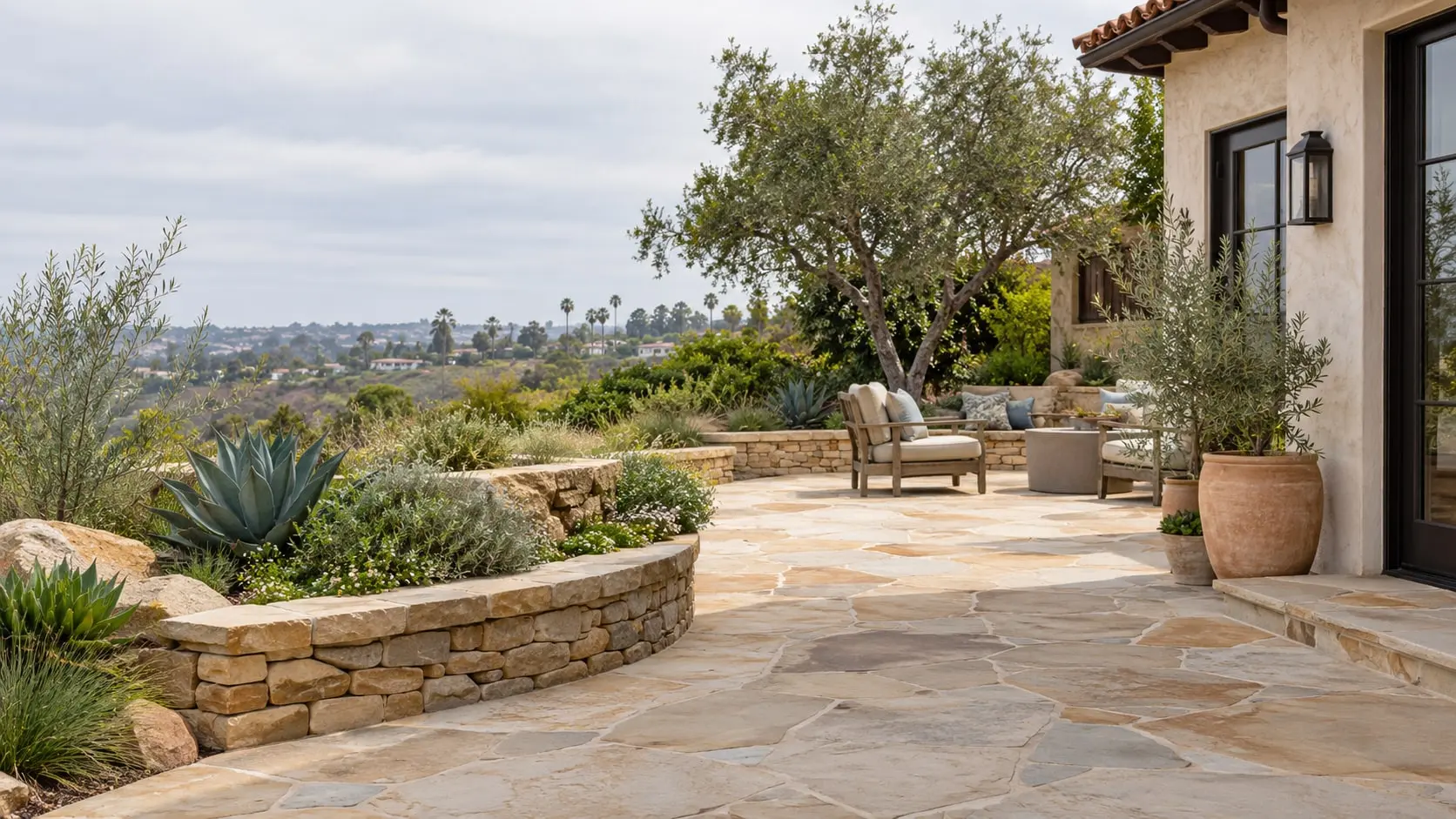
Dark porcelain absorbs heat like any dark surface; lighter tones stay more comfortable underfoot.
Low absorption means moss and algae have little to grip, but a textured finish is still wise where it stays wet.
Dense porcelain does not take up salt the way porous stone can, so rinsing mainly keeps the surface clean.
Clarity before you begin
Exterior porcelain is made with a textured or matte surface for grip. Compare slip ratings if the product lists them, and test a wet sample under bare feet before choosing for pool-adjacent areas.
Rigid tiles need flat support, precise leveling and special cutting. Many homeowners find the process more demanding than laying concrete pavers, so ask an installer before ordering material.
Dense porcelain generally does not, but grout lines or joint materials can. Follow the manufacturer's guidance for cleaning and any joint sealer.
Corners can chip if struck or dropped, and unsupported tiles can crack under load. A flat, complete support under each tile is the main safeguard.
Porcelain is more uniform and cooler in tone than natural stone, which many people like for modern spaces. Natural stone offers more variation and character.