
About / Our approach
About Us
How planning, materials and site conditions fit together before anything is built.
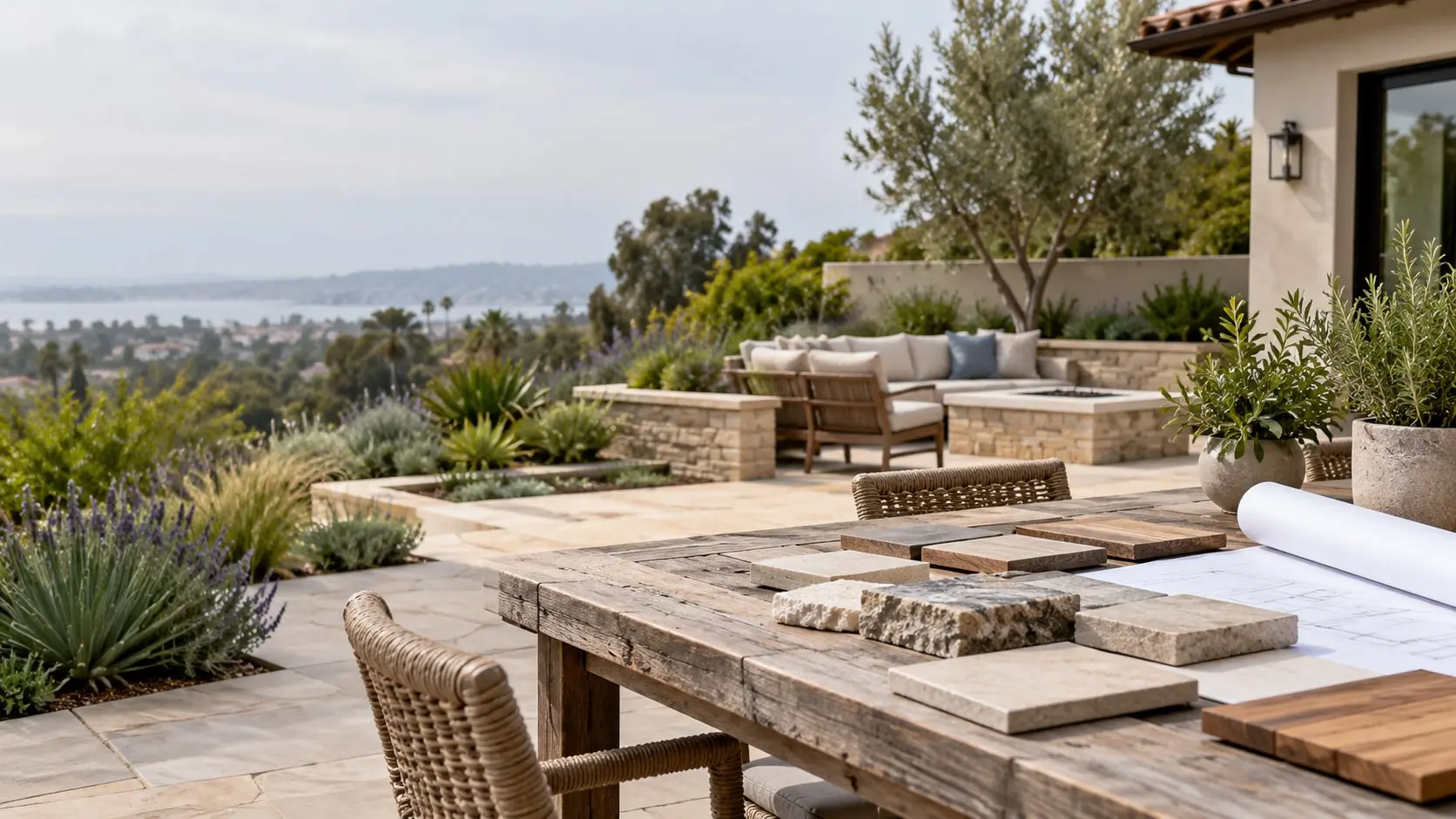
Hardscaping Company San Diego
As a trusted San Diego hardscaping company, we help homeowners transform ordinary yards into beautiful, functional outdoor spaces.
Our team designs and builds paver patios, driveways, walkways, retaining walls, fire pits, outdoor kitchens, and pool decks using durable materials and proven installation methods. Every project begins with careful planning, accurate measurements, and a properly compacted base, because strong foundations prevent sinking, shifting, and costly repairs later. We understand San Diego’s soils, slopes, and climate, so we design hardscapes that handle sun, rain, and daily use while keeping their appearance for years. Whether you want a relaxing backyard retreat, an inviting front entry, or a stronger, more attractive driveway, our crew delivers clean lines, quality craftsmanship, and honest communication from start to finish. Contact our San Diego hardscaping company today to schedule your free consultation and start planning your next project.
Bring this to the conversation
- How you use the yard today
- What you would change first
- Styles or materials you like
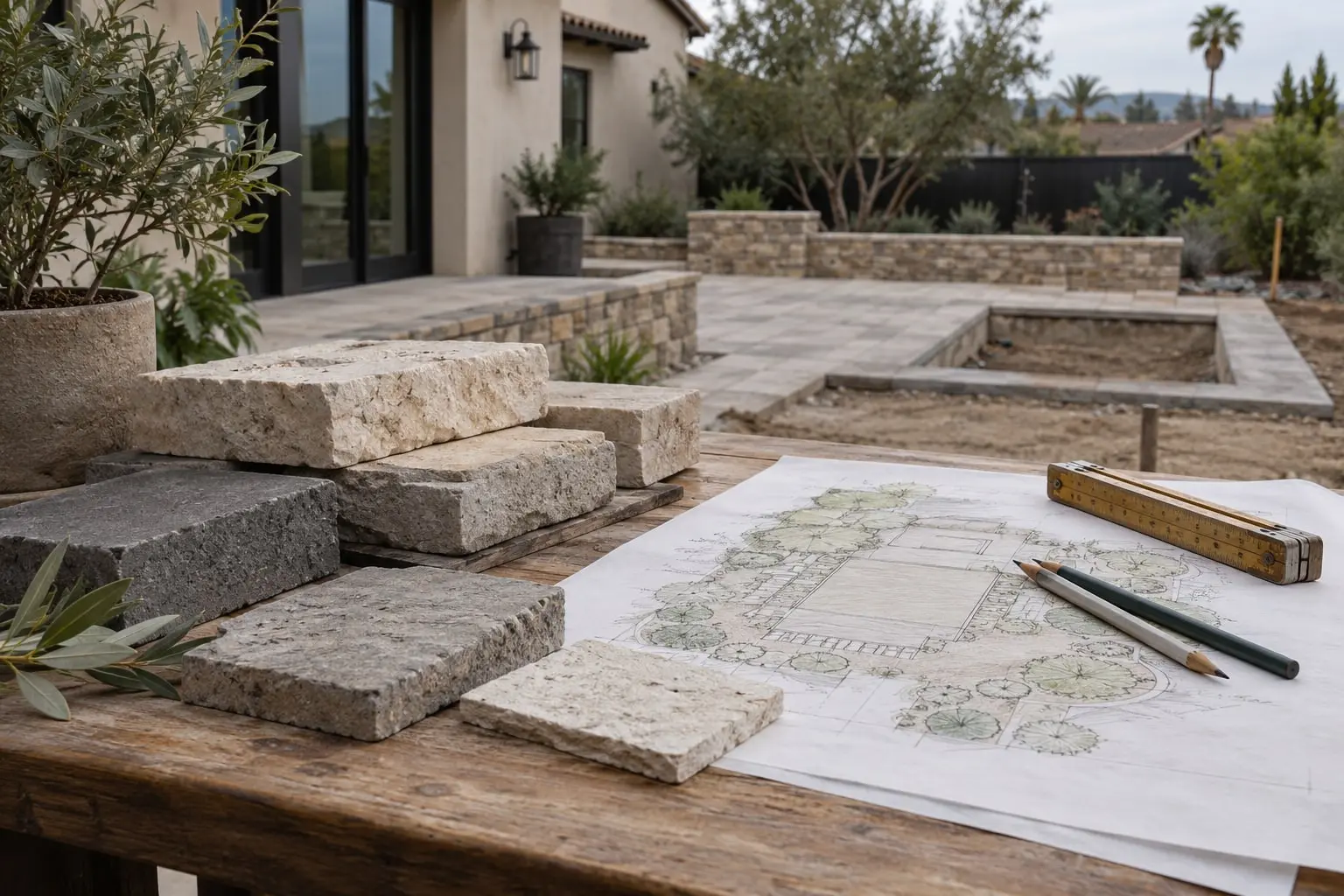
San Diego, California
Our business and approach
San Diego Hardscaping works on the part of a property that sits between the house and the landscape: patios, paths, walls, steps, driveways, fire features and the structures that tie them together.
The approach is to ask what the space has to do before anyone talks about stone. A dining terrace, a safer entry and a stable slope each lead to different answers, even when they share a material.
- Based in
- San Diego, California
- Phone
- (619) 949-1833
- Hours
- Mon–Sat, 9am–5pm
How choices get made
Craftsmanship and material selection
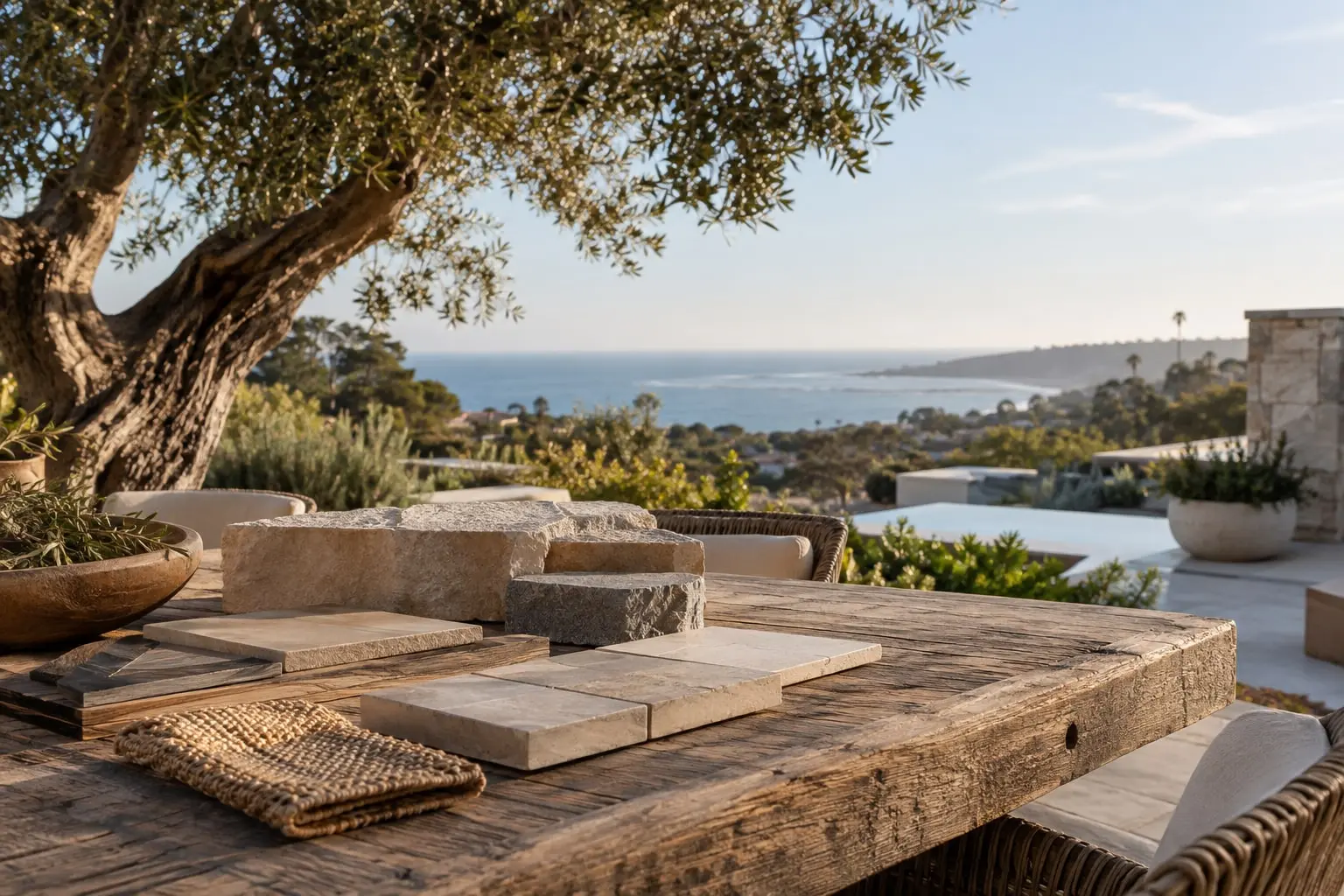
A finish is only as good as what sits beneath it. These are the questions that separate a good surface from a lasting one.
| Decision | What to compare | Why it matters |
|---|---|---|
| Surface material | Travertine, concrete pavers, porcelain, flagstone | Each handles heat, salt air, slip resistance and repair differently. |
| Base and drainage | Depth, compaction, slope away from structures | Most failures begin below the surface and show up as settling or standing water. |
| Edges and transitions | Restraint, steps, thresholds, curbs | Edges hold the field in place and control how people move between levels. |
| Sealers and joints | Penetrating vs. film-forming, polymeric vs. open joints | They set color, stain resistance and how much weeding and re-sanding follows. |
| Utilities and lighting | Gas, electrical, water, low-voltage routes | Running them before paving is far simpler than cutting in afterward. |
Full-size samples, seen outdoors in your own light, settle more questions than a catalog.
A typical sequence
How we work with homeowners
Every property is different, but the conversation follows an order that keeps surprises small.
-
Step 1: Share the brief
Describe the space, what is not working, and what you would like to keep. Photos and rough dimensions are plenty.
-
Step 2: Walk the site
Look at grades, drainage, access, utilities, trees and association rules together.
-
Step 3: Review options
Compare layouts and materials against how you use the space and how much care you want to give it.
-
Step 4: Agree the scope
Put inclusions, exclusions, responsibilities and selections in writing before work begins.
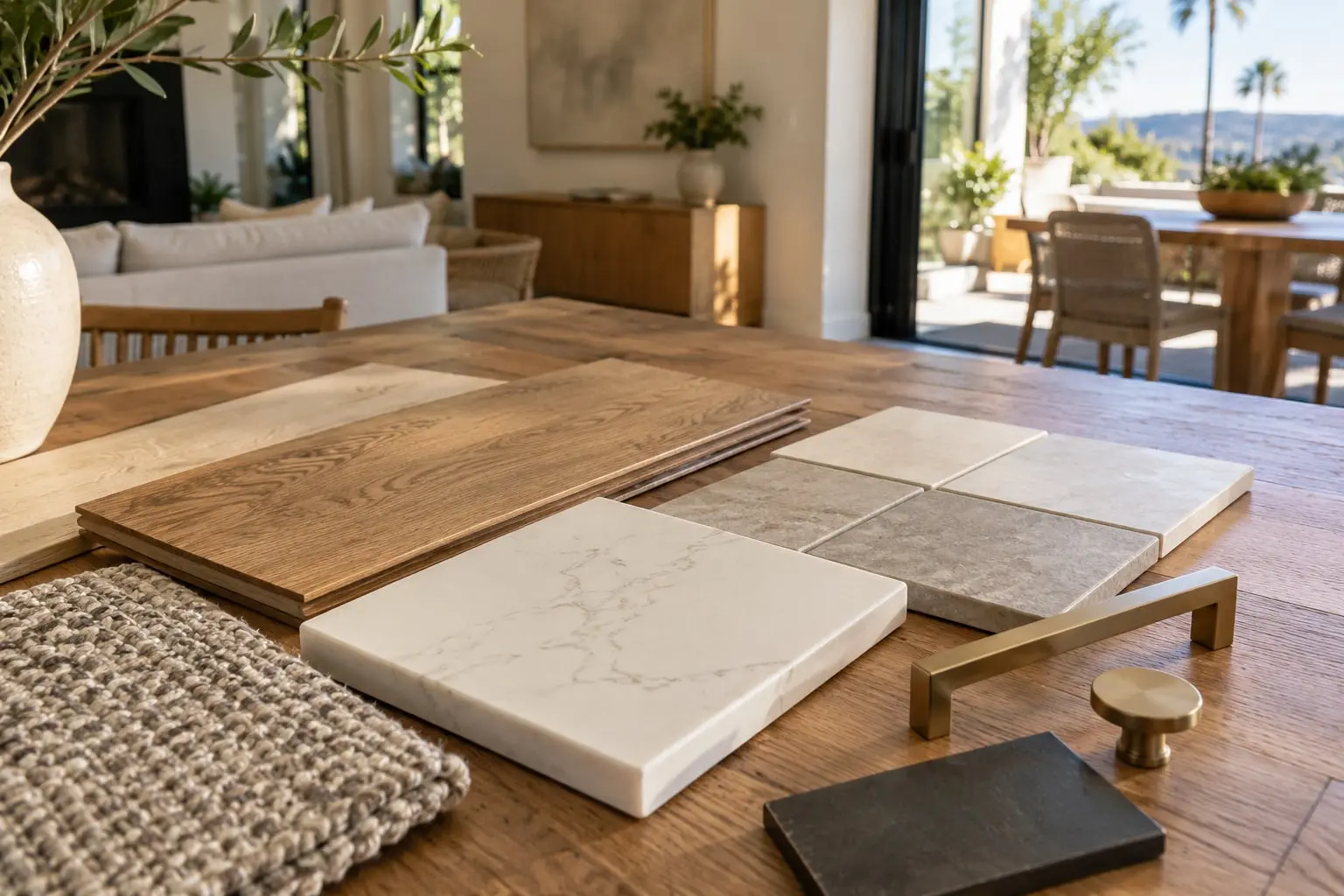

Coast to inland
Serving San Diego
From a marine-air courtyard to a hot inland yard or a sloping canyon lot, the setting changes the material, the drainage plan and the approvals. The area guides describe those differences for fourteen communities.
- Fourteen area guides
- Coastal, inland and hillside notes
- Confirm your address before scoping
Have a space in mind? Describe it and the next step follows.