Flagstone Patios
Irregular flagstone creates a natural, organic surface with beautiful color variation, and we fit each piece carefully with tight joints and a stable base for a distinctive patio.

Service guide / San Diego
Natural stone hardscaping in San Diego: flagstone, travertine, slate and granite compared, sealing, base and joints, climate factors, and planning questions.
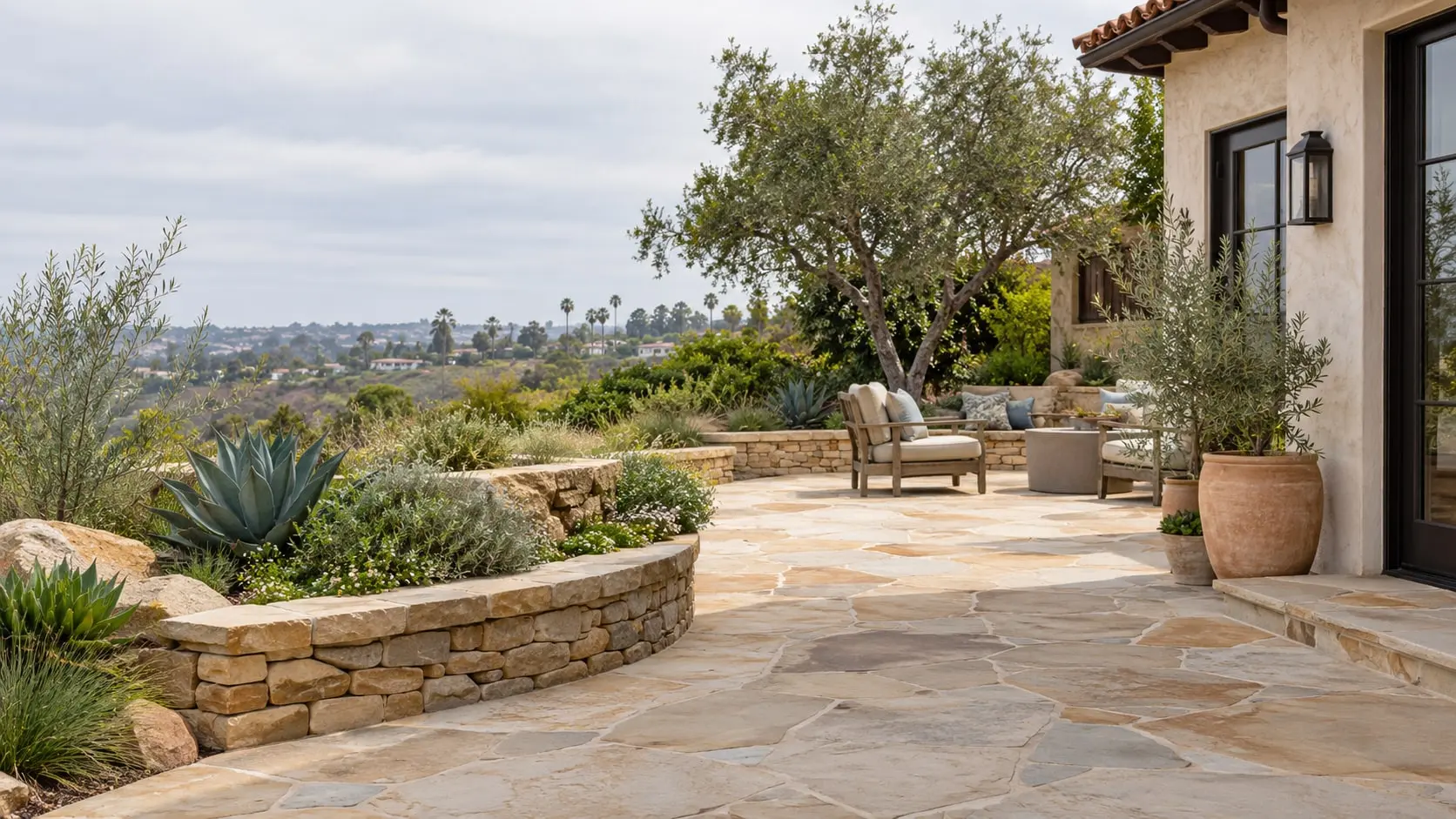
Natural stone hardscaping in San Diego adds enduring character, texture, and elegance to your property.
We build patios, walkways, steps, walls, columns, and outdoor features using flagstone, limestone, granite, and other quality stone that blends beautifully with the landscape. No two stones are exactly alike, which means every project has a unique, custom appearance that synthetic materials struggle to match. Our skilled craftsmen carefully select, cut, and set each piece on a solid foundation, ensuring strength, stability, and clean lines. Natural stone is durable, weather-resistant, and gains character with age, making it an excellent long-term investment. We’ll help you choose stone types and colors that complement your home and surroundings. We also provide expert repairs, sealing, and restoration for existing stone patios, walls, and walkways. Contact us today to schedule a consultation and discuss natural stone hardscaping in San Diego.
Irregular flagstone creates a natural, organic surface with beautiful color variation, and we fit each piece carefully with tight joints and a stable base for a distinctive patio.
Built from quality stone with solid footings, our walls and columns add structure and timeless appeal, supporting gates, fences, and features while enhancing your property’s character.
Natural stone steps and paths blend naturally with gardens and slopes, offering durable, slip-resistant surfaces that make it easier to move around your yard in comfort.
Add stone veneer to planters, fire features, outdoor kitchens, and seating walls, giving them rich texture and a high-end finish without the weight and cost of masonry.
We help you compare flagstone, limestone, granite, and other options for color, durability, and budget, making sure the stone you choose suits your property and withstands local weather.
Cutting, fitting, and setting natural stone requires skill, and our crew pays close attention to alignment, spacing, and structure so every installation looks polished and lasts for decades.
Stone shows up in more places than patios.
Irregular flagstone or cut rectangles make a patio with natural texture and few repeating patterns.
Thick slabs on a solid base make durable steps, especially with a textured finish for grip.
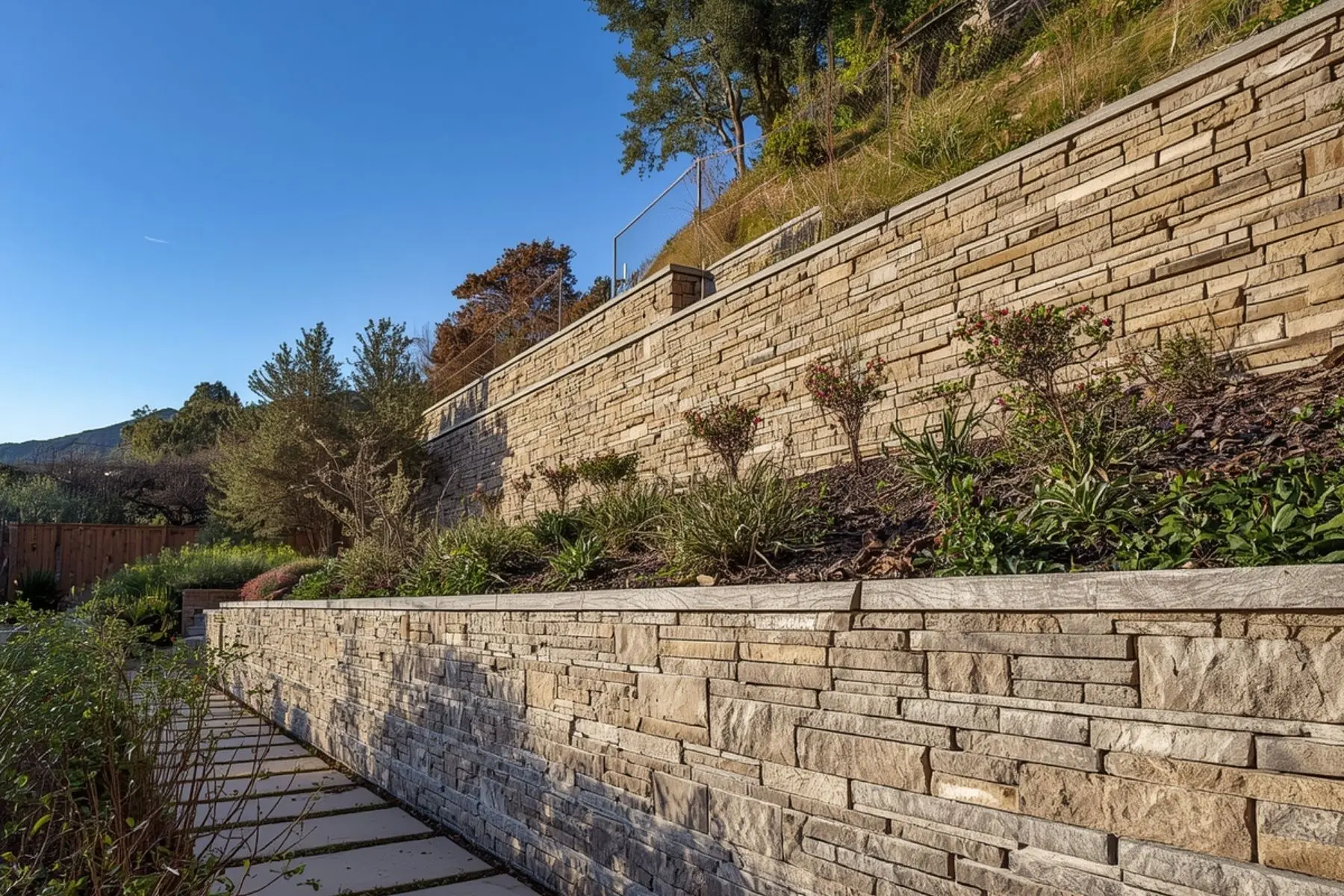
Dry-stacked or mortared stone faces seat walls, planters and the exposed face of retaining walls.
Honed or tumbled travertine and similar stones stay cooler and have a softer look than many surfaces.
Stacked stone surrounds hold up to heat, and noncombustible surfaces make sense near brush.
Large stones anchor slopes, mark entries and soften the transition to planting.
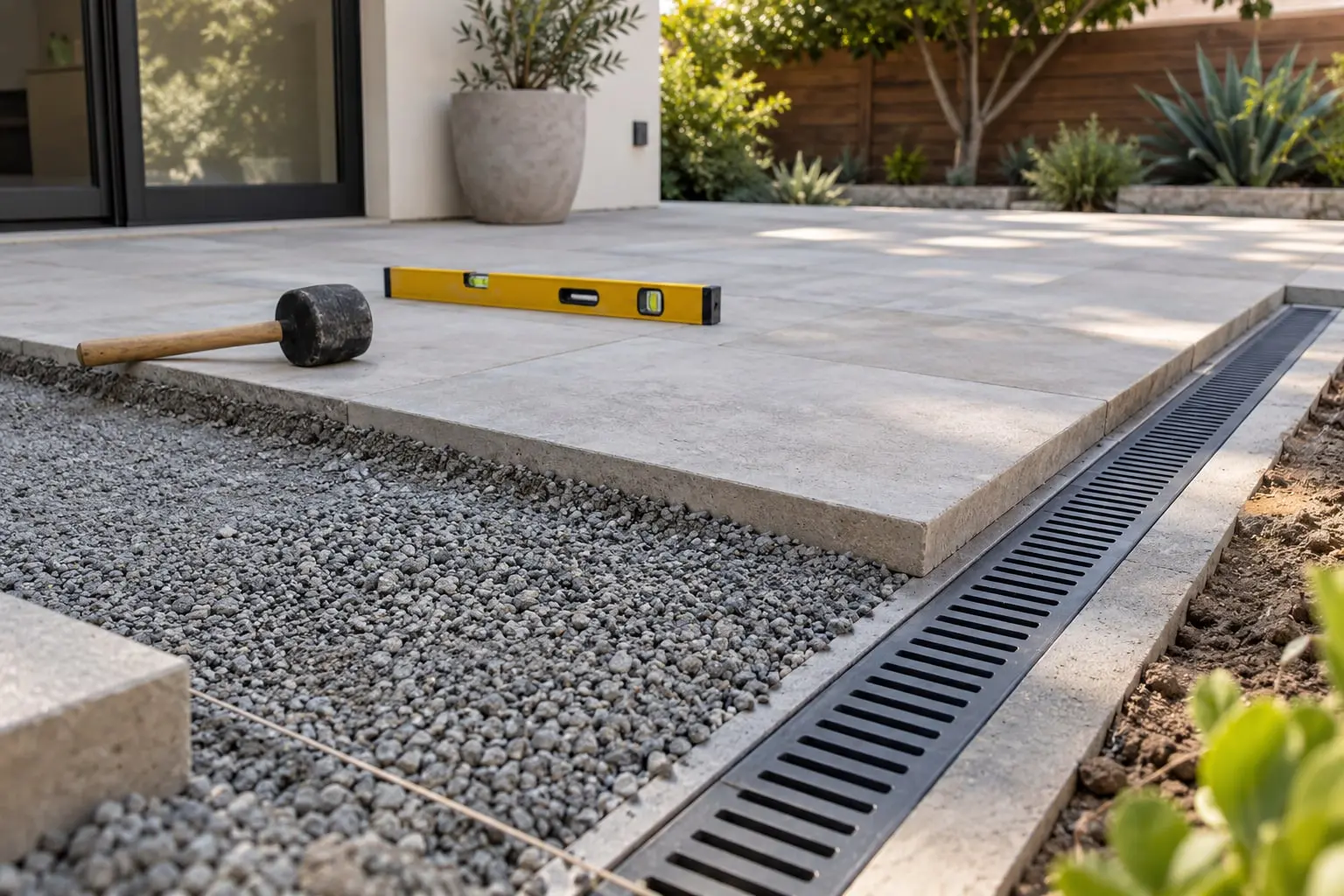
Travertine is warm in tone and softer in feel, often chosen for pool decks and terraces. Flagstone, which includes sandstone and quartzite varieties, gives a rugged, earthy look. Slate and granite tend to be denser and darker.
Seeing stone wet and dry in your own light is worth the trip to a yard, because color and sheen can change a great deal.
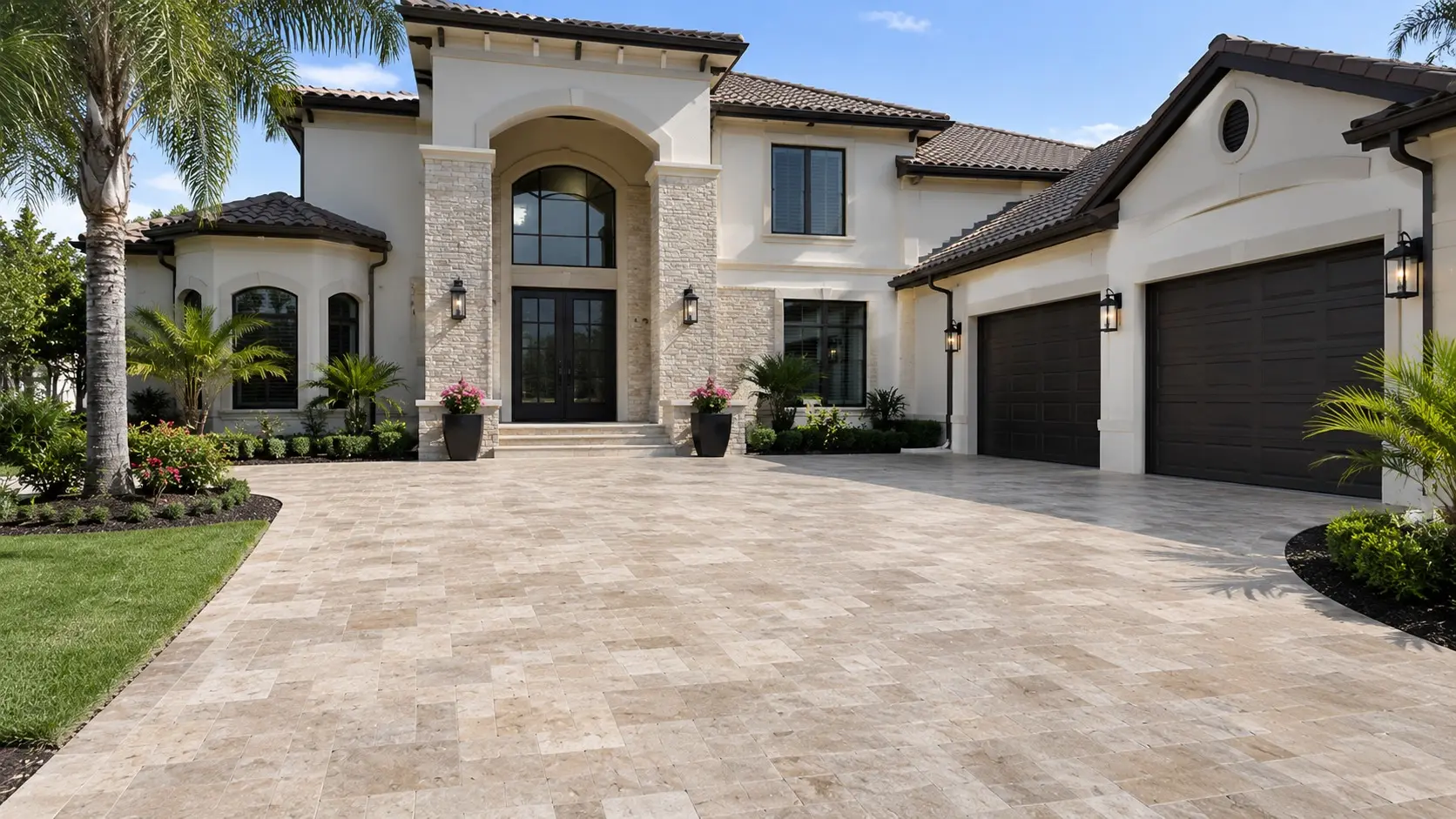
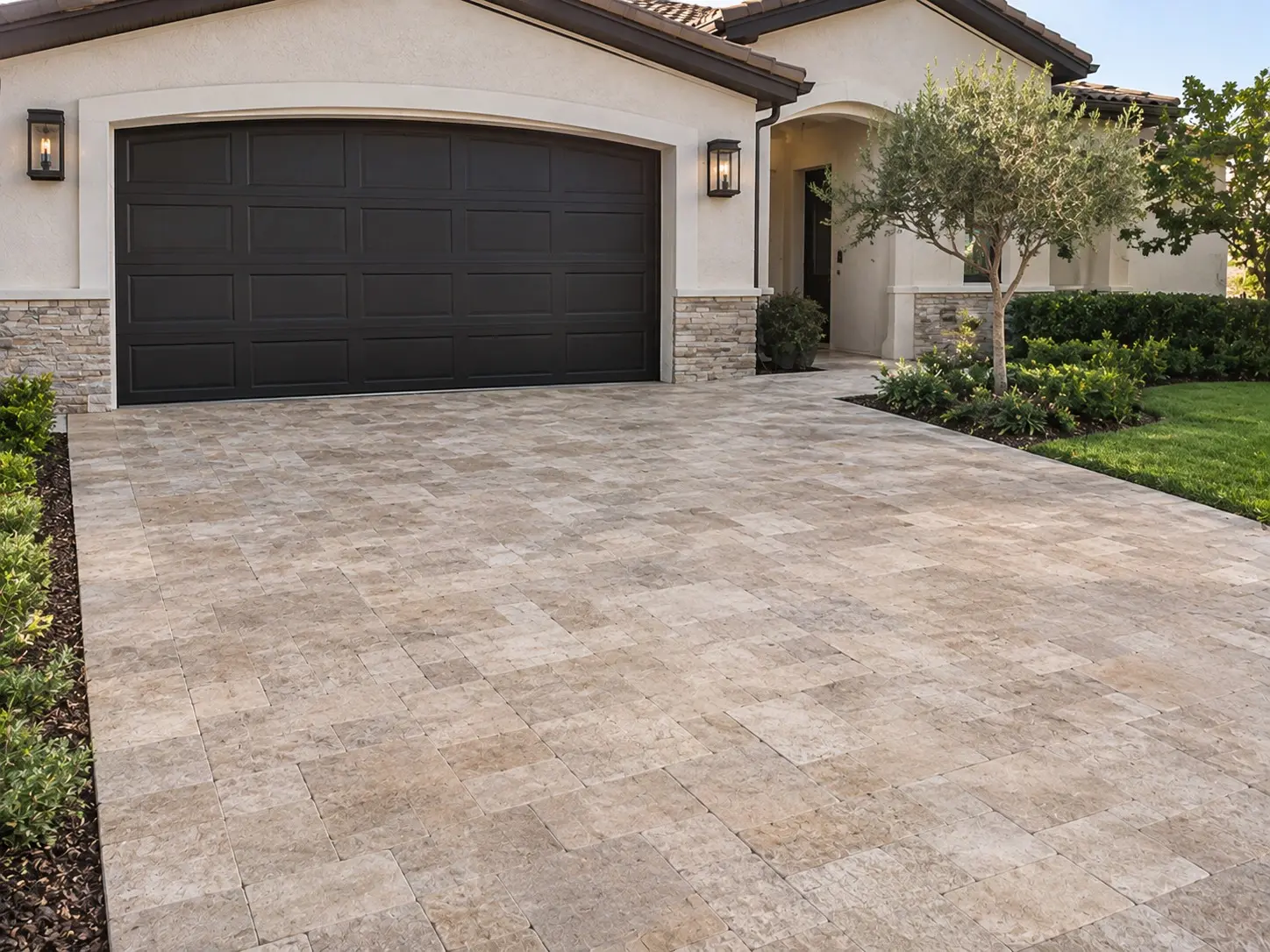
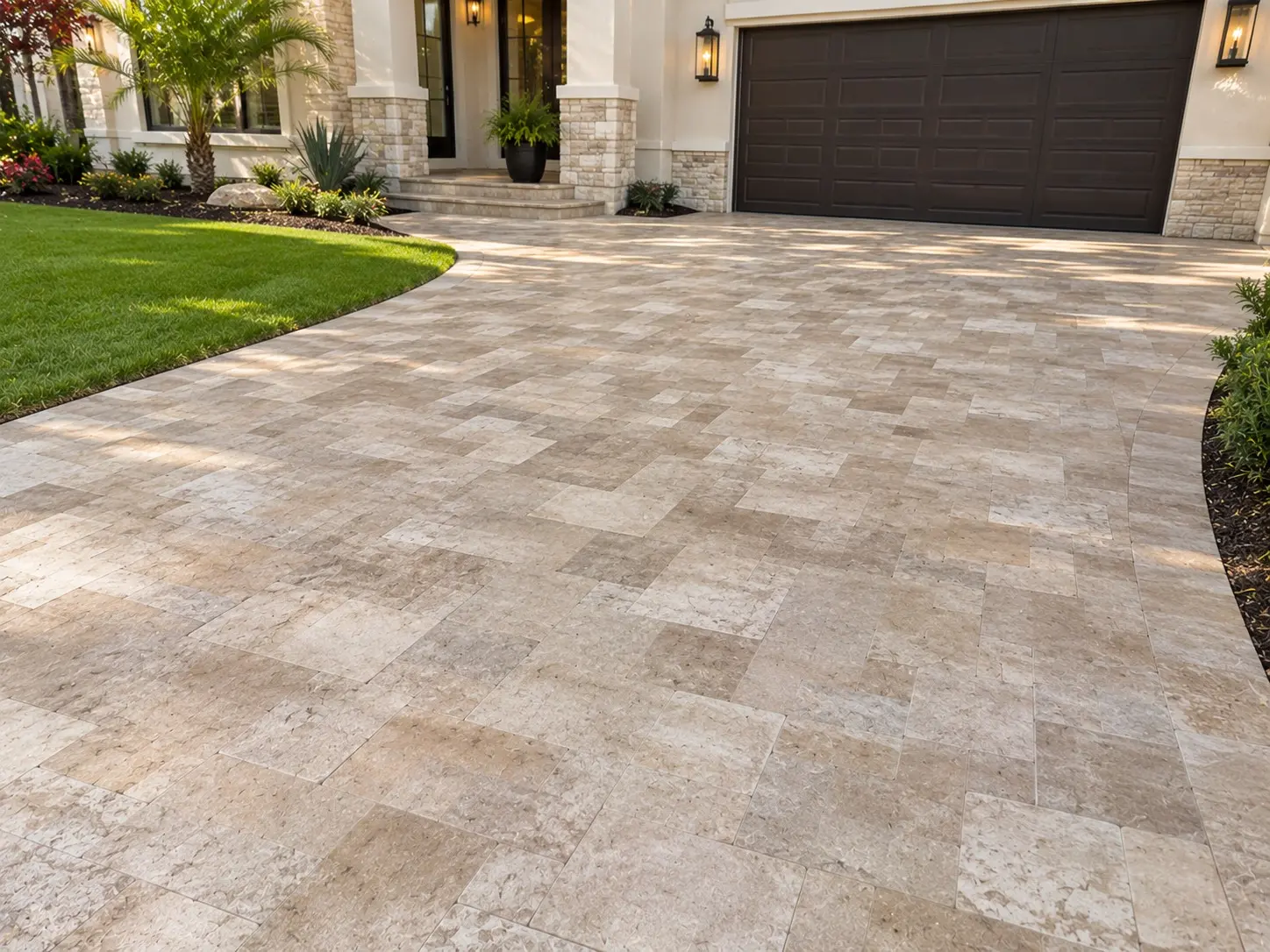
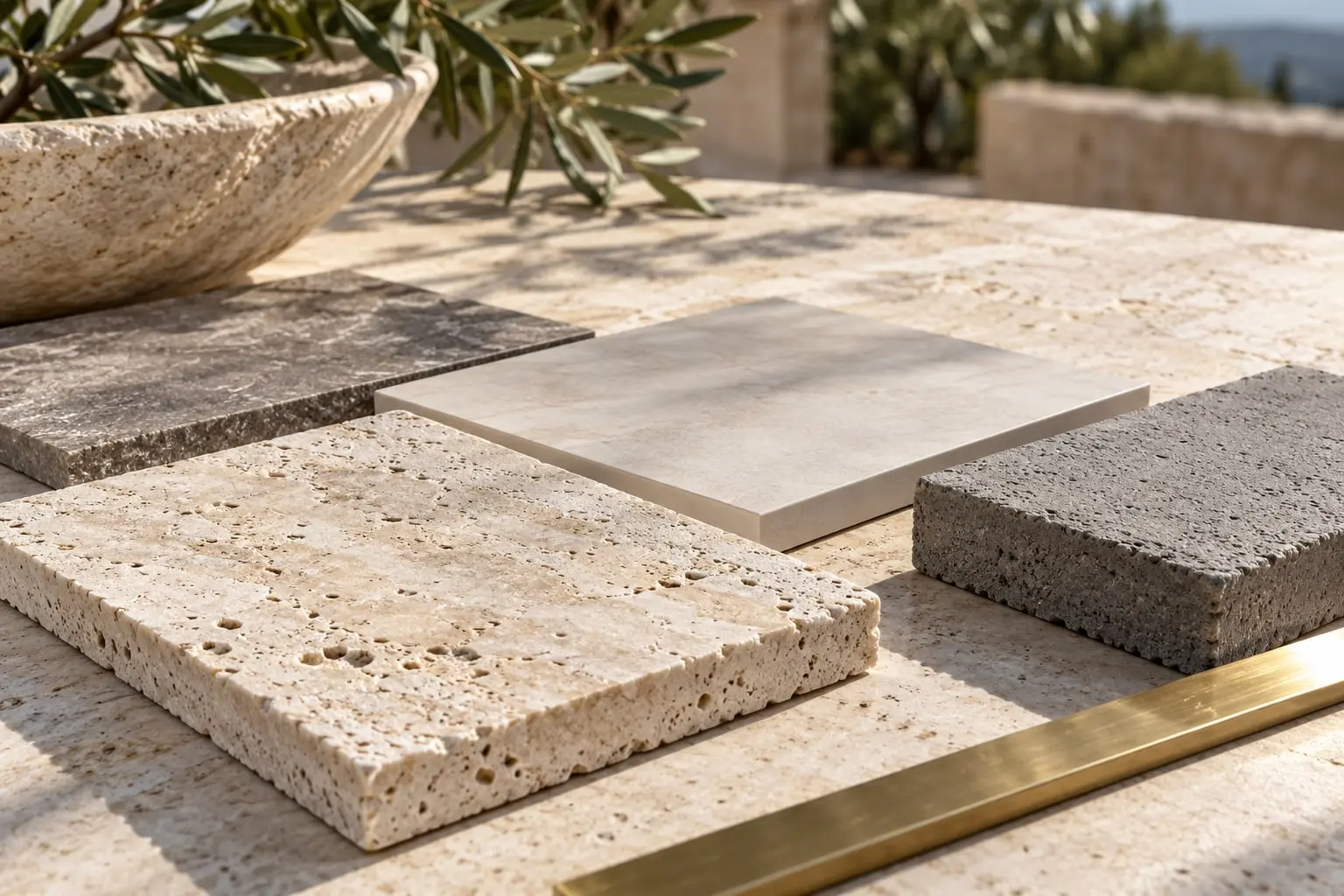
Porous stone drinks stains and salt, while dense stone resists them; ask how the specific stone behaves with water and oil.
Dark or dense stone can be hot underfoot on a west-facing patio; lighter colors stay more comfortable.
Polished or glossy stone is risky near pools and sprinklers; choose textured, honed or flamed finishes.
Thin or uneven stone is better set on a solid slab with mortar, while thick stone can sit on a compacted base.
Pallets vary. Mixing from several pallets and previewing the layout on the ground gives a more even look.
If you may add to the patio later, confirm the stone is still available, since quarries change and shades vary.
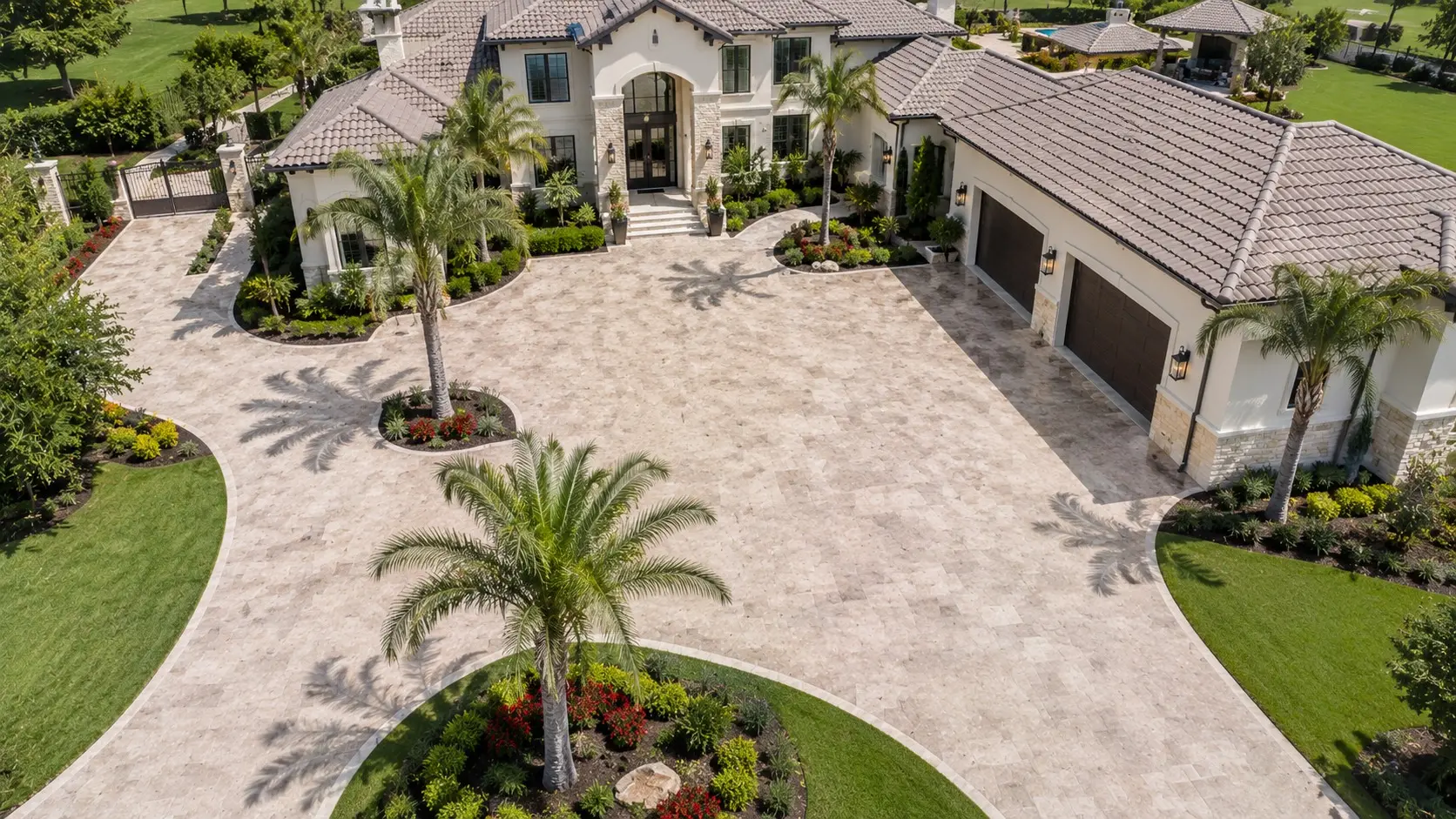
Stone should be chosen for the site as much as the style. Near the coast, salt moves through porous stone and can cause surface flaking or white crystals called efflorescence; denser stone and a suitable sealer limit it. Inland, heat and wide temperature swings favor stone that stays stable and light-colored.
Design details matter too: joint width, edge cuts, how the stone meets planting beds and where stone transitions to other surfaces. A consistent joint treatment makes irregular stone look intentional.
Salt air and moisture make dense stone and careful sealing the priority.
Strong sun heats surfaces, so color choice and shade matter for bare feet and pets.
Stone steps and walls help on slopes, but drainage and the stability of the base come first.
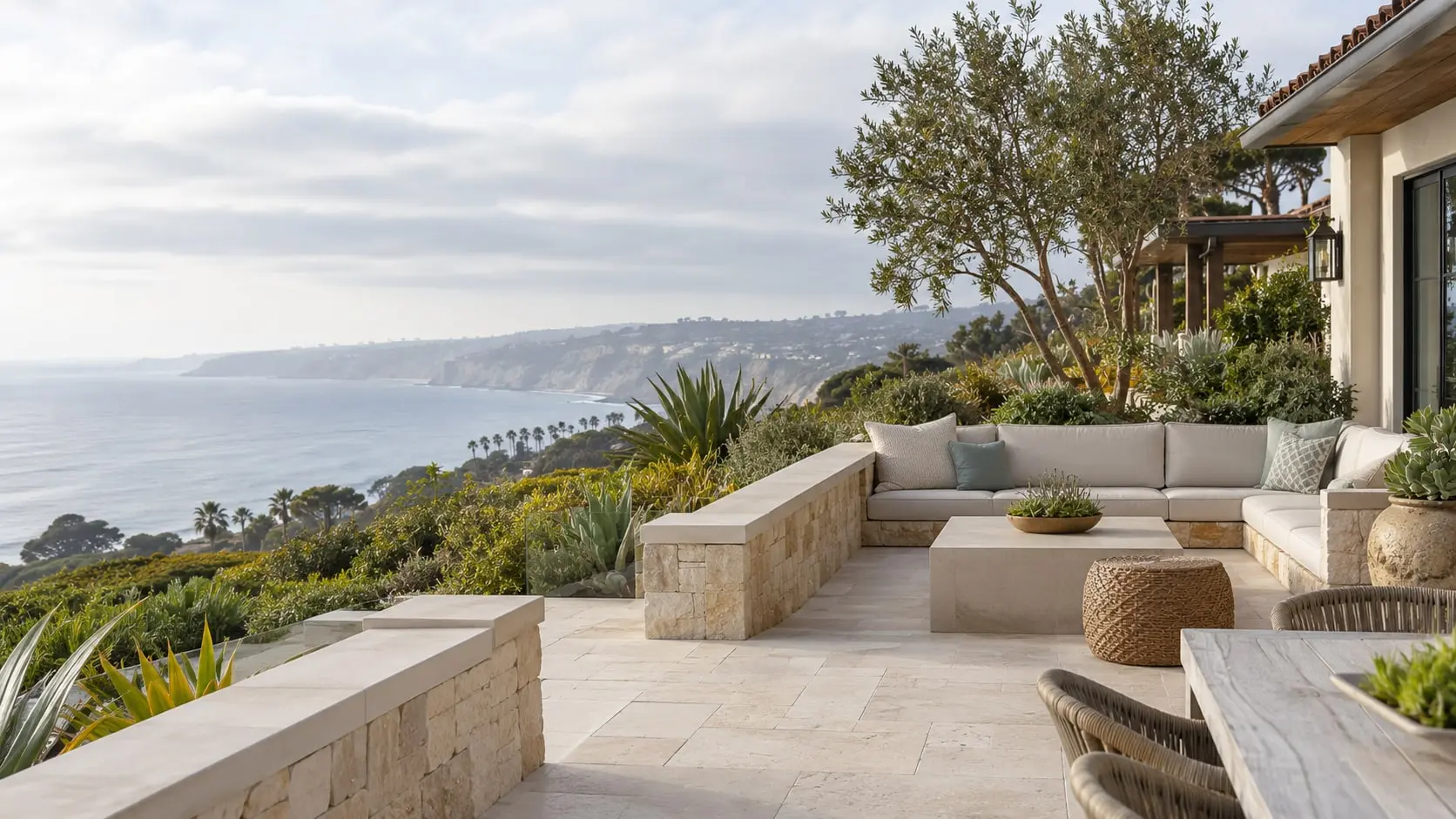
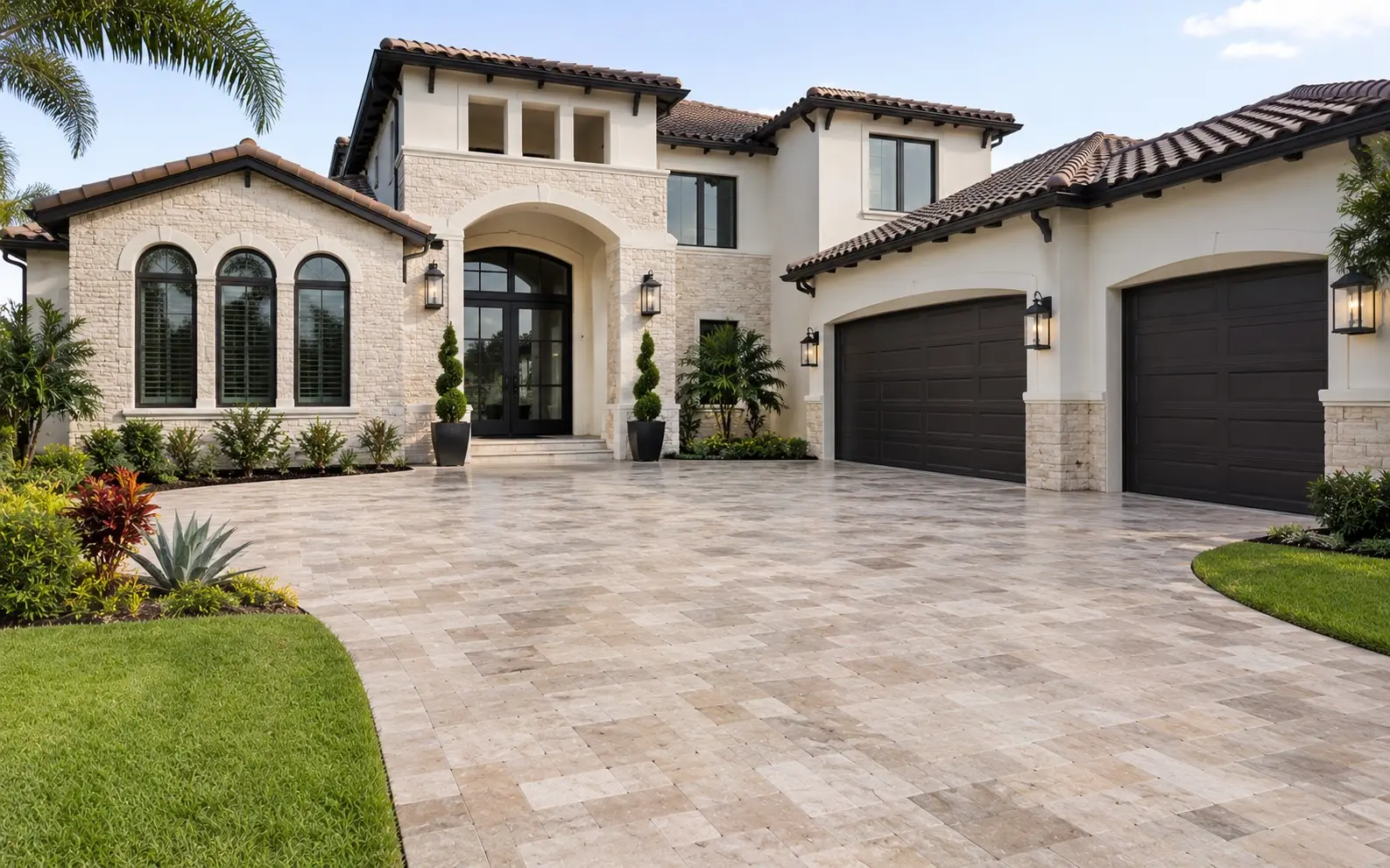
Stone can be set two ways. A dry-laid system rests on a compacted aggregate base with sand or stone dust between units; a mortared system bonds stone to a concrete slab. Mortared is rigid and tidy but can crack with the slab, while dry-laid flexes and can be repaired in sections.
Before any work, call 811 for utility marking, check HOA rules, and decide how the stone will meet existing concrete and doors. Many people lay the stone out dry on the ground first to judge color and pattern.
Often, especially porous types, but sealer choice depends on the stone and finish. Test on a spare piece because some sealers darken or add a sheen.
Usually movement beneath it: a settling base, a slab with no control joints, or poor drainage. The stone itself is rarely the cause.
Pieces are fitted by eye and trimmed with a chisel or saw to keep joints a consistent width.
If the slab is sound, drained and has height to spare, stone can be mortared over it. Check door thresholds and drainage first.
Tight joints with polymeric sand or stone dust reduce weeds, and sweeping keeps debris from collecting.
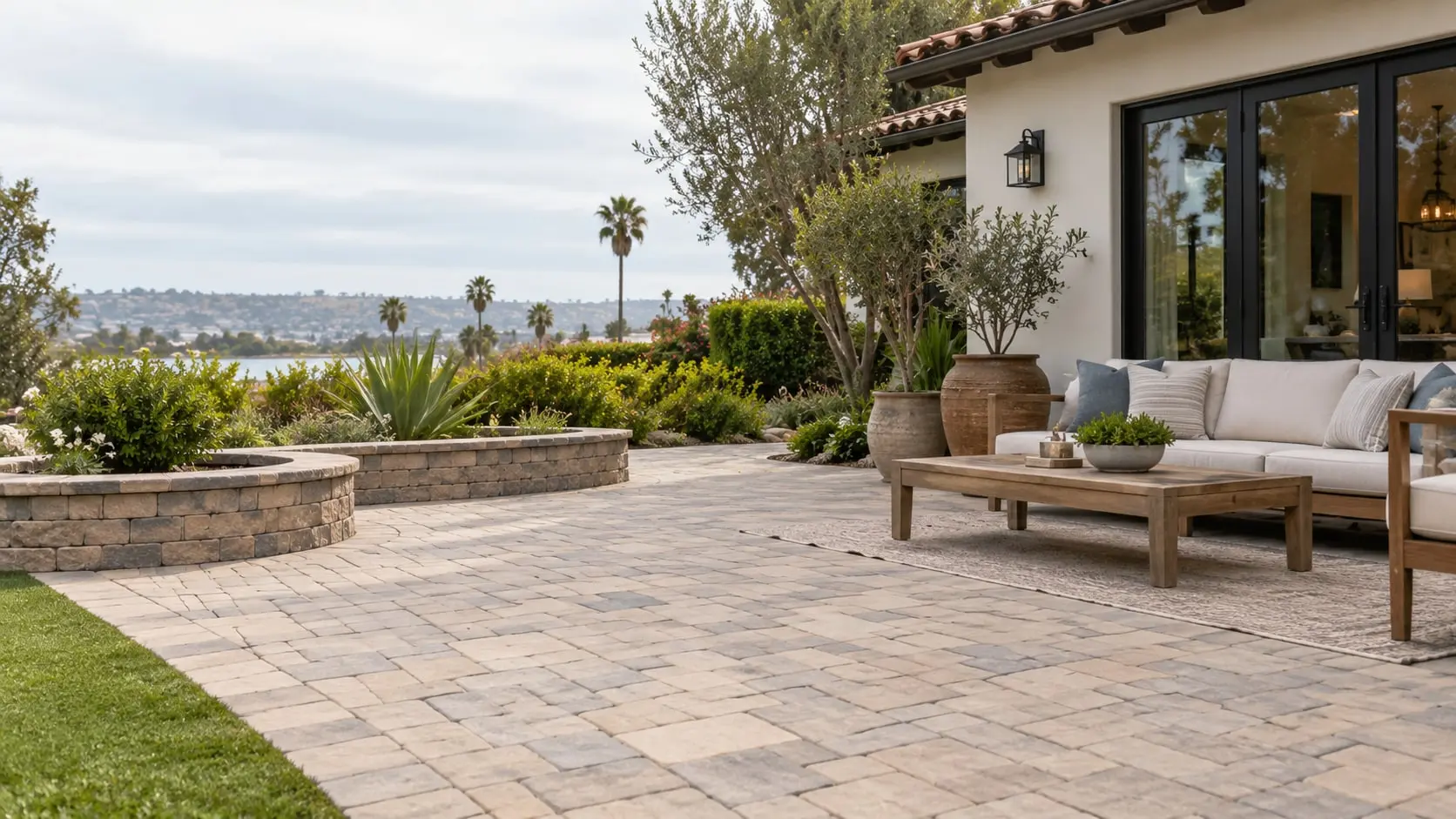
Regular sweeping and a gentle rinse prevent buildup that stains and hosts moss in shaded areas.
Use pH-appropriate cleaners; acidic products can etch travertine and limestone.
Water that stops beading on the surface is a sign it may be time to reseal, per the sealer's instructions.
Mineral-rich irrigation spray leaves stains; redirect heads away from stone.
Top up joints when sand washes out, so stone remains locked and weeds do not take hold.
Clarity before you begin
Not necessarily. Dense stone is low-maintenance, while porous types need more attention to sealing and cleaning. The choice of stone matters more than whether it is stone or concrete.
The stone type and thickness, how much cutting the pattern needs, installation method, site access and base preparation.
Yes, with a slip-resistant, heat-aware finish. Travertine and textured flagstone are common choices, but check how the specific stone handles pool chemicals.
At-grade patios often do not, but raised areas, walls and work in the Coastal Zone may. Check with your city or county, and with your HOA.
Yes. Stone borders with concrete fields or pavers are common, but joints and heights need to be planned where they meet.