Paver Patios
Create a durable living space with interlocking pavers in many colors and patterns, installed on a compacted base for a stable surface that handles furniture and foot traffic.

Service guide / San Diego
How a paver and hardscape installation fits together in San Diego: base layers, edge restraint, drainage, material choices, and the order work happens on site.
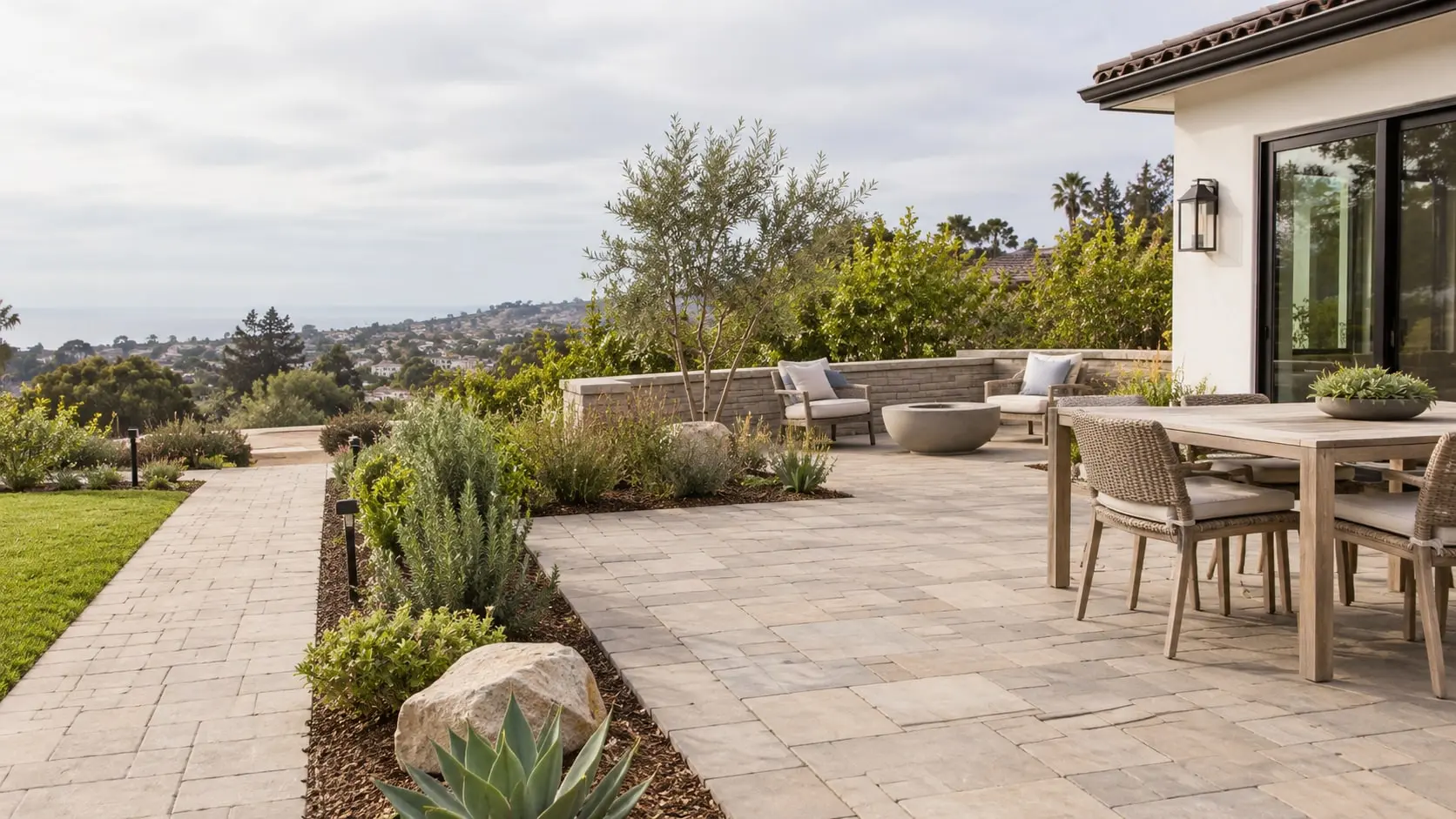
Pavers and hardscape installation in San Diego adds beauty, structure, and lasting value to your outdoor spaces.
We build paver patios, driveways, walkways, pool decks, steps, and borders using durable materials in a wide range of colors, textures, and patterns. Every project begins with proper excavation, base compaction, and drainage planning, because a strong foundation prevents sinking, shifting, and weed growth later on. Our experienced crew installs each paver with precise spacing and clean cuts, then locks everything in place with edge restraints and jointing sand. The result is a surface that handles foot traffic, vehicles, sun, and rain while keeping its appearance for decades. We’ll help you choose materials that match your home and landscape. Our work is backed by local experience and honest pricing. Contact us today to get a free estimate for hardscape installation in San Diego.
Create a durable living space with interlocking pavers in many colors and patterns, installed on a compacted base for a stable surface that handles furniture and foot traffic.
Upgrade your entrance with strong pavers that resist cracking, handle vehicle weight, and enhance curb appeal, with proper drainage and a compacted base that keeps it looking great.
We install paver walkways, garden borders, and edging that guide guests through your property, define landscape areas, and add polished detail to your front and back yards.
Slip-resistant, comfortable pavers make safe and stylish pool surrounds, and we choose materials that resist moisture, sun exposure, and chemicals while keeping the deck cool and visually attractive.
Low walls, steps, and seating add structure and function to your hardscape, and we build them from matching materials for a cohesive look throughout the yard.
We excavate, compact, and grade every project correctly, using quality base materials and edge restraints to prevent sinking, shifting, and water problems that shorten hardscape life.
One system, many uses
The same layered method adapts to very different jobs around a house.
Flat, furniture-friendly surfaces off the back door, sized to the table and seating rather than to a standard slab.
Thicker units over a deeper base to carry vehicle weight and turning forces.
Risers and treads that match the surrounding paving so a grade change feels like part of the design.
Low walls and edging that contain the paving, hold planting beds and double as extra seating.
Narrow routes between house and garden that need firm footing and clear drainage.
Lifting, re-bedding and widening existing paving when the base, not the units, has failed.
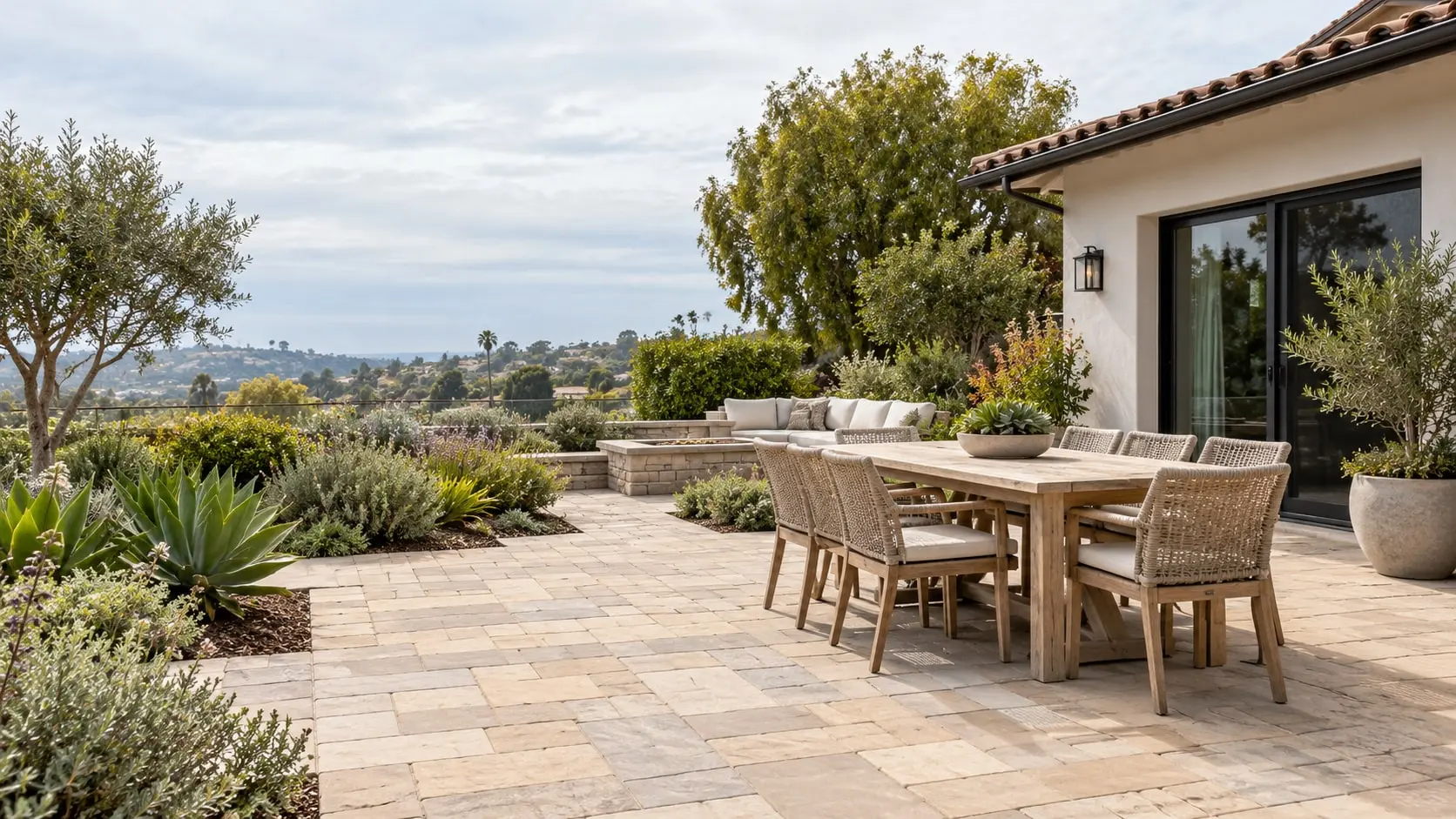
Work through these before choosing a paver and laying pattern.
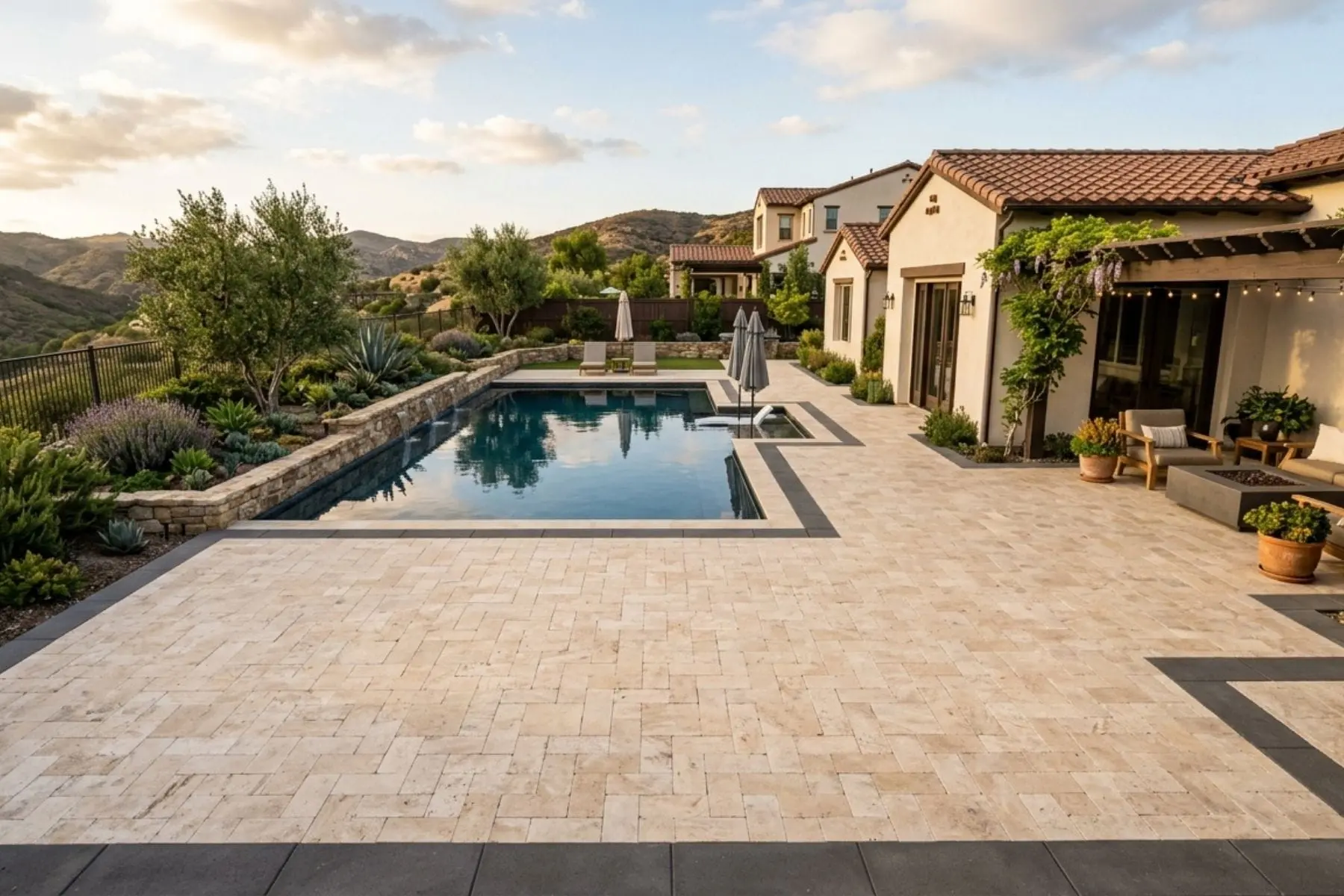
Pedestrian areas and vehicle areas call for different thicknesses; confirm the product is rated for the load it will carry.
Herringbone interlocks most firmly under traffic, while running bond and stack patterns suit quiet, low-load spaces.
Pavers from different pallets vary slightly, so installers normally pull from several pallets while laying.
Decide early whether the edge meets lawn, planting, a wall or a drain, since each needs a different restraint detail.
Narrow joints look tidy and lock tightly; wider joints suit tumbled and natural-stone units but need the right fill.
Sleeves under paving for irrigation, lighting or gas lines are far cheaper to place now than to cut in later.
A good installation responds to the ground and air it actually has.
Moist, salty air near the coast favors dense units and periodic rinsing to limit staining and efflorescence.
Clay swells when wet and shrinks when dry, so the base needs more depth and water must be steered away from it.
Sun-baked yards raise surface temperatures, so lighter tones and shade structures change how comfortable the paving is.
A paver system sits between poured concrete and cut flagstone: more flexible than a slab, more uniform than irregular stone. Looking at these three surfaces together makes the trade-offs easier to see.
Ask to see full-size pieces outdoors, once dry and once wet, because color and sheen shift noticeably between the two.
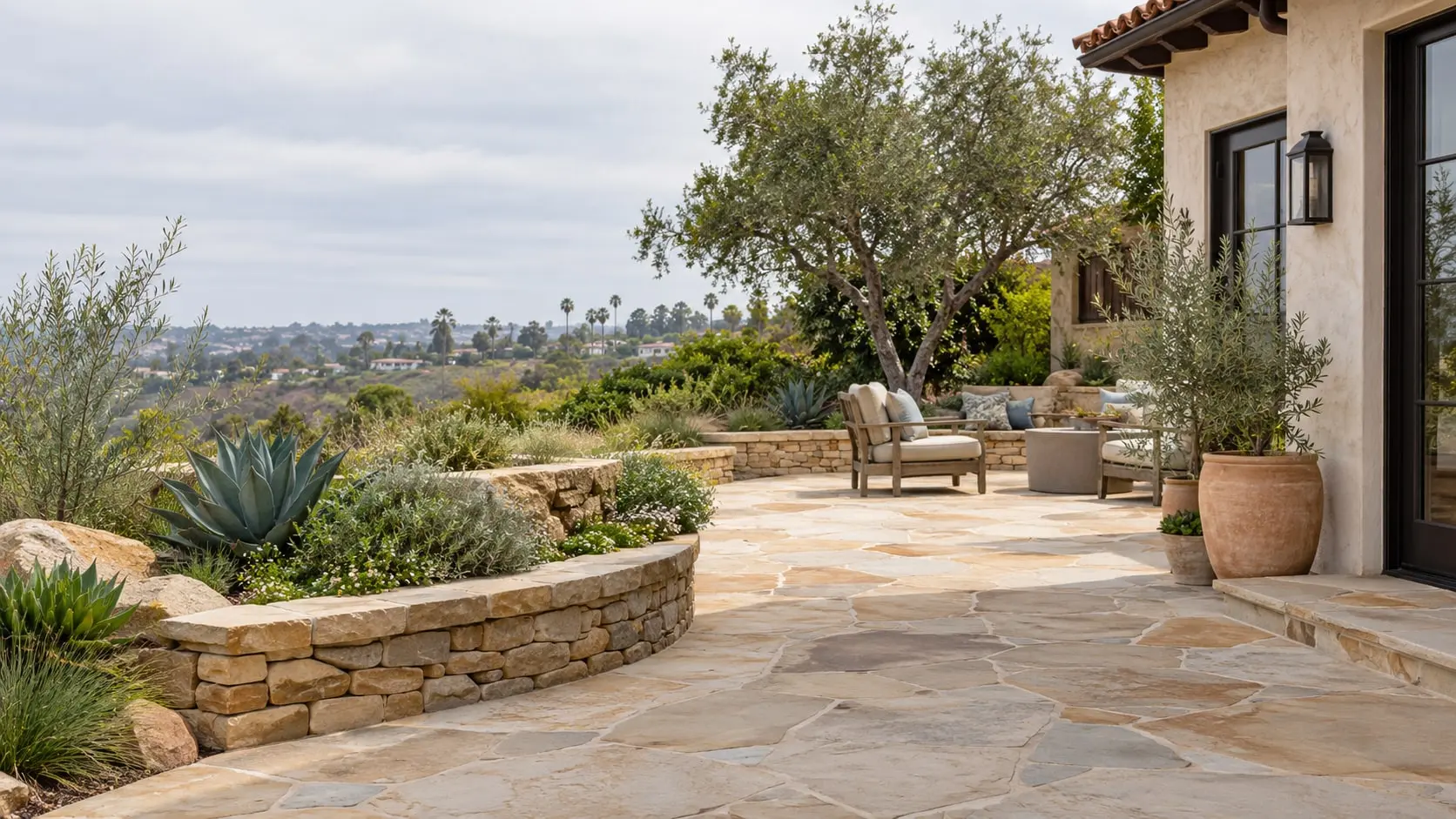
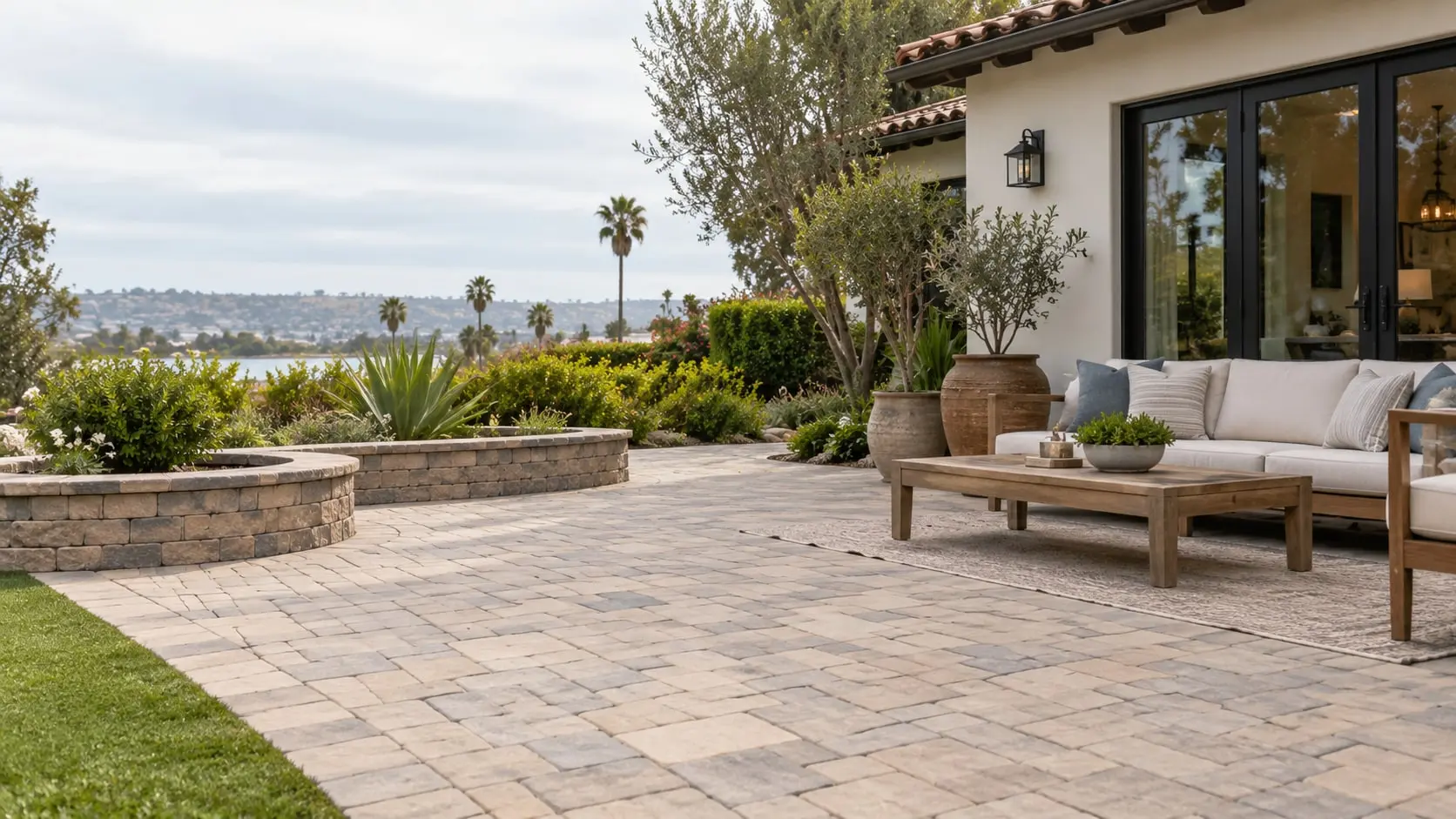
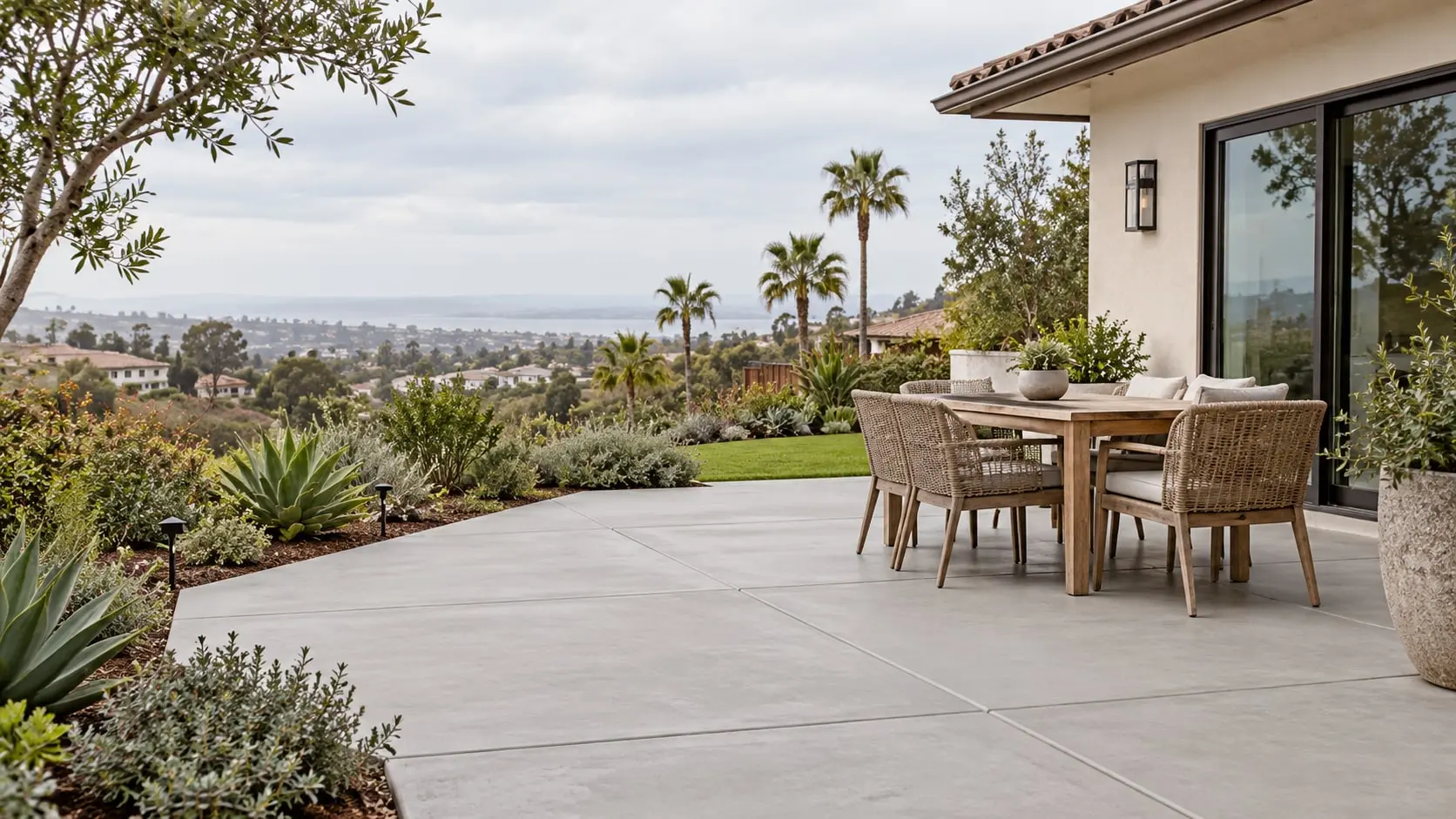
Planning begins with measurements, photos and a walk of the site to mark doors, drains, utilities and any trees whose roots will matter. Call 811 (DigAlert in California) before excavation so buried lines are marked, and ask your HOA whether a hardscape change needs architectural review.
On site, the order is excavation, grade setting, base installation in compacted lifts, bedding, paver placement, edge restraint, cutting, joint filling and a final compaction pass. Drainage work and any wall footings happen before the first paver goes down.
Paver patios Sizing a terrace around furniture and fire features is a different exercise from the system overview here. 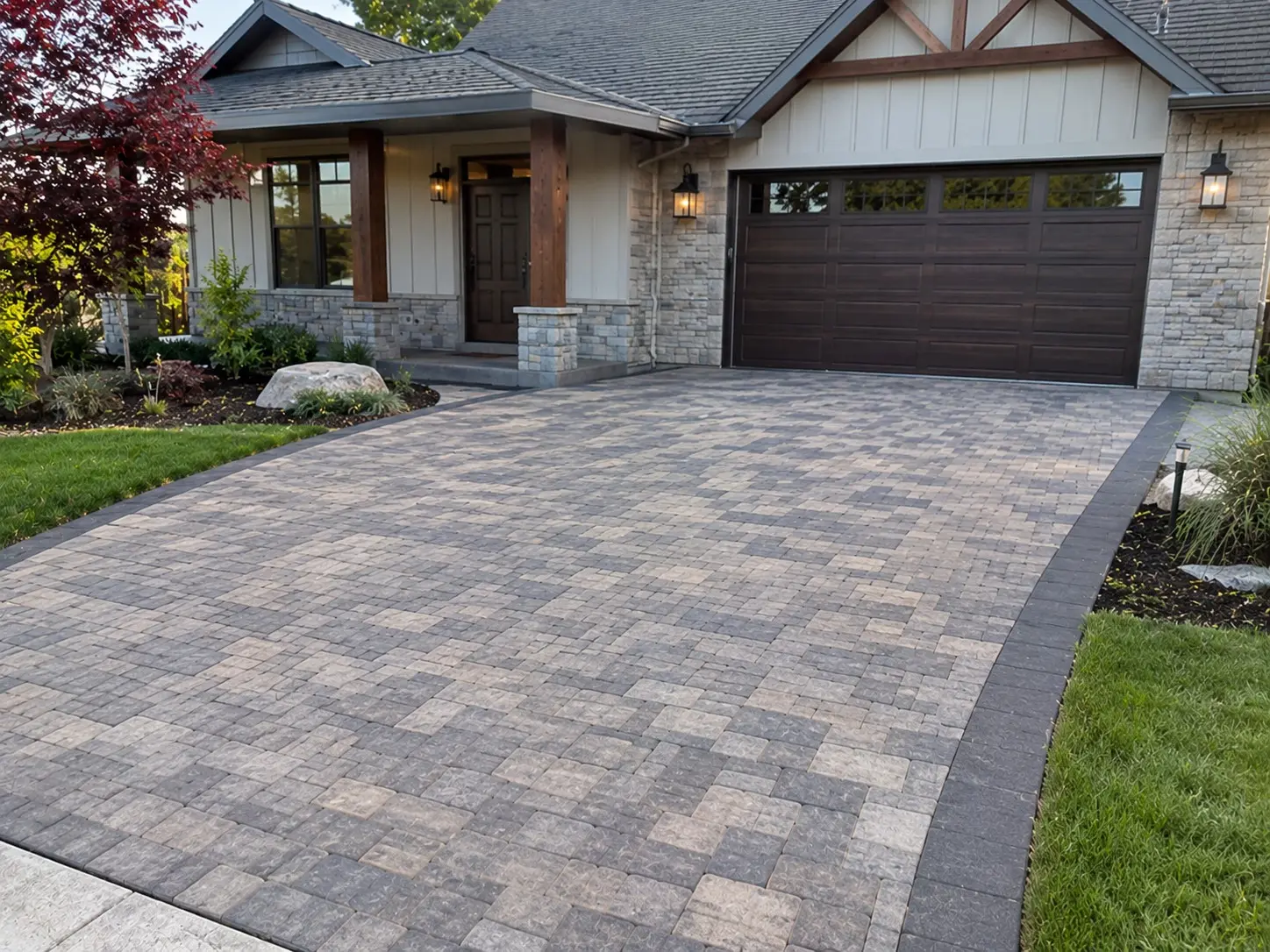 Paver driveways Vehicle loads change thickness, base depth and how water leaves the surface.
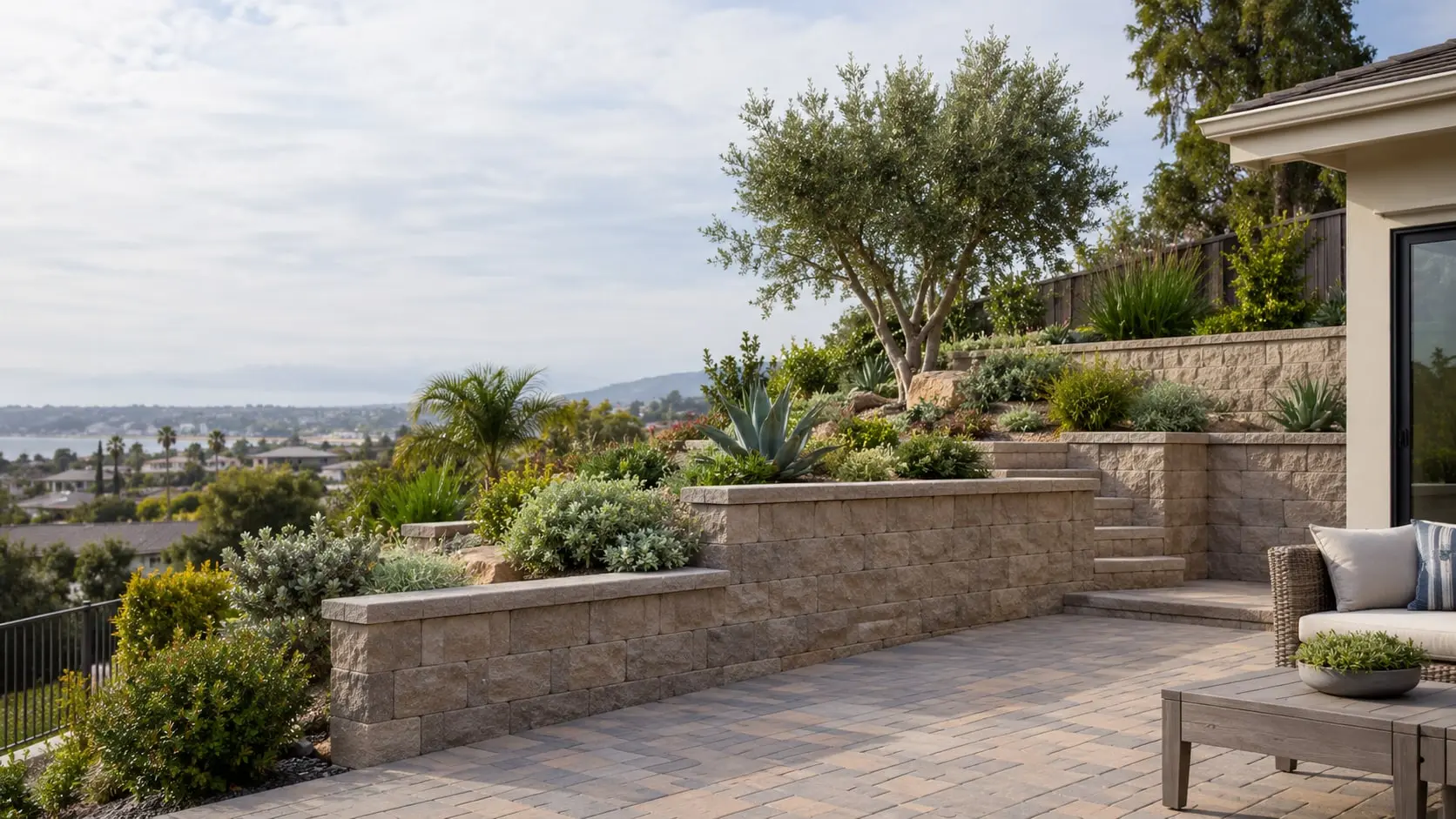 Retaining walls Grade changes often need a wall before any paving can be laid flat.
 Cleaning, sealing and repair Maintenance choices are easier to make when you know what the finished surface needs.
Clarity before you begin
Lifespan depends far more on base preparation and drainage than on the paver. A well-compacted, well-drained assembly can stay flat for decades, while a shortcut base may show dips within a few seasons.
No. Native soil, especially clay, moves and holds water. A layer of compacted crushed aggregate spreads load and drains, and is the standard foundation for every paver system.
It depends on height, attachments and location. Flat at-grade paving often needs none, but raised areas, walls and work near the coast may. Confirm with your city or county building department before starting.
Usually insufficient compaction, trapped water or a missing edge restraint. Once the cause is fixed, the existing pavers can often be lifted and re-laid.
Match the written scope line by line: excavation depth, base material, edge restraint, drainage, joint material and who handles debris. Differences there explain most gaps between proposals.