Interlocking Strength
Interlocking pavers spread vehicle weight across the surface and flex slightly with soil movement, resisting the cracking that often affects poured concrete and asphalt driveways over the years.

Service guide / San Diego
Planning a paver driveway in San Diego: vehicle loads and base depth, drainage toward the street, patterns that resist shifting, and the order of work.
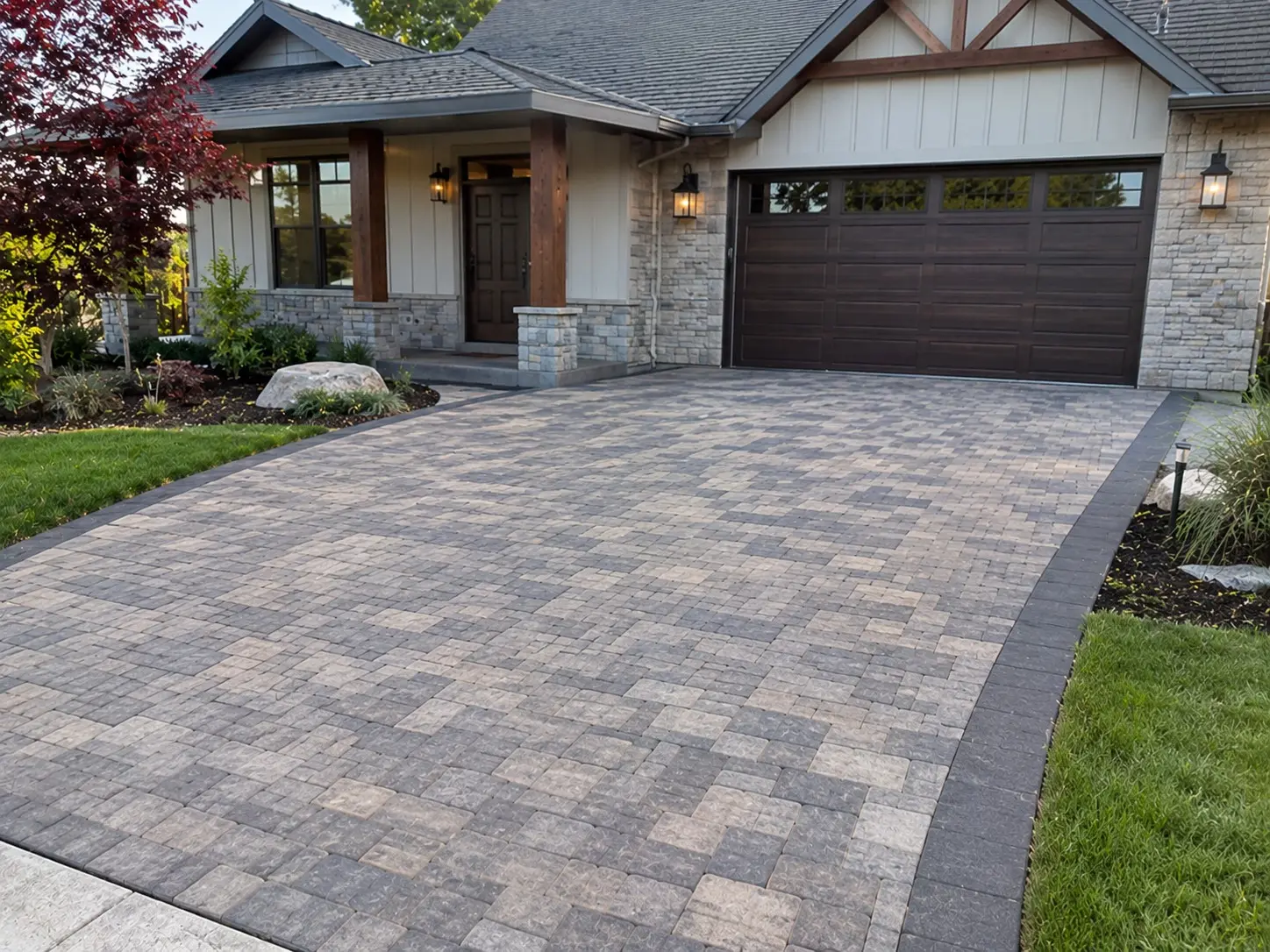
A paver driveway in San Diego instantly elevates your home’s curb appeal while delivering exceptional strength and longevity.
Interlocking pavers distribute weight evenly, handle daily vehicle traffic, and resist cracking caused by soil movement and temperature changes. We build every driveway on a deeply compacted base with proper drainage, and we install pavers in patterns and colors that complement your home’s architecture. Options include classic brick styles, modern slab designs, and decorative borders or apron details that give your entrance a custom look. Unlike poured surfaces, damaged pavers can be lifted and replaced individually, keeping repairs simple and affordable. Our team works efficiently and cleans up thoroughly after installation. We match walkways and steps for a unified look. Contact us today for a paver driveway estimate in San Diego and discover how much a new entrance can improve your property.
Interlocking pavers spread vehicle weight across the surface and flex slightly with soil movement, resisting the cracking that often affects poured concrete and asphalt driveways over the years.
Select from brick patterns, cobblestone looks, or modern slabs in many colors and finishes, and we carefully design your driveway to complement your home’s architecture, roofline, and landscaping.
We excavate deeply, compact multiple layers of quality aggregate, and install edge restraints, creating a stable foundation that supports daily vehicles and delivers dependable, long-lasting performance for decades.
If a section is stained or damaged, individual pavers can be lifted and replaced without tearing out the entire driveway, saving time and money while keeping it uniform.
Permeable pavers allow rainwater to soak into the ground, reducing runoff, flooding, and puddling, and they may help meet drainage goals while creating a distinctive, environmentally conscious driveway.
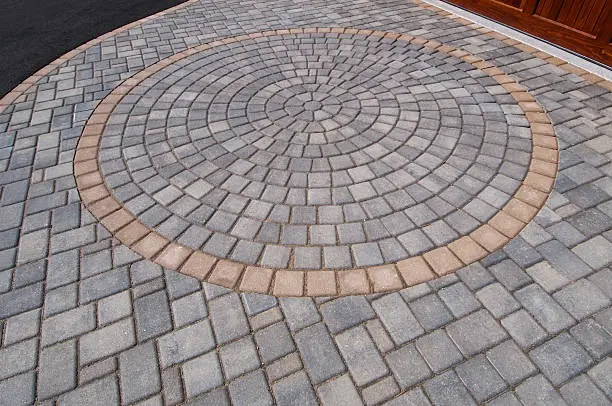
Contrasting borders, aprons, and accent bands frame your driveway and connect it to the street, giving your entrance a custom, high-end appearance that boosts your curb appeal.
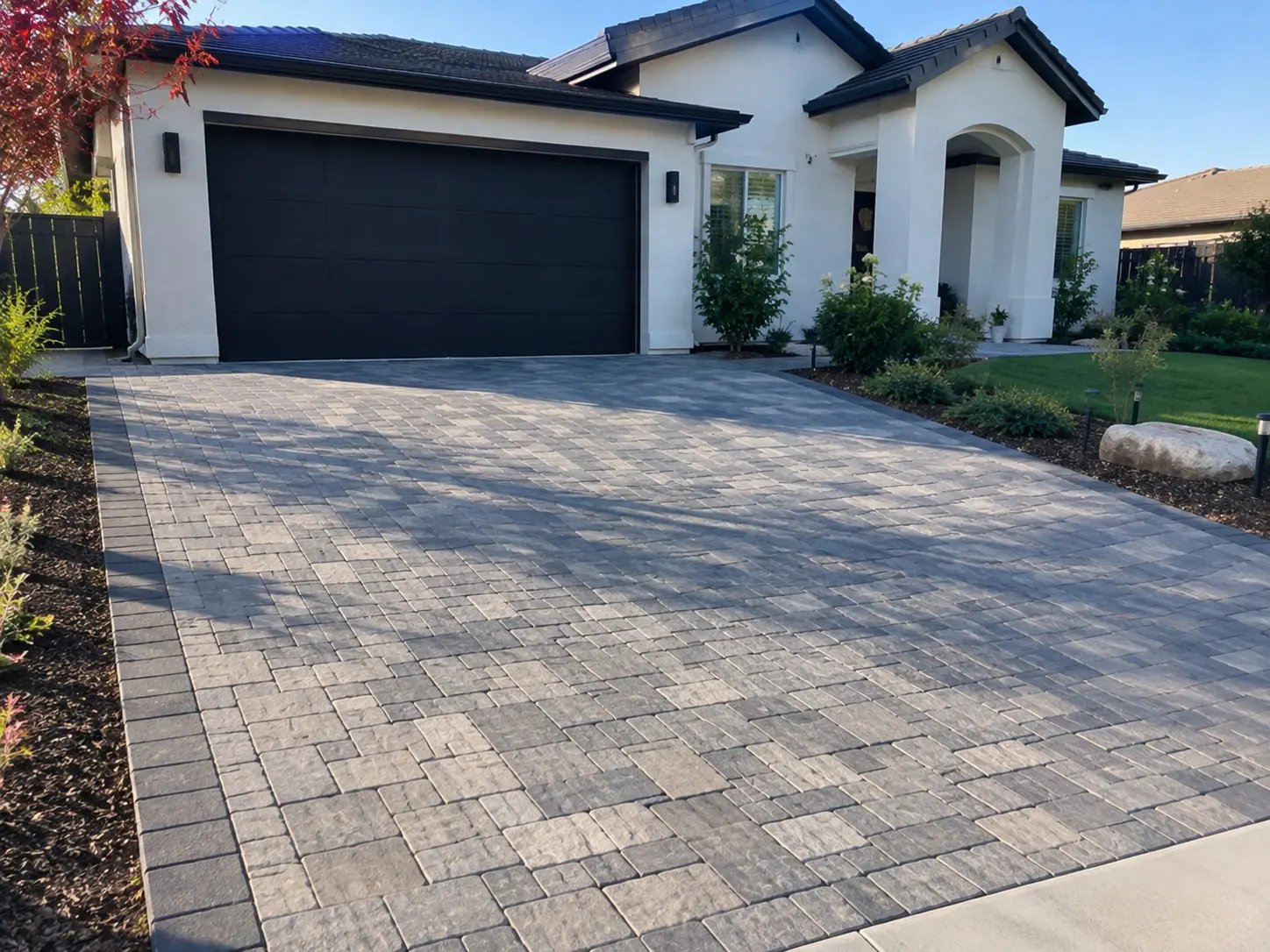
Pavers can replace cracked asphalt or concrete, widen a narrow drive, add a motor court or parking pad, or create a decorative apron in front of the garage while the rest stays as is.
The old surface comes out and the exposed soil is checked for soft spots, roots and old utility trenches that need attention.
String lines establish the slope so water leaves toward the street, a swale or a drain rather than toward the garage.
Crushed aggregate goes in thin layers, each compacted, until the base is deep enough for the vehicles it will carry.
A concrete curb or an anchored restraint holds the outer rows against the sideways push of turning tires.
Pavers are placed in the chosen pattern, edges are cut to fit, and the surface is compacted before joint sand is swept in.
Joints are filled and compacted again; a sealer is optional and is applied only once the surface has had time to dry.
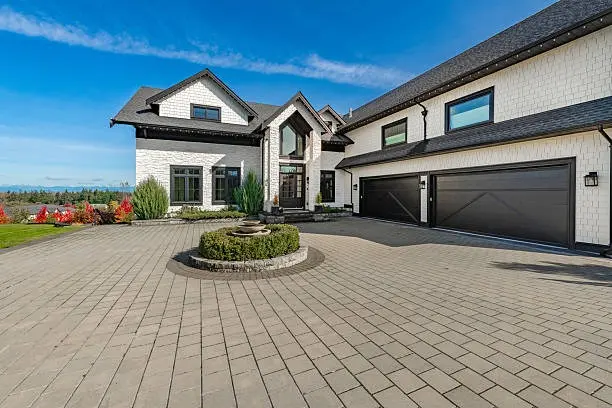
Yes, when the units are thick enough, commonly about 3 1/8 inches rather than the 2 3/8 inches used on patios, and the base is built for vehicles. A pedestrian-grade patio system will not hold up.
Herringbone interlocks in every direction and resists the sideways force of turning wheels better than running bond. The edge restraint does the rest.
Concrete pavers are porous, so leaks can soak in. A penetrating sealer helps, and a stained unit can be swapped without disturbing its neighbors.
Heavy, slow-moving loads need a purpose-built base and sometimes a concrete subbase. Share the weight and parking spot so the build can be designed for it.
A driveway that drops toward the garage needs a plan for water at the threshold before any paver is chosen.
A narrow channel drain across the drive intercepts runoff before it reaches the garage slab.
The apron where the drive meets the sidewalk or curb often sits in the public right-of-way and may have its own city requirements.
Open-jointed pavers over clean stone let some rain soak in, which can relieve downspouts and gutters on tight lots.
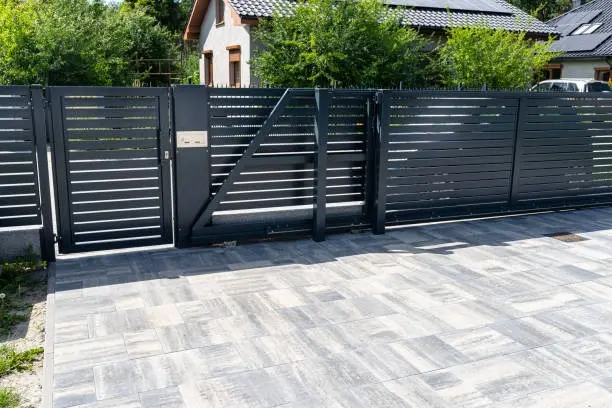
Three common driveway surfaces, compared on how they behave under cars.
The most common choice: strong, available in many colors and made in vehicle-rated thicknesses.
Natural stone gives a refined look, but softer stone and brake-pad dust are worth discussing before choosing it for tire paths.
Wider joints filled with clean stone allow water to pass through to a reservoir base beneath.
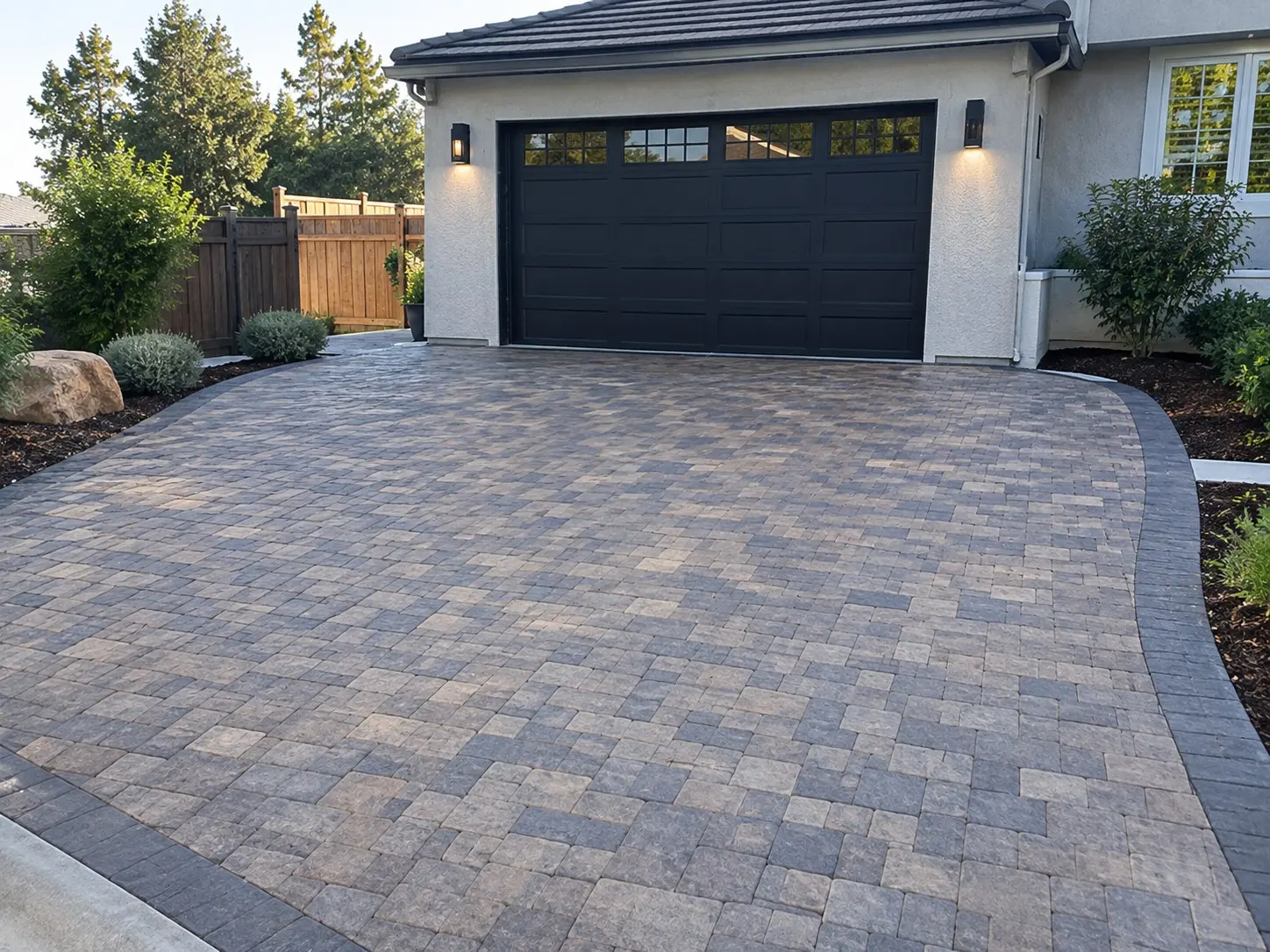
A driveway is the largest paved surface most people see from the street, so color and pattern should echo the house. Warm neutrals tend to hide dust and oil, while a contrasting border can frame the garage and tie into the front walk.
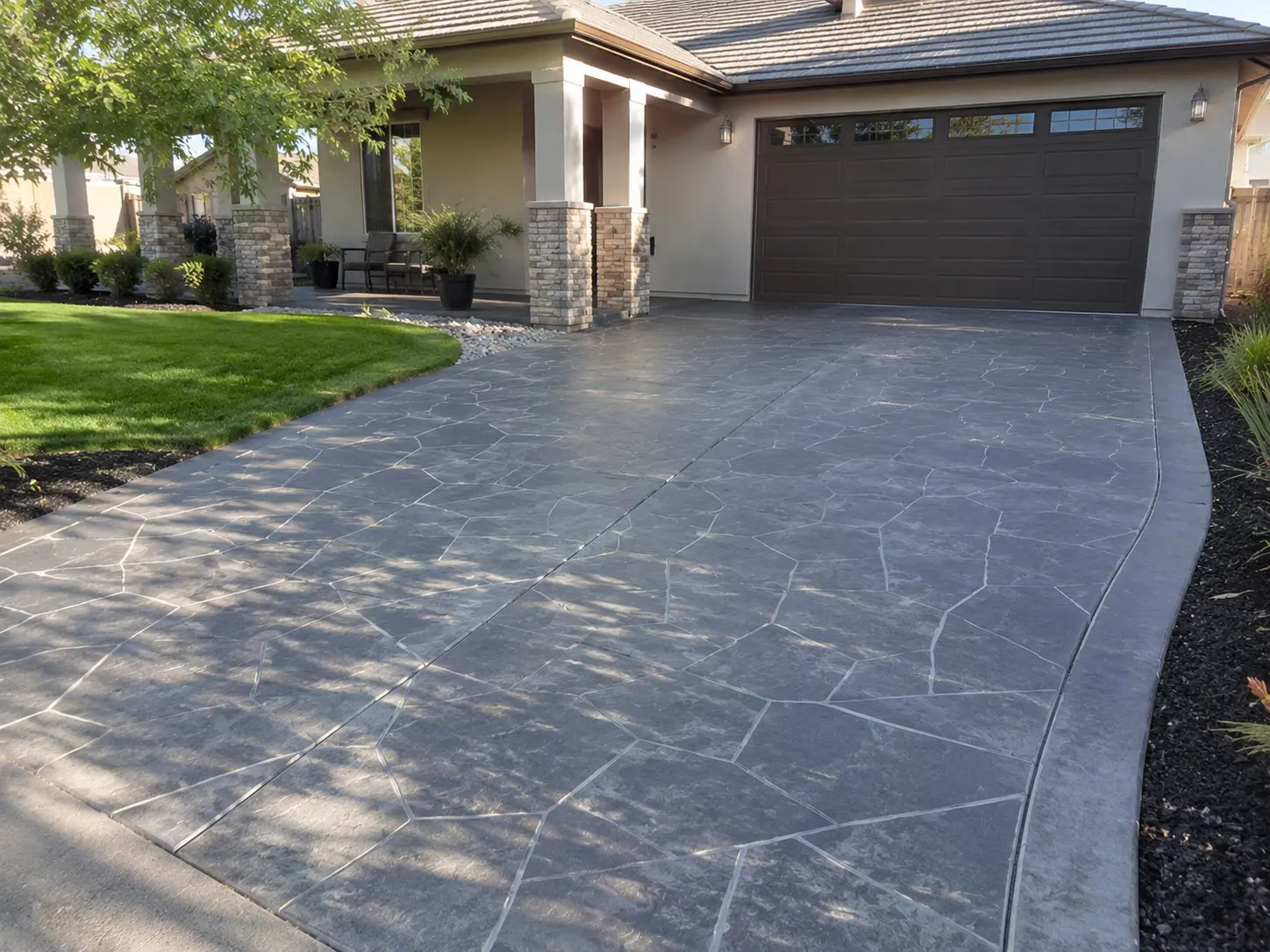
Before demolition, mark the location of sprinkler lines, gas or electrical runs and any tree roots near the drive, and call 811 so underground utilities are located. If part of the work touches the sidewalk, curb or street, check with the City of San Diego Development Services Department or your city or county building department about right-of-way requirements.
Access matters too: plan where the household will park during the work, where material and equipment will stage, and how long the finished surface should stay free of traffic while joints settle.
Clarity before you begin
Neither is universally better. Pavers cost more labor to install but allow spot repairs and avoid long cracks, while a slab is simpler and continuous. Compare finish, repairability and how you plan to use the drive.
Foot traffic is usually fine once the joints are compacted, but vehicles should wait until the installer says the surface and any sealer are ready. Follow their guidance instead of a general rule.
Replacing a driveway within your property may not need one, but changes to width, slope or the street connection may. Confirm with the City of San Diego or your local building department first.
Only if the existing surface is structurally sound and the new height will still clear the garage and drain properly. Many cracked drives are removed so the base can be built correctly.
Polymeric sand hardens in the joints and resists weeds and washout when installed in dry weather. Keep joints topped up and clear of debris over the years.