Slip-Resistant Surfaces
Textured pavers offer reliable traction when wet, helping protect swimmers and guests, and we choose materials with the right finish to keep your pool area safe and comfortable.

Service guide / San Diego
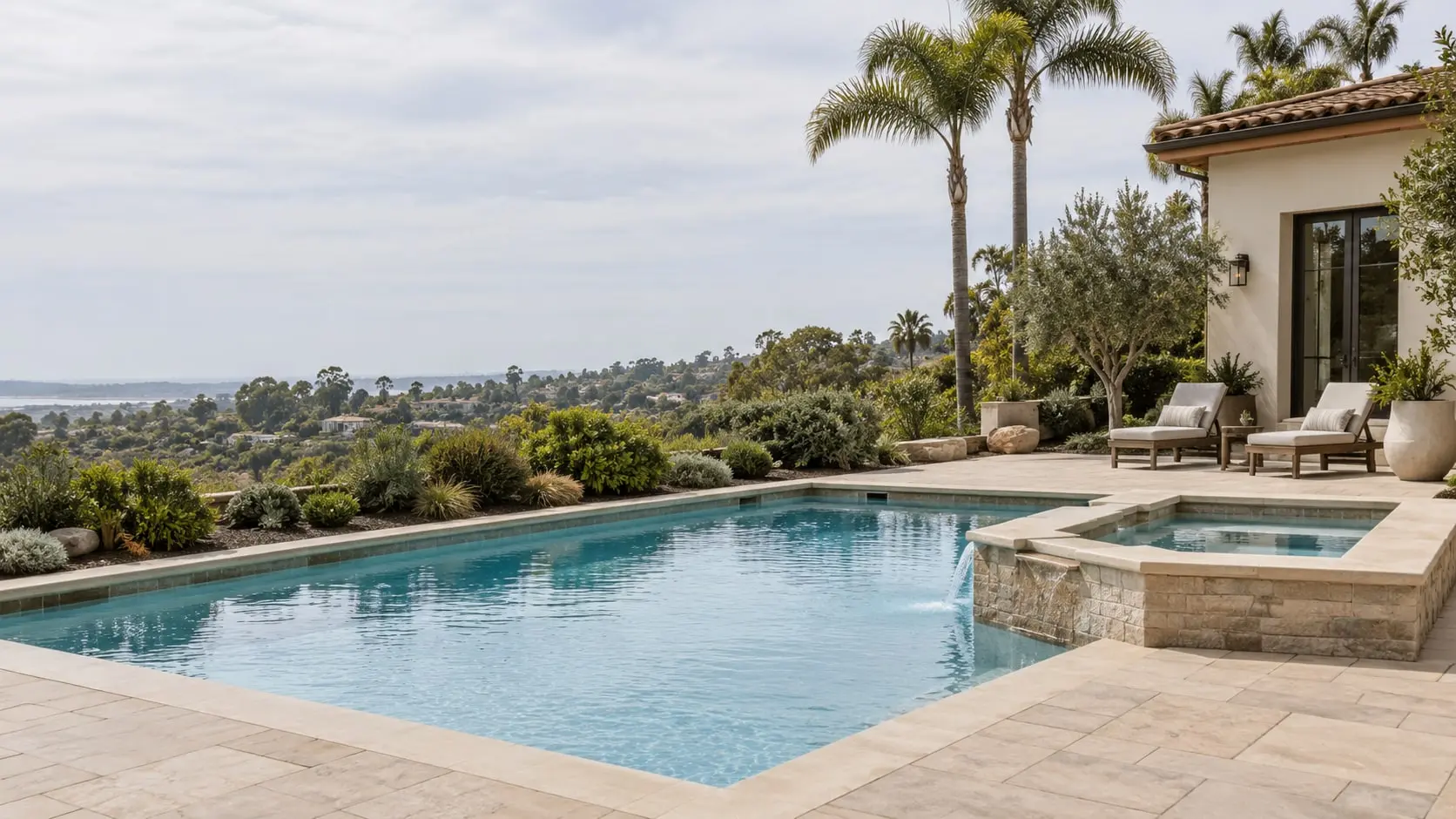
Choosing pool deck pavers in San Diego: slip resistance, surface heat, chlorine and salt exposure, drainage around coping, and the order of work around a pool.
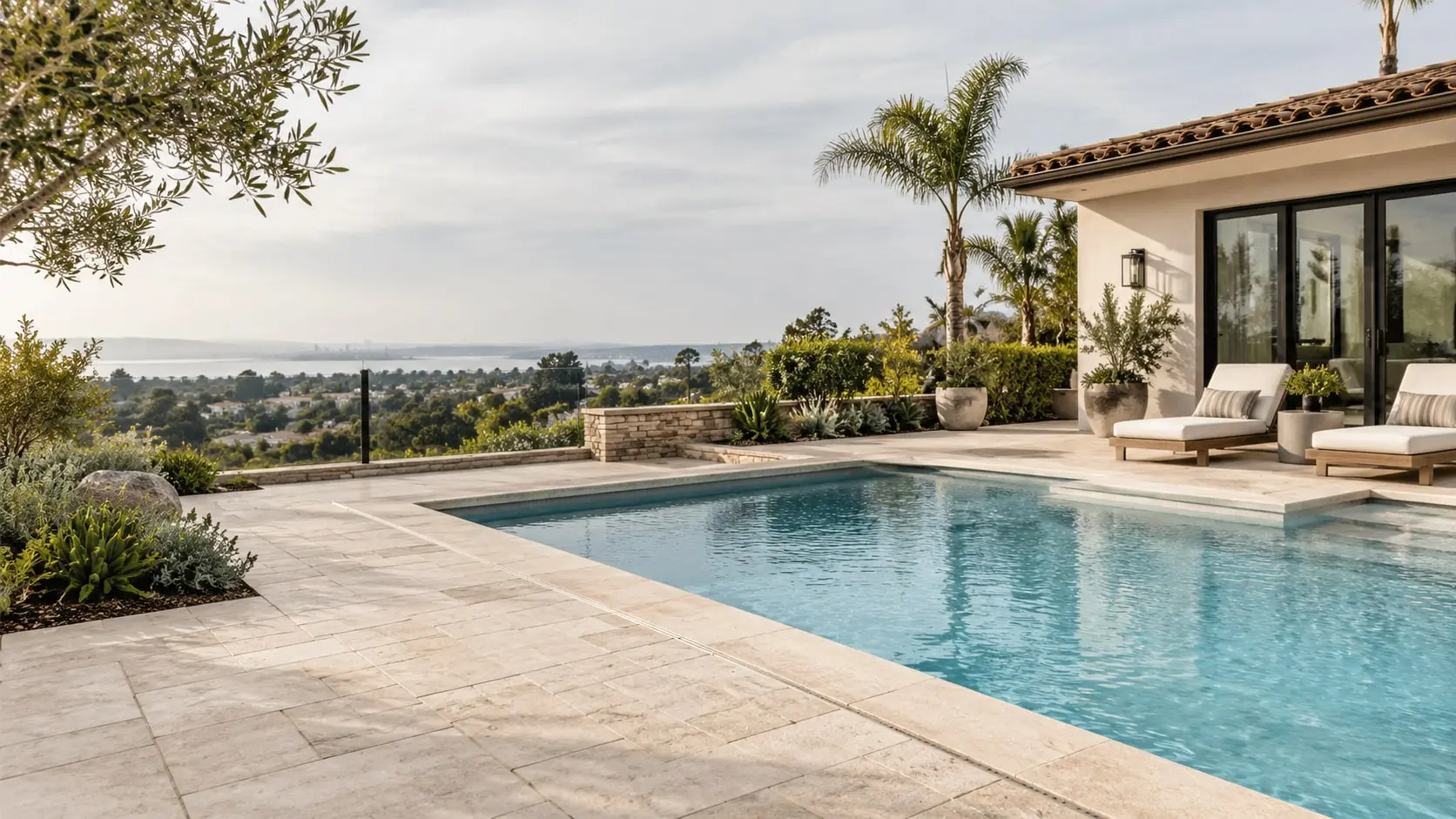
Pool deck pavers in San Diego create a safe, stylish, and comfortable surface around your swimming pool.
The right paver provides excellent slip resistance when wet, stays cooler underfoot in the sun, and resists damage from pool chemicals, moisture, and constant foot traffic. We install pool decks using travertine, concrete pavers, porcelain, and natural stone in a wide variety of colors and textures that complement your pool and home. Each deck is built on a compacted base with proper drainage and precise edging, keeping water flowing away from the pool and preventing settling over time. Pavers are also easy to repair if a section ever needs attention. Upgrade your pool area with a beautiful finish that adds value. We also offer sealing and repair for existing pool decks. Contact us today for a pool deck paver estimate in San Diego.
Textured pavers offer reliable traction when wet, helping protect swimmers and guests, and we choose materials with the right finish to keep your pool area safe and comfortable.
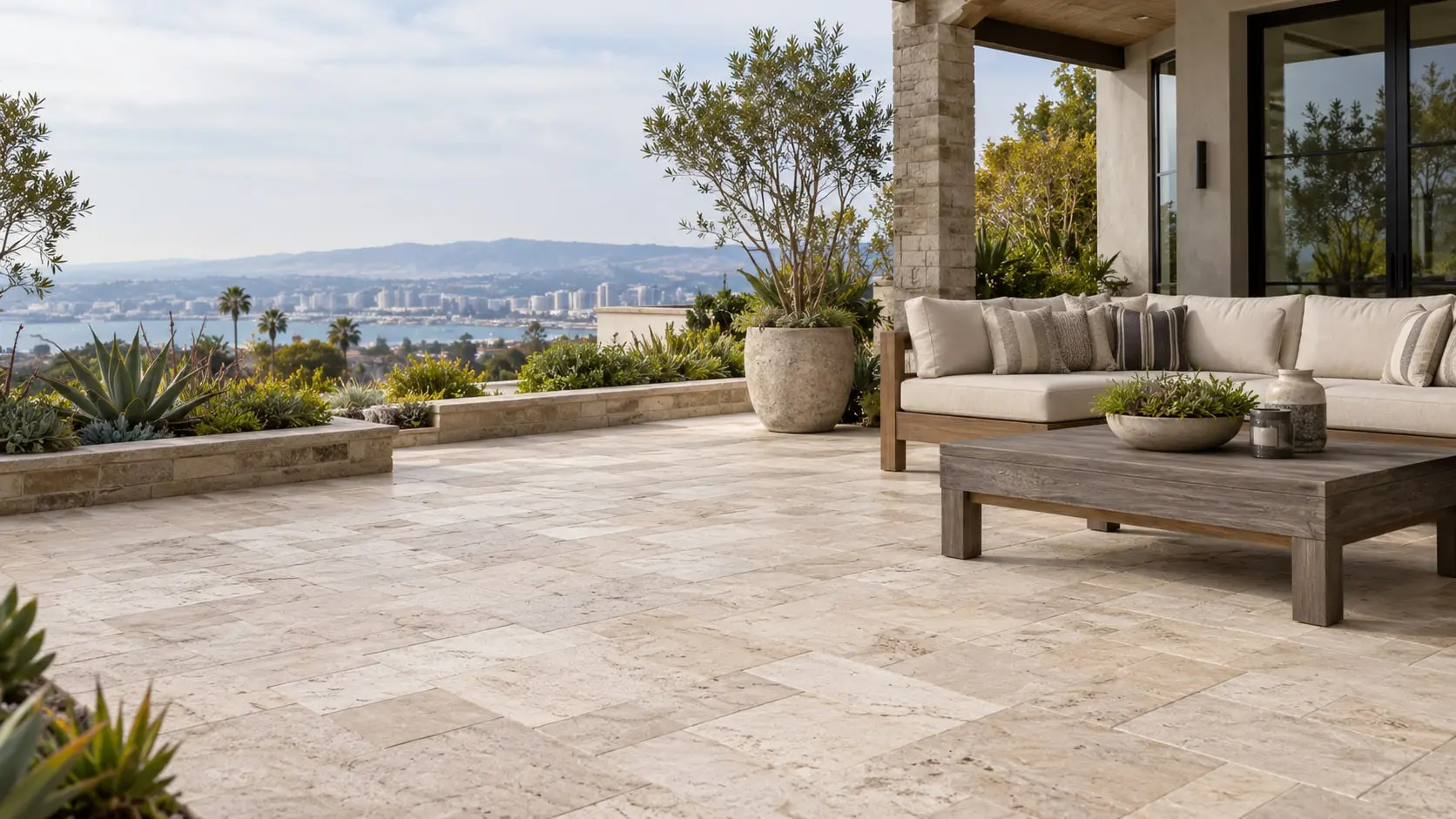
Travertine and light-colored pavers reflect heat and stay noticeably cooler underfoot than many alternatives, making barefoot walking much more comfortable during hot San Diego summers around the pool.
Coping frames the pool edge, and we install it with precise alignment and secure bonding, creating a clean, finished transition between water and deck that looks sharp.
Quality pavers withstand splashing, pool chemicals, and constant moisture without deteriorating, and sealing options give added protection and make cleaning easier for years of dependable use.
We slope pool decks to carry water away from the pool and house, with drains where needed, preventing puddles and protecting your foundation, landscaping, and pool equipment area.
Extend the same materials to nearby patios, steps, and walkways for a truly unified outdoor design that connects your pool, lounging areas, and entertaining spaces together beautifully.
Three common ways pavers are used around water.
Cracked or stained concrete around a pool is removed and replaced with pavers, with drainage and coping addressed at the same time.
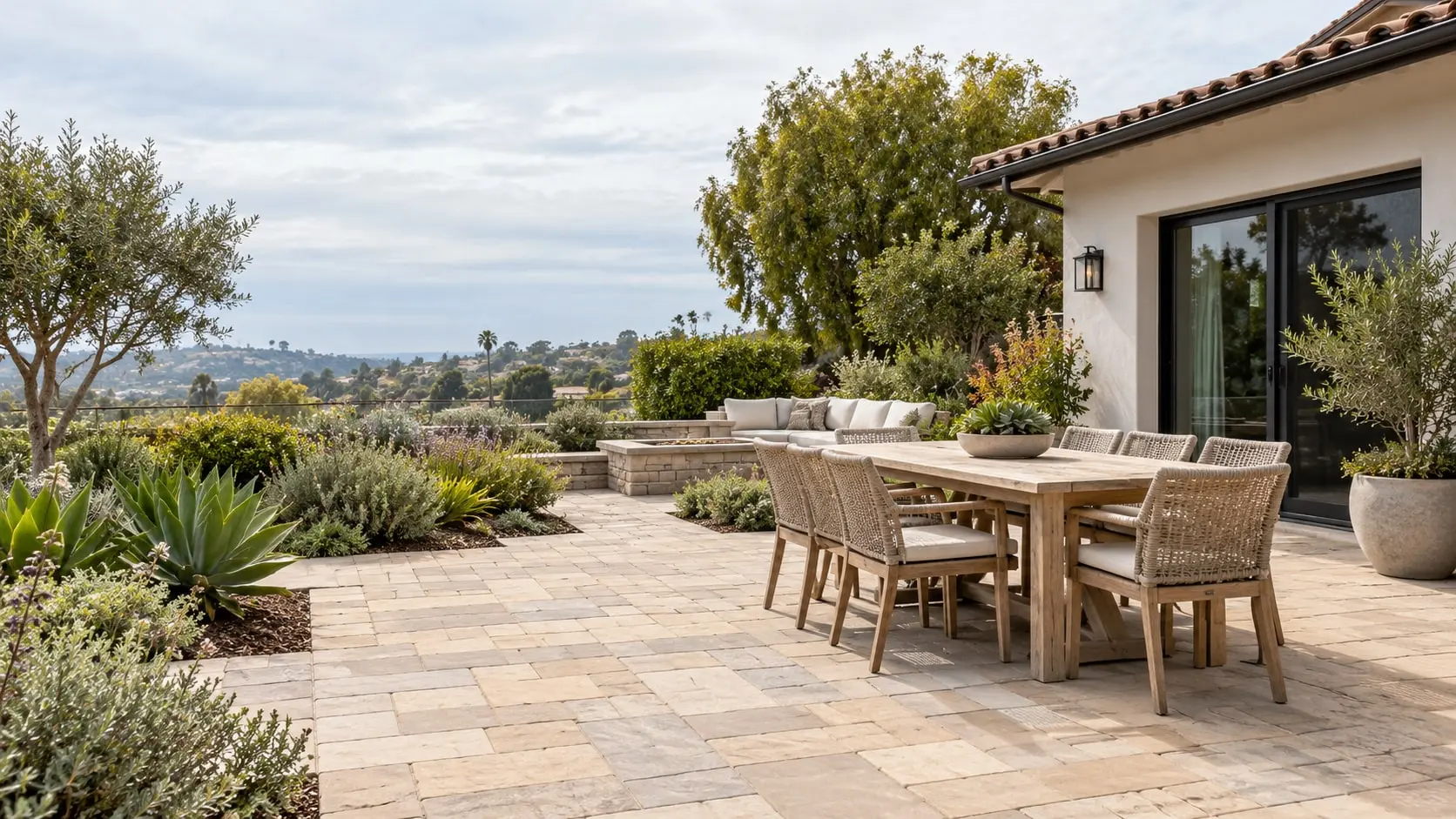
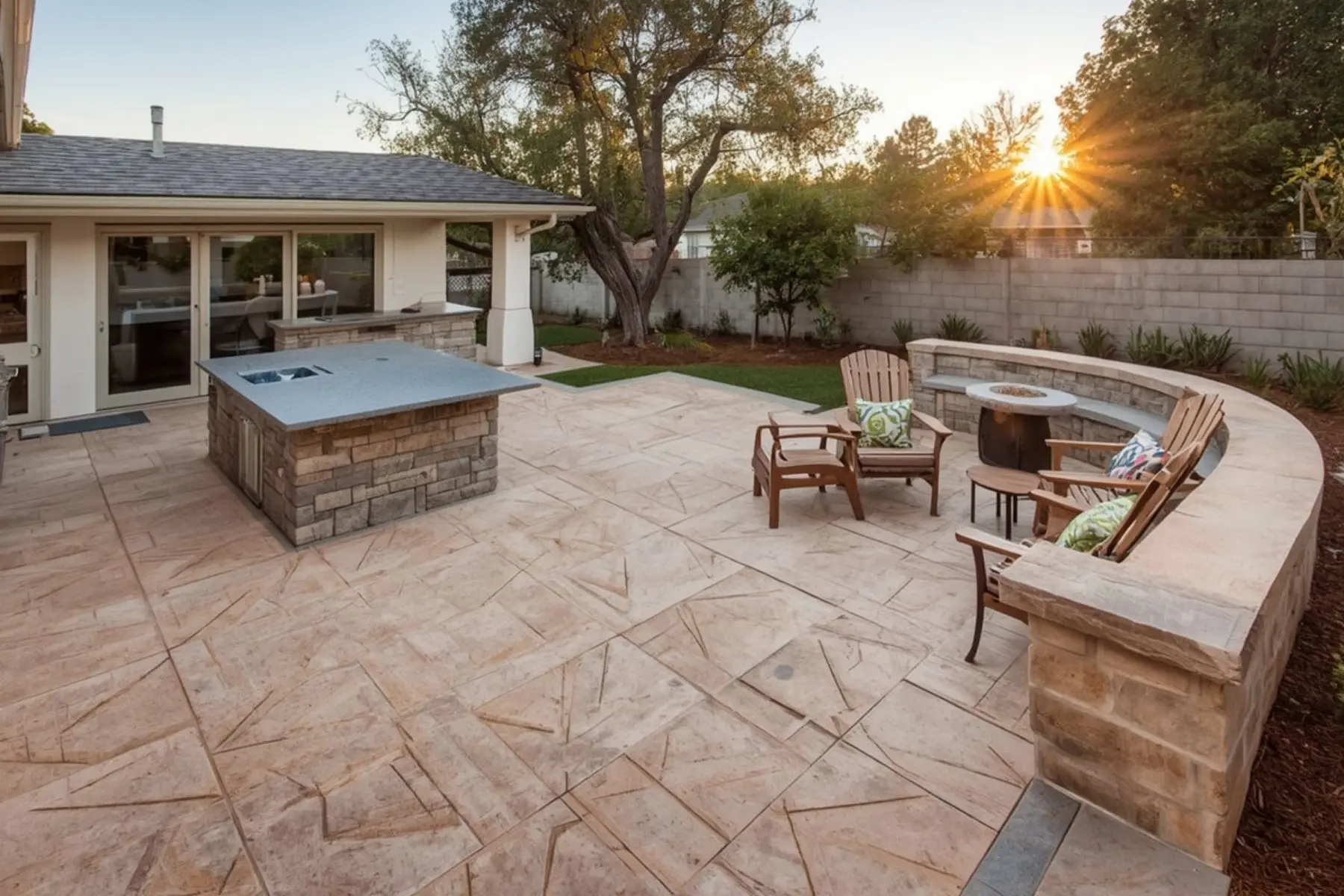
A paver patio beside the existing deck adds seating space without disturbing the pool shell.
Raised spas, benches and sheer descents are framed with pavers that continue the pool deck's finish.
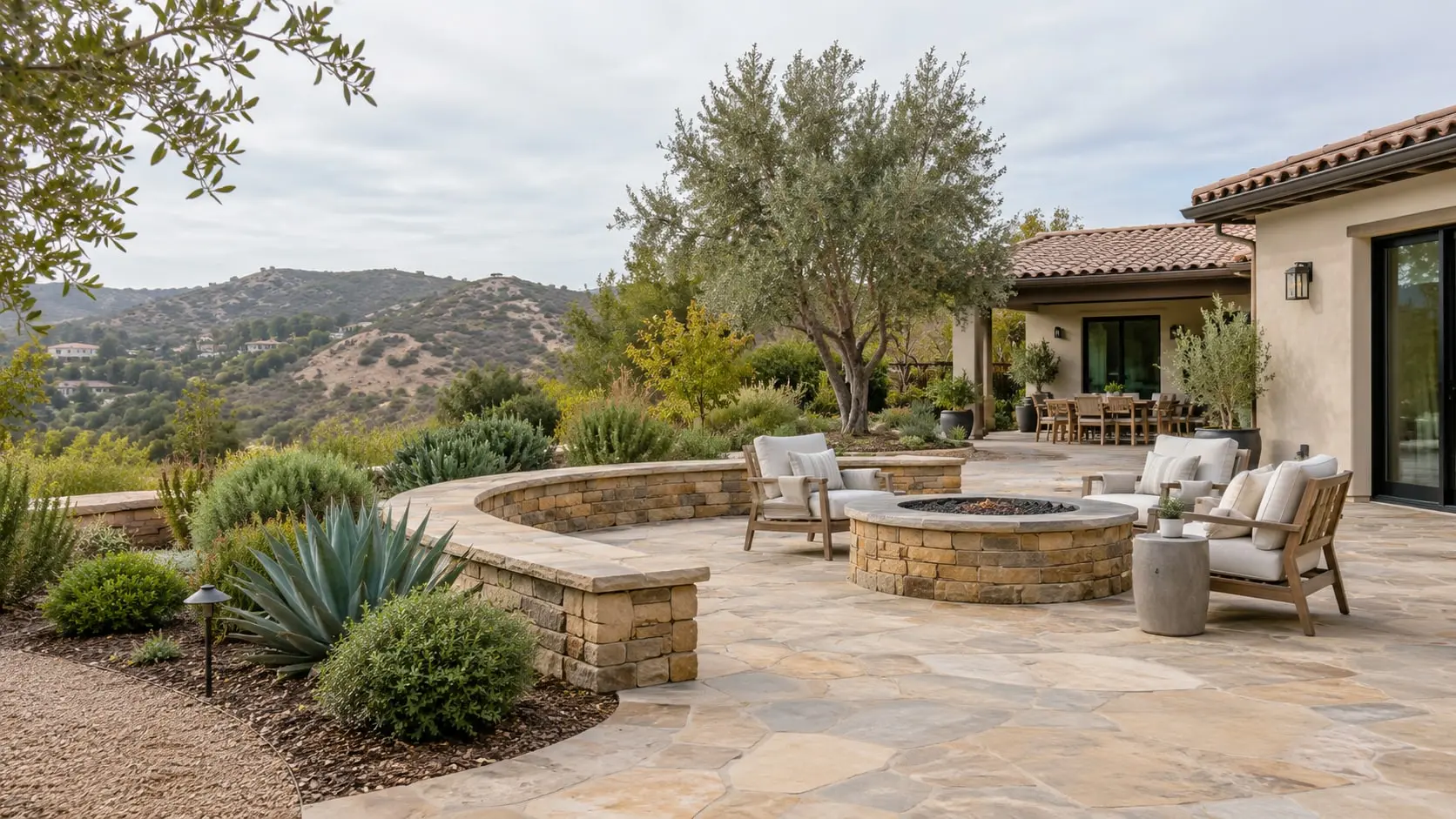
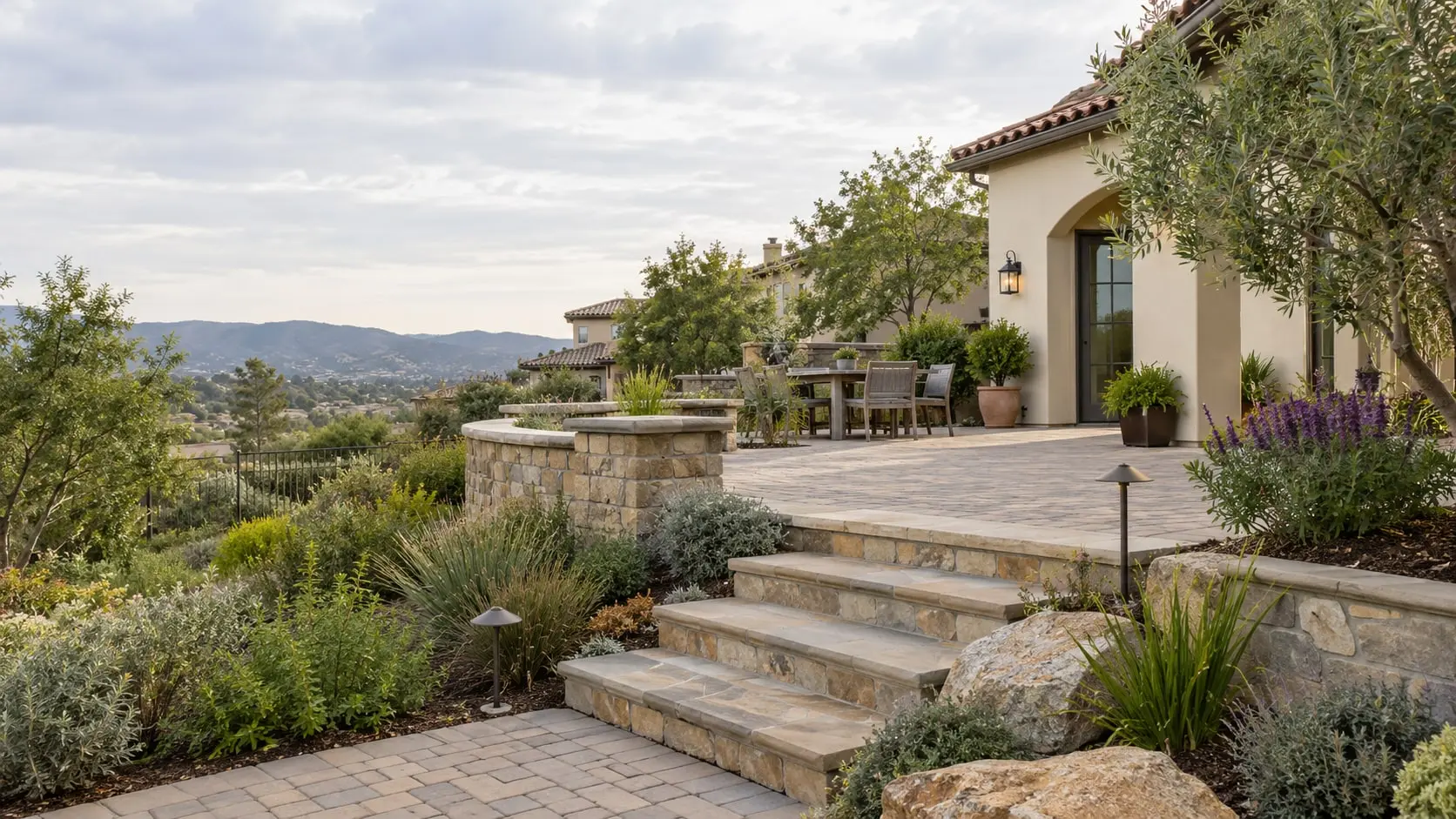
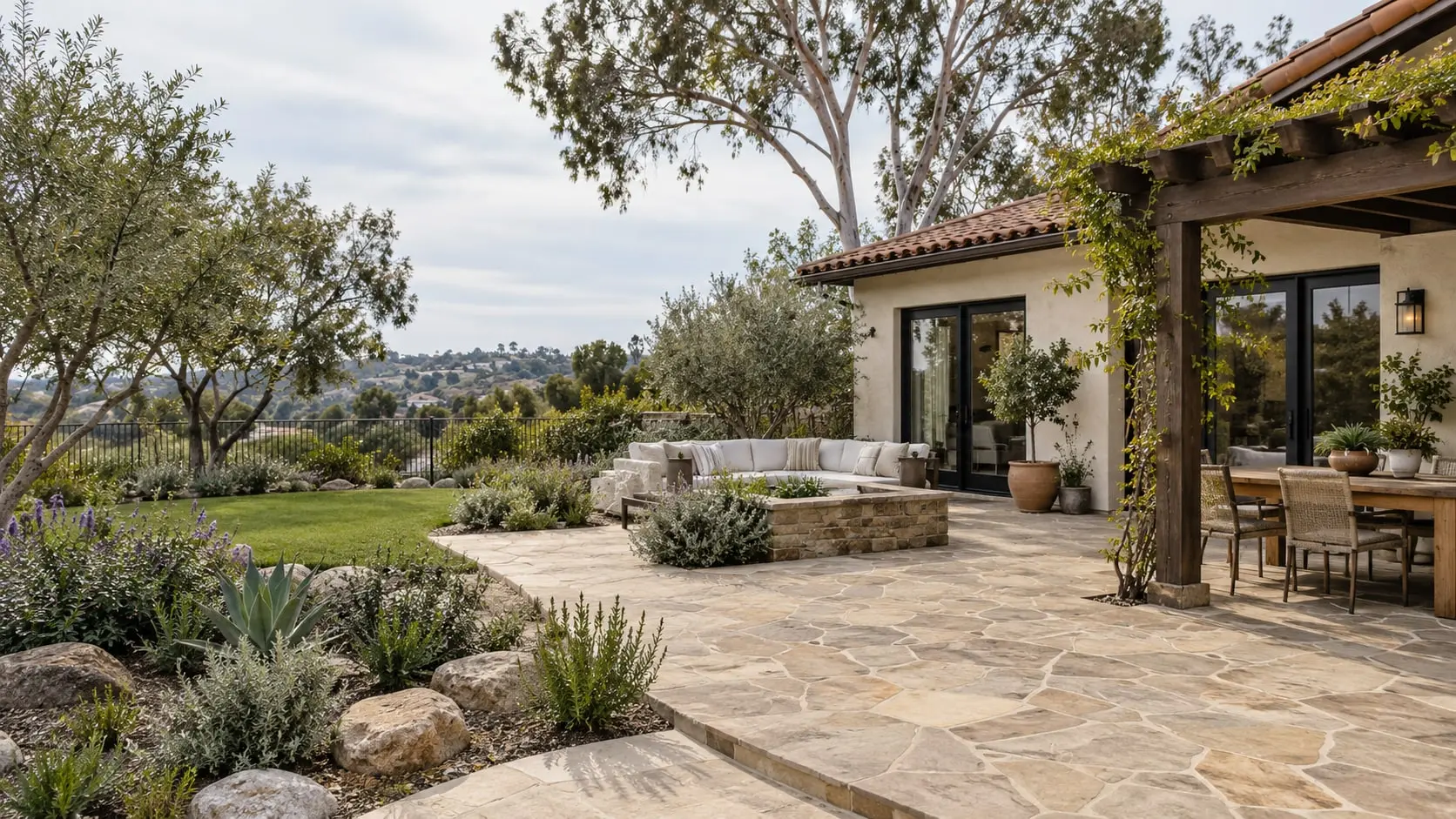
Bare feet are the test. Light-colored travertine and some porcelain stay noticeably cooler in afternoon sun than dark concrete pavers, while a pergola or shade sail changes how long the deck is usable.
| Material | Wet grip | Heat underfoot | Chemical tolerance |
|---|---|---|---|
| Travertine, tumbled or brushed | Good | Cooler in light tones | Seal; avoid acidic cleaners and pool chemicals |
| Travertine, honed | Lower when wet | Cooler in light tones | Seal; keep acids off |
| Textured porcelain | Good, if grip-rated | Varies with color | High; dense body resists staining |
| Concrete pavers | Moderate, texture varies | Warmer in dark colors | Moderate; seal for chlorine and salt |
| Natural flagstone | Varies with surface | Varies with color | Seal; check joints |
Request the supplier's slip data if available, and test wet samples barefoot.
Cover or drain it as needed and keep dust, debris and cement washings out of the water.
The old deck comes out and the base, any plumbing and the coping edge are inspected before anything new goes in.
The deck is sloped away from the pool and house to drains or planting areas that can handle the water.
Compacted aggregate or a prepared slab supports the paver; pool decks often need a more stable base than patios.
Pavers meet the coping with consistent joints, and expansion gaps are left where the plan calls for them.
After joints and sealer are done, water is run across the deck to confirm it drains.
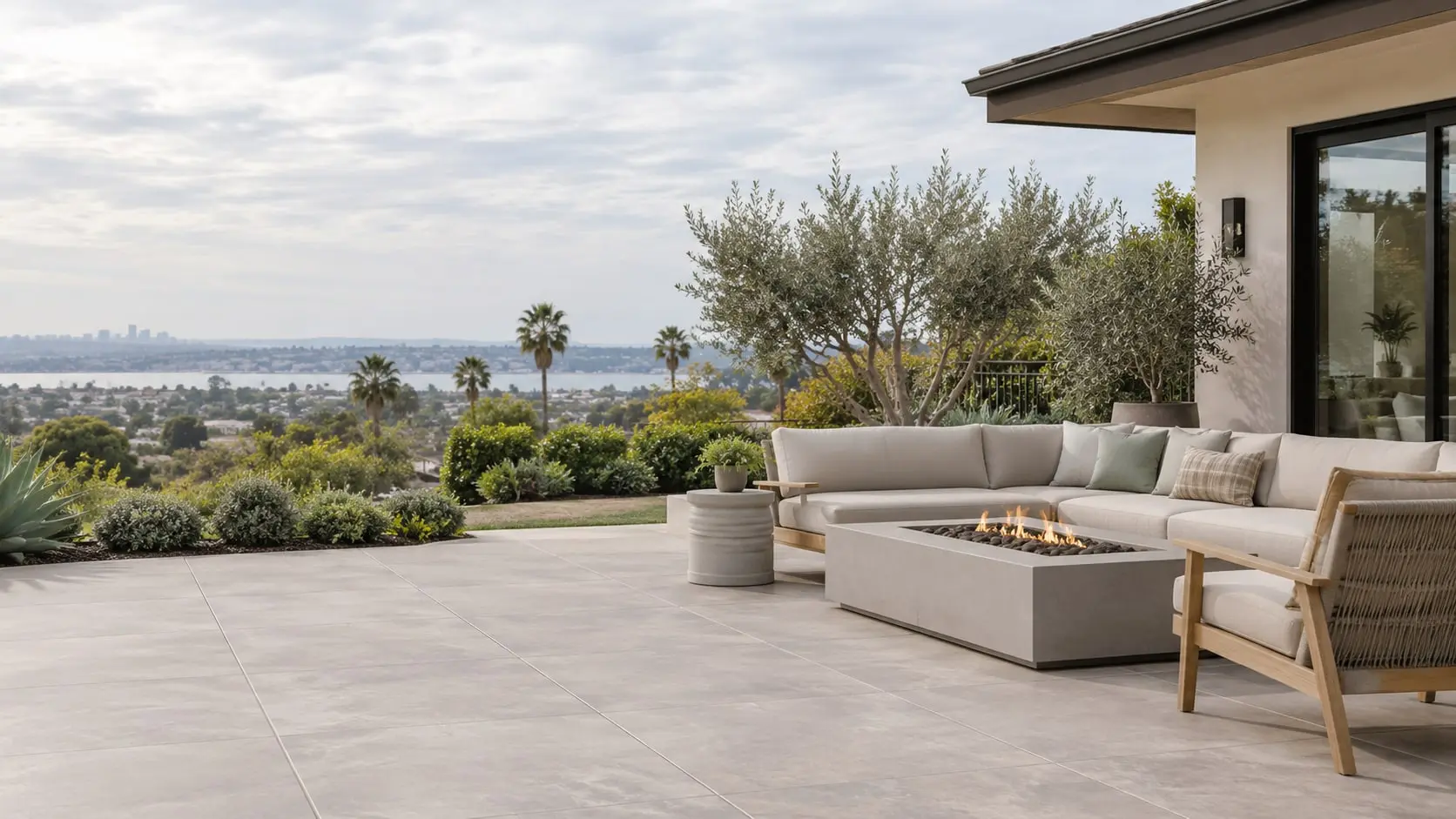
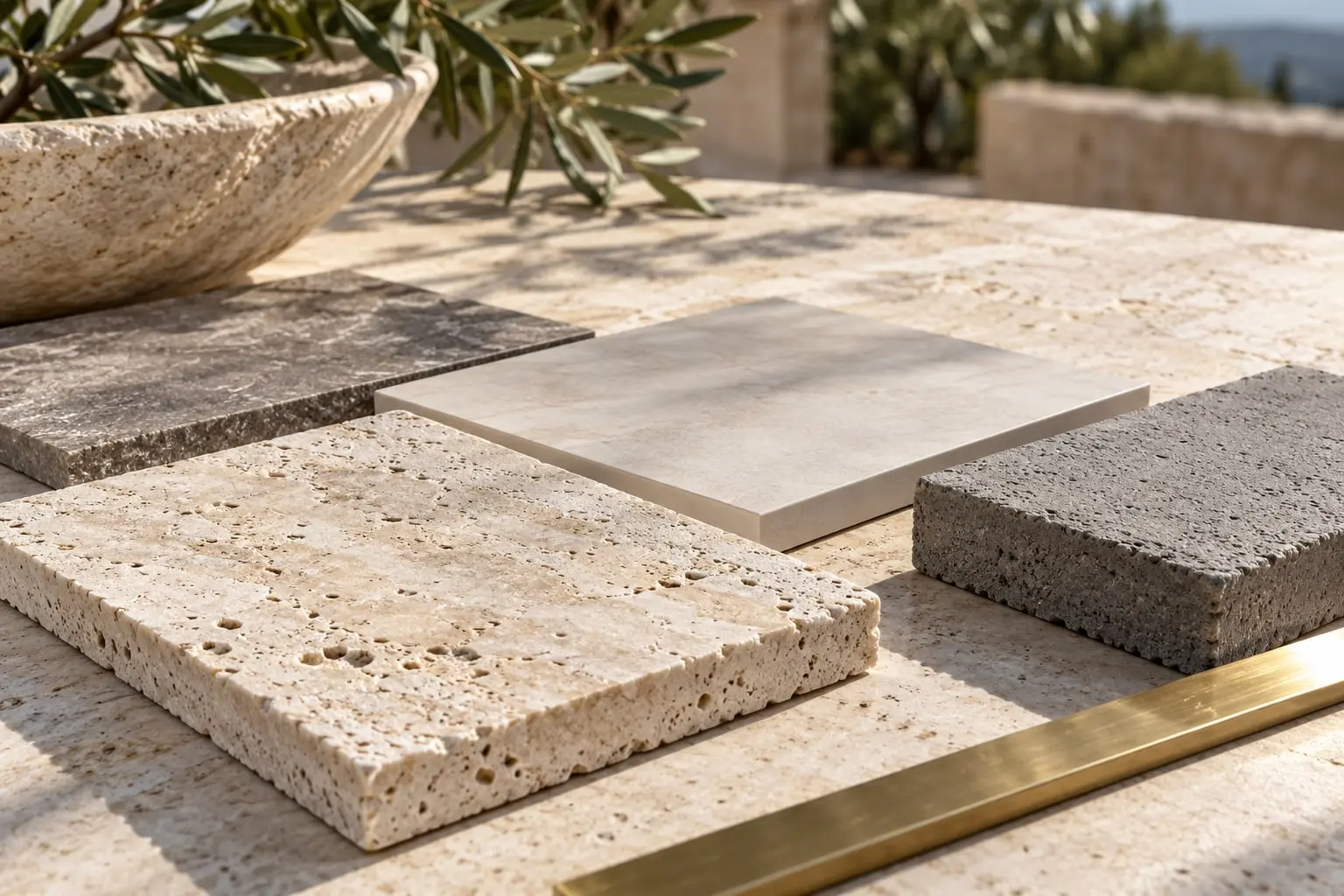
These surfaces suit a pool deck in different ways: travertine for softness and cooler tones, porcelain for density and low upkeep, and tan concrete pavers for the widest choice of shapes.
A full-size sample placed beside the water, dampened and viewed in afternoon light, will tell you more than a catalog page.
Mark any pool plumbing, equipment pads and electrical runs before excavation, and call 811 so buried utilities are located. Work that touches the pool shell, barrier, electrical or gas may require permits or inspections, so confirm with your city or county building department.
Within a Coastal Zone, additional review can apply, and HOAs often want a say in finish and color. Raising these questions before material orders prevents delays later.
Chlorine and saltwater systems leave deposits, and splash-out can discolor porous surfaces. Sealing, rinsing and cleaning with the right products keep pavers looking consistent.
Light travertine and light porcelain generally stay cooler than dark concrete. Color matters more than material, so test samples in direct sun.
Yes, but the joint between them needs a flexible detail and a drainage plan. A rigid joint that cracks lets water under the deck.
Porous stone and concrete can show salt deposits or surface wear if left unsealed. Dense porcelain is less affected. Ask for sealer guidance suited to a salt system.
Replacing surface material may not, but changes in height, drainage or work near barriers and equipment can. Ask your city or county first.
That depends on the product, weather and sealer. Ask for specific cure and cleanup guidance in writing before the work starts.