Stone Fireplaces
Natural stone fireplaces deliver a rich, lasting look that blends with your landscape, and our masons build each one with strong footings, careful stonework, and a safe firebox.

Service guide / San Diego
Outdoor fireplaces in San Diego: masonry vs. prefab, gas vs. wood, chimney and clearance planning, foundations, finishes and local rules to check first.
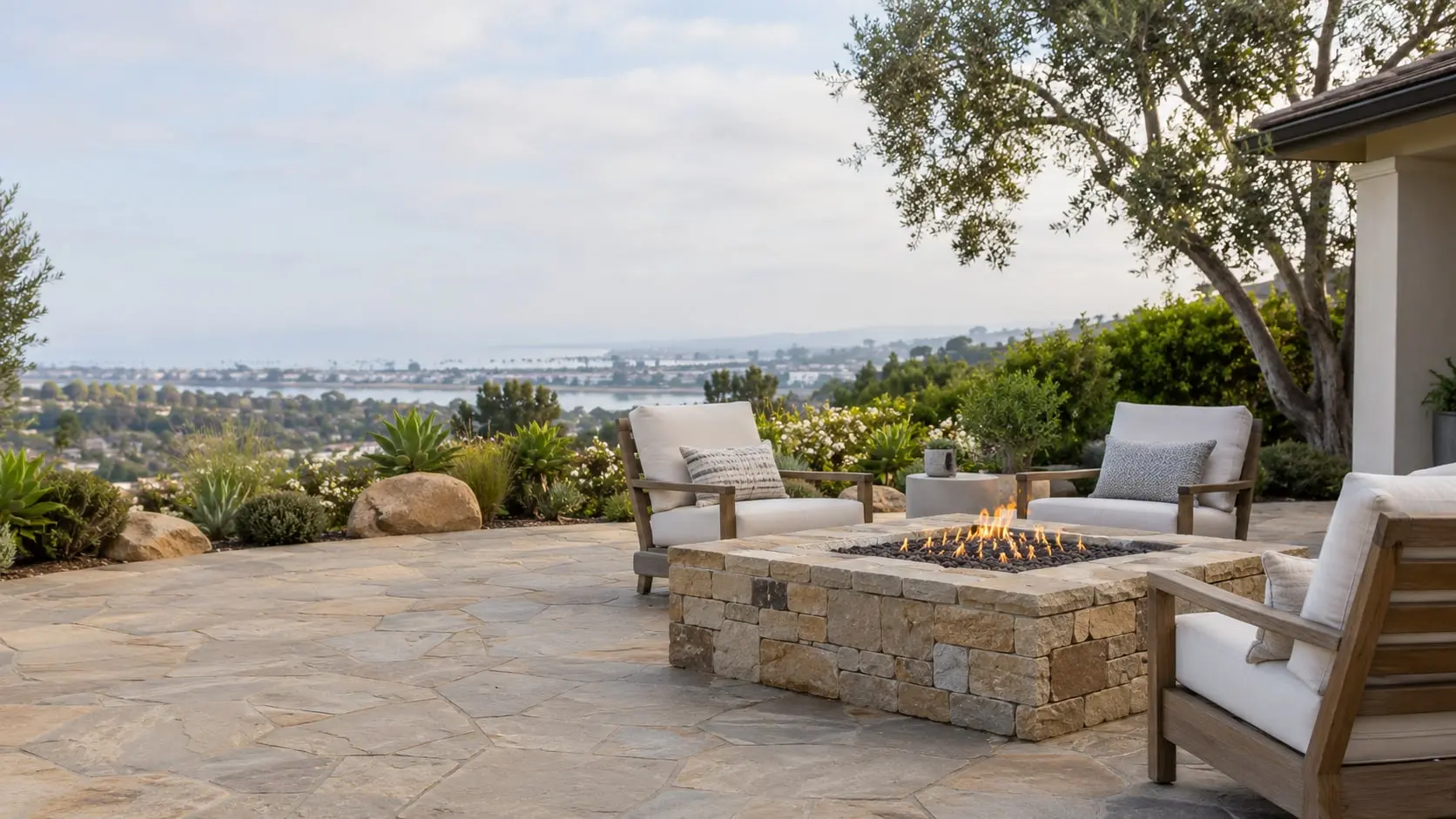
An outdoor fireplace in San Diego creates a stunning focal point that brings warmth, ambiance, and year-round enjoyment to your backyard.
Our team designs and builds custom fireplaces using natural stone, brick, stucco, and veneer finishes that match your home and landscape. We can add built-in seating, mantels, wood storage, and surrounding patio space to create a complete outdoor living room. Safety and structural quality guide every project, from the foundation and chimney construction to proper clearances and fuel options, including wood-burning and gas models. San Diego’s mild evenings make an outdoor fireplace a practical upgrade that you’ll use often. It also adds noticeable value and appeal to your property. We can coordinate with landscapers and electricians to complete your outdoor space seamlessly. Contact us today to discuss your design ideas and request an outdoor fireplace estimate in San Diego.
Natural stone fireplaces deliver a rich, lasting look that blends with your landscape, and our masons build each one with strong footings, careful stonework, and a safe firebox.
Match your home’s architecture with brick or stucco finishes, selecting colors and details that make your fireplace feel like an extension of the house and patio.
Choose gas for convenience or wood for traditional ambiance, and we plan venting, fuel lines, and clearances so your fireplace operates safely and reliably all year.
Custom mantels, built-in benches, and nearby seating walls turn your fireplace into a welcoming gathering area where friends and family can relax and enjoy cool evenings together.
We build fireplaces into patios, covered areas, and pergola designs, creating a cohesive outdoor room with structural support, safe spacing, and finishes that match surrounding surfaces.
Quality materials, proper foundations, and correct clearances protect your property, and our team follows safe building practices so you can enjoy your outdoor fireplace confidently for many years.
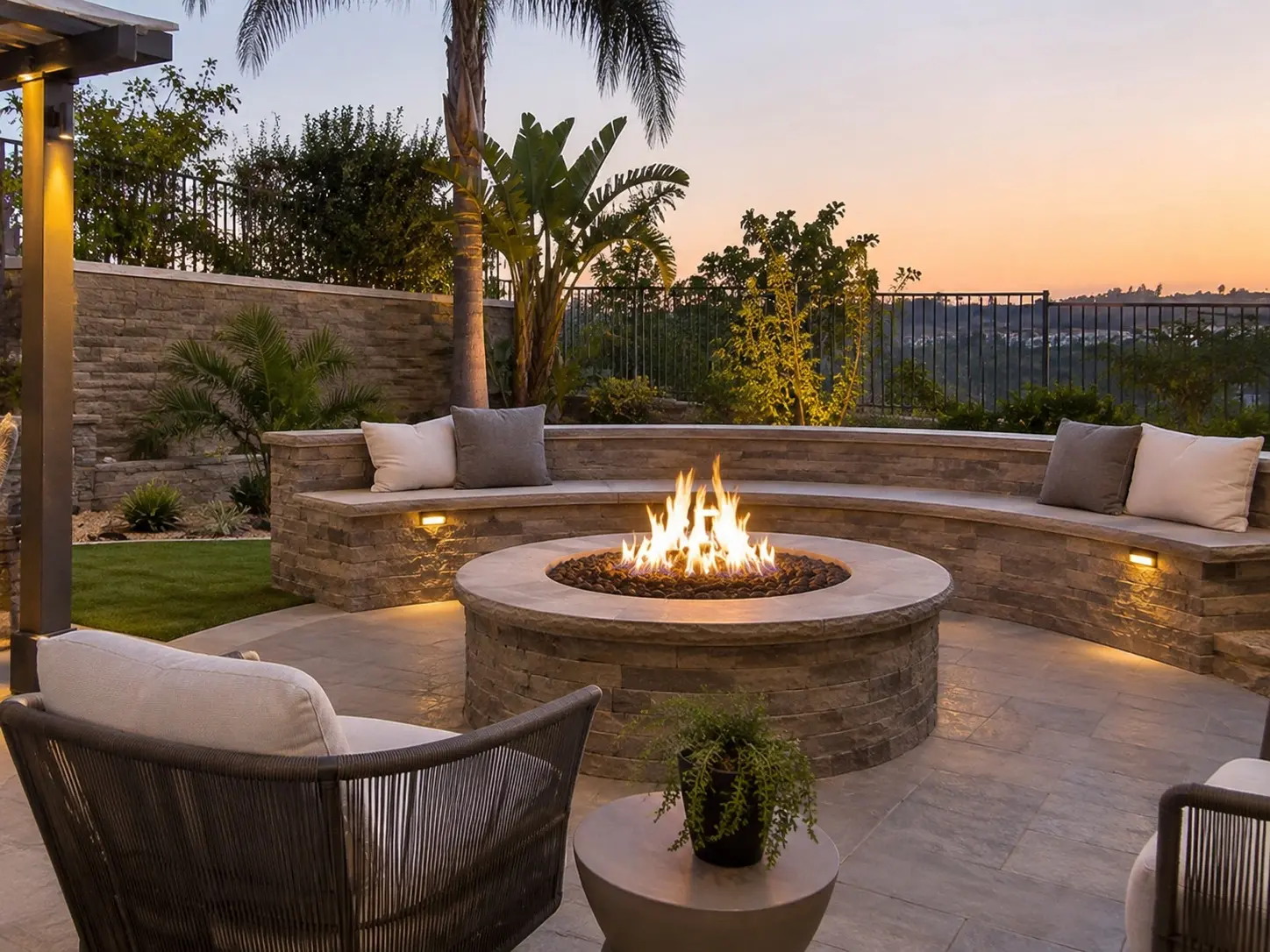
Outdoor fireplaces come in three broad forms: a freestanding masonry structure built on its own footing, a prefabricated firebox clad in stone or stucco, and a fireplace integrated into a wall, seating area or kitchen backdrop.
Placement changes everything. Against a house wall it needs clearances and a proper flue; out on the terrace it needs wind sense and a footing; at the end of a pergola it needs clearance from overhead structure.
The chimney pulls smoke up and away, so seating can sit closer and the fire holds in a breeze that would scatter a pit.
A fireplace adds real weight; the foundation depth depends on soil and design, and may need an engineer's input.
Branches, eaves, pergola beams and roofs above the chimney all limit where it can go and how tall it must be.
Solid stone or stucco gives the space a visual end, blocks sightlines to neighbors and shelters chairs on windy evenings.
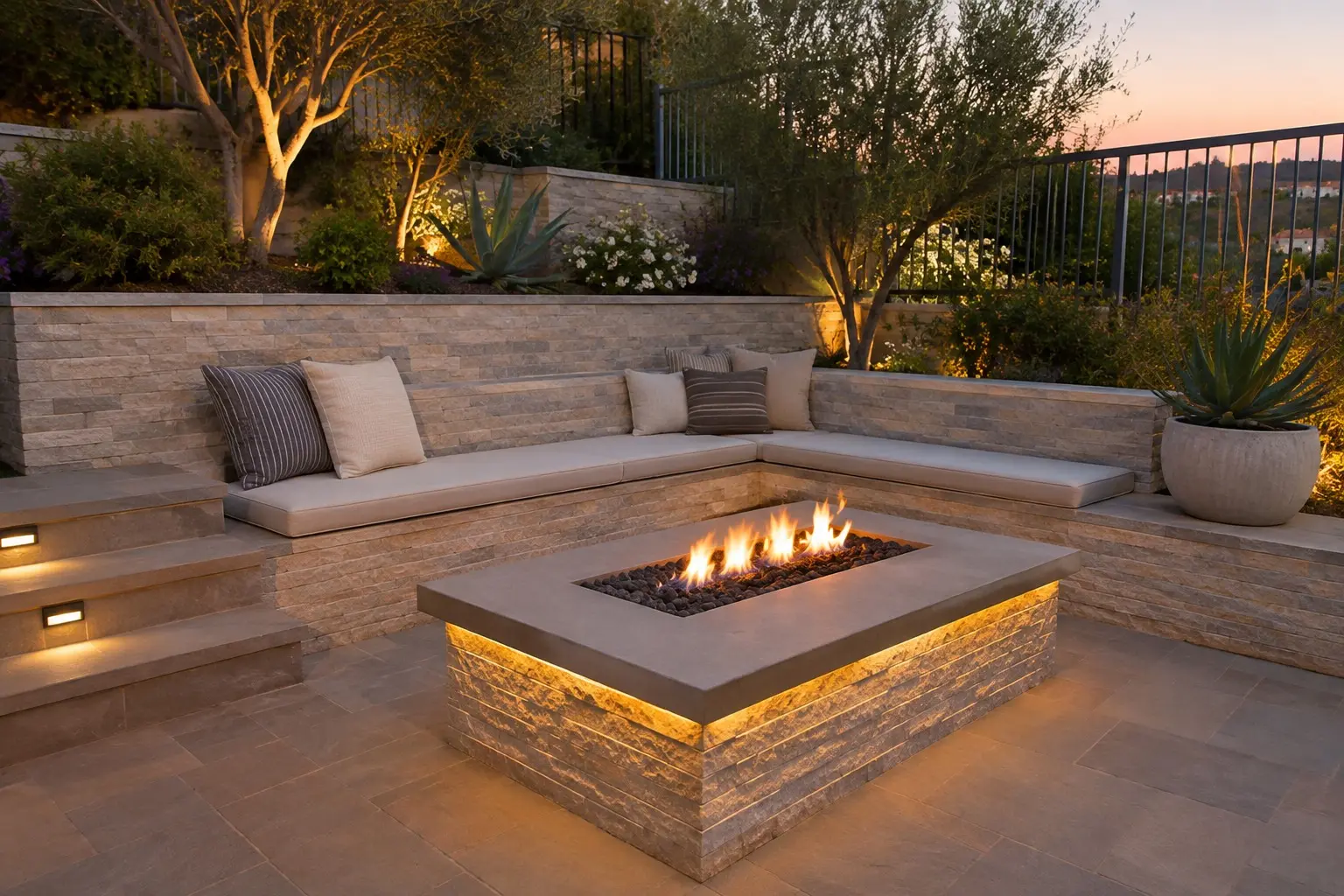
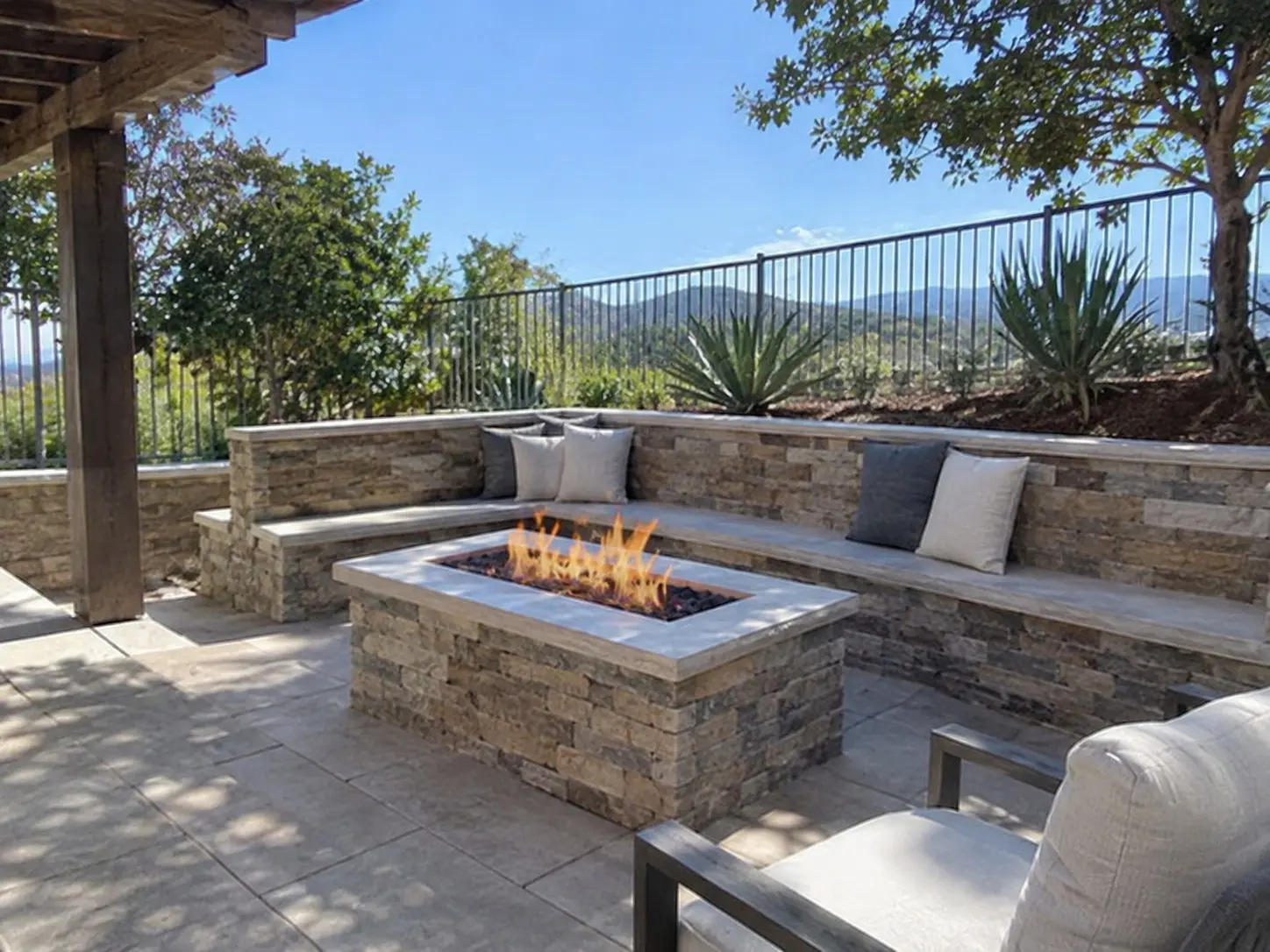
Wood gives crackle and smoke; gas gives instant flame with less maintenance. Local air-quality and fire rules and HOA covenants may limit wood.
A gas line, valve and any electric ignition must be installed and inspected by qualified trade professionals under local rules.
Stand at the planned spot on a typical afternoon and note which way smoke would travel across seating.
Flue height is set by the firebox and nearby obstructions, so check overhead space before drawing the elevation.
Coastal terraces, inland slopes and wildfire-prone neighborhoods each add different material and ember-resistance questions.
A built fireplace is a structure. Confirm requirements with the City of San Diego Development Services Department or your city or county.
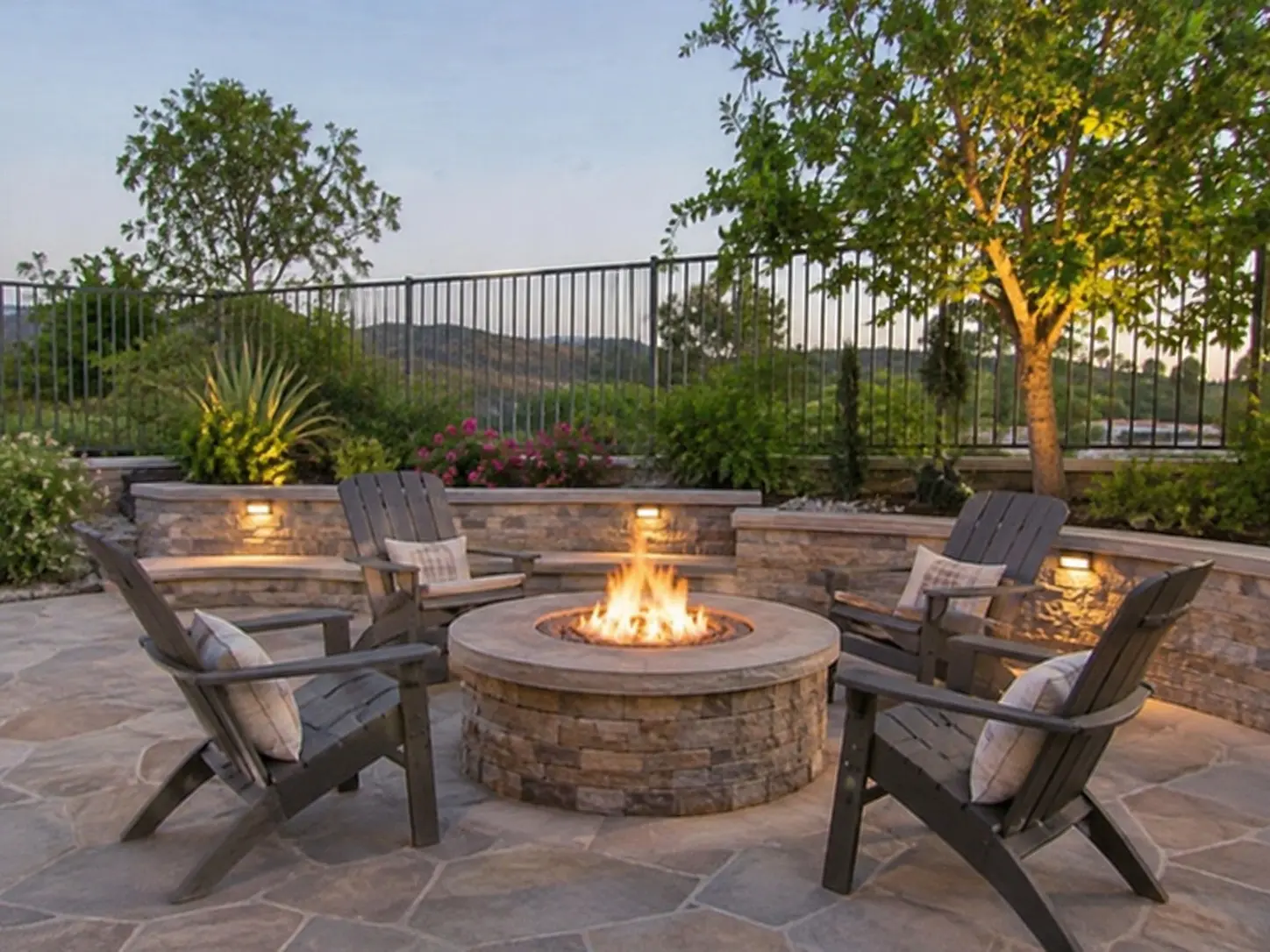
The firebox itself is lined with firebrick or a manufactured refractory panel; the visible cladding is where you choose character. Stacked ledgerstone reads rustic, smooth stucco reads Spanish or modern, and large-format porcelain panels read crisp.
Near the coast, sealed stone and stainless or powder-coated hardware resist salt and damp better than raw steel. Inland, the question is more often heat on dark finishes and the expansion of masonry between cold nights and hot days.
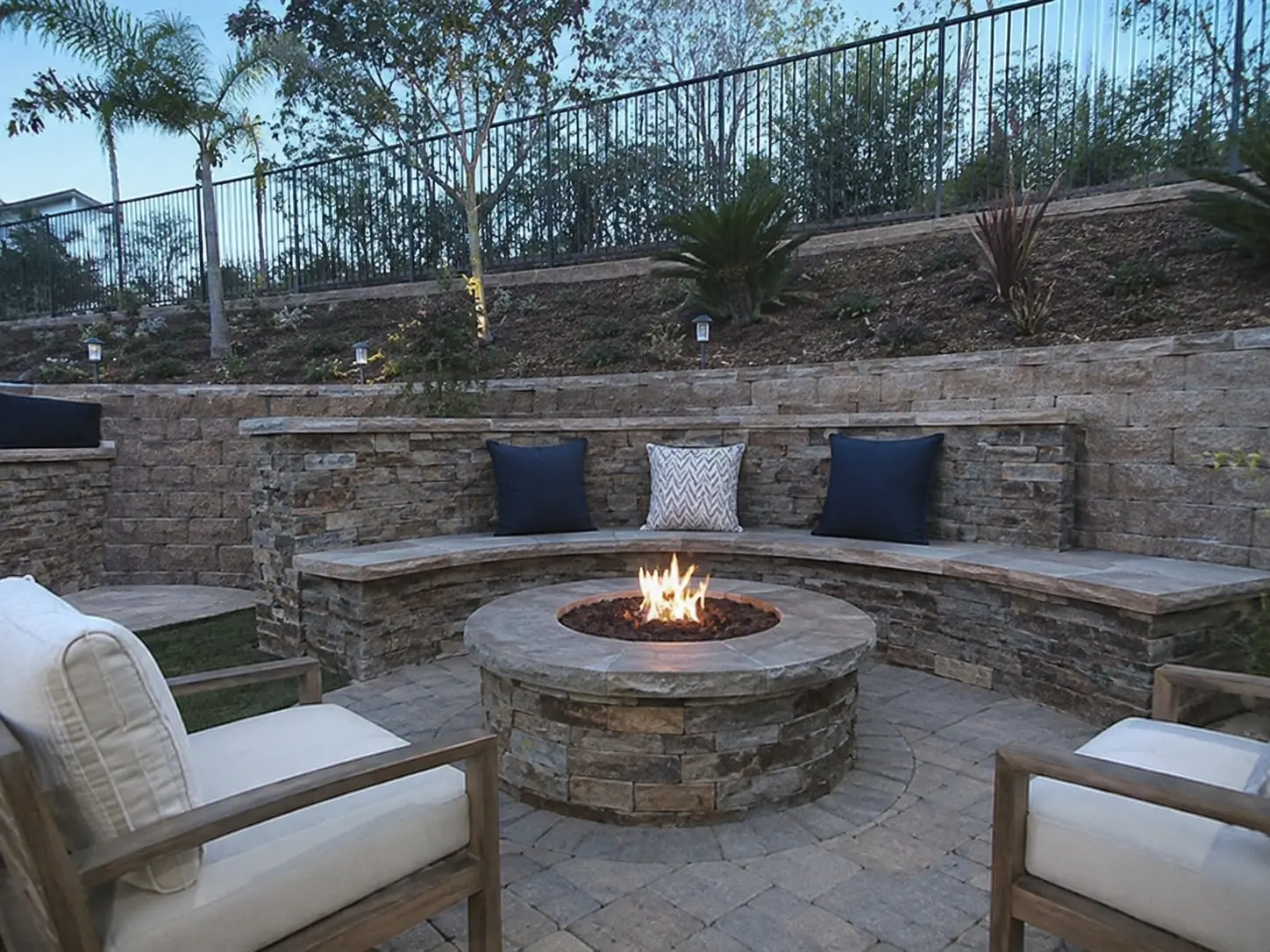
Note slopes, trees, utility lines, the house wall and the direction of the afternoon wind.
Buried lines must be marked before any footing or gas trench is dug.
Check building, fire and HOA requirements before the design is locked, since flue height and clearances are regulated.
Excavation, reinforcement and curing come first; the firebox is not set until the base is ready.
The firebox and chimney are built or set, then finished in stone, stucco or tile.
Gas connections are pressure-tested by the qualified trade; wood units need a slow first burn to cure the masonry.
A fireplace can close one end of a bluff terrace, sit beside a pergola, or become the focal point behind a long dining table. Each location changes the foundation, the wind exposure and the finish.
Whichever setting suits your yard, the layout should leave room for walking around the hearth and clearance for furniture.
A fireplace is vertical, vented and better in wind, with a stronger sense of enclosure. A fire pit is lower, social on all sides and simpler to build. Many yards use one or the other, rarely both.
Sometimes. Check local fire and air-quality rules, wildfire-season restrictions and HOA covenants before choosing wood. Gas often faces fewer limits.
A tall masonry structure usually needs a footing designed for the soil and load, and a building department may ask for plans. Confirm early.
Clearances come from the manufacturer's listing and local rules, and combustible siding or eaves limit placement. Verify before positioning it.
Footing and structure, flue height, cladding material, gas or electric runs, and any pergola or seating around it.